.png)

SpaceX stock struggled after its first NASDAQ-100 session, even as Wall Street issued mostly positive ratings and ARK Invest added more shares. SPCX closed at $149.47 on Tuesday after falling 7%, leaving the stock above its $135 IPO price but below its June 12 opening level.
The stock also trades more than 25% below its June 16 closing high of $201.80. Overnight, SPCX rose 0.2% heading into Wednesday. The move came as investors weighed index demand, wide analyst targets, ARK buying, and higher Starlink aviation prices.
SpaceX entered the NASDAQ-100 on Tuesday, a move that had been expected to bring buying from index-tracking funds. Funds with about $800 billion in assets were expected to buy SPCX shares to match the benchmark. This demand did not lead to a rally in the first session.
The stock fell instead, suggesting part of the index demand may have been priced in earlier. SPCX had gained nearly 6% last week before the index addition. Investors then sold the stock as the first NASDAQ-100 session failed to extend this move.
SPCX closed at $149.47, slightly below the level where it began public trading on June 12. The stock still trades above its $135 IPO price, yet the drop shows a sharp pullback from its June 16 high. The $150 level is now a key near-term area for market attention.
Meanwhile, ARK Invest added to its SpaceX position. The ARK Innovation ETF bought 44,196 SPCX shares on Tuesday. Based on the closing price, the purchase was worth about $6.6 million. ARK funds already held about 3.29 million shares by the end of SpaceX’s first public trading day.
Wall Street analysts started new coverage after the post-IPO quiet period ended. The average analyst target stood near $236, which suggests about 58% upside from Tuesday’s close. Nineteen analysts issued ratings after the quiet period lifted for banks involved in the IPO.
Deutsche Bank began coverage with a Buy rating and a $255 target. The firm cited reusable rockets, Starlink, and possible AI infrastructure use. Cantor Fitzgerald started coverage with an Overweight rating and a $246 target, describing SpaceX as a “planetary infrastructure company.”
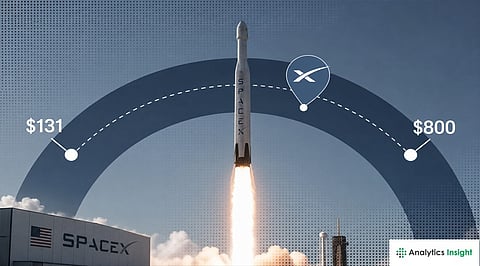
Raymond James set the highest target on the Street at $800. Citi rated the stock a buy at $200 and linked a longer-term $900 case to Starship. Morgan Stanley set a $300 base case, with a $600 bull case and a $75 bear case.
Still, not all analysts shared that view. MoffettNathanson set a $131 target and gave the stock a neutral rating. The firm questioned SpaceX’s valuation and its long-term business forecasts. It called the company’s $30 trillion addressable market estimate ‘absurd.’
MoffettNathanson also raised doubts about plans tied to orbital compute. The firm said, “There is simply no credible financial model that can support what is at the time of this writing a roughly $2 trillion valuation. Our own certainly does not.” The firm said investors were pricing future businesses that do not yet exist.
SpaceX also raised prices for Starlink Business Aviation customers. The Aviation Regional 25GB plan rose to $4,000 per month from $2,000. The plan includes 25GB of data, with added data priced at $250 per GB.
The company also introduced Aviation Regional Unlimited at $12,500 per month. Aviation Global Unlimited rose to $20,000 per month from $10,000. This plan offers worldwide coverage and speeds of up to 1 Gbps, though Starlink says the Aviation Performance Antenna is needed to reach this speed.
The new pricing took effect immediately for new customers on Tuesday. Existing customers will move to the updated plans on their next billing cycle after August 7. General Aviation pricing is not changing.
Separately, Starlink aviation equipment rose to $200,000 per business jet from $145,000 last year. The hardware cost does not include monthly service fees. The higher pricing adds another data point for investors tracking Starlink revenue as SPCX trades below its early post-IPO peak.
Also Read: SpaceX Shares Slide Again as Bond Sale and AI Spending Shake Investors
