.png)

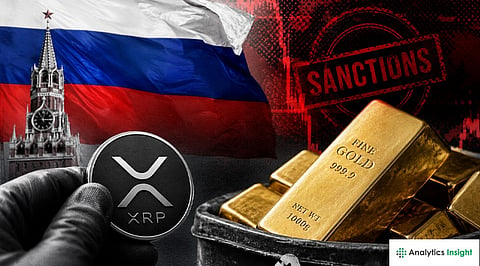
Russia has cut its gold holdings while expanding XRP-linked trading instruments, according to recent market data and exchange listings. The move comes as sanctions pressure, war costs and fiscal strain continue to shape Moscow’s financial choices.
The Bank of Russia held 73.9 million ounces of gold as of May 1, 2026, down by about 900,000 ounces from the start of the year, according to recent reports citing official data. The decline pushed reserves to the lowest level since early 2022.
Gold has long served as a reserve buffer for Russia during sanctions. Now, the pace of selling suggests mounting fiscal pressure as military spending and restricted access to Western finance continue.
The reduction also stands out as Russia spent years building gold holdings as a sanctions shield. That backdrop makes the recent drawdown a notable shift in reserve management.
The Moscow Exchange lists an XRP MOEX Ripple Index futures contract. The listing shows that Russia’s market infrastructure already includes XRP-linked products.
Market analyst Pumpius has linked those developments to a broader adjustment in Russia’s financial strategy. The analyst said the pattern points to testing settlement tools that sit outside traditional Western banking channels.
That view aligns with XRP’s stated use case. Ripple says XRP can support cross-border payments and settlement in as little as three seconds, which suits fast institutional transfers.
Read More: How the Russia-Ukraine War Permanently Changed Crypto Exchange Policy in Europe
Russia still trades energy with partners such as China and India, but settlement remains the key challenge. SWIFT, correspondent banking and dollar clearing all face sanctions exposure and political limits.
For that reason, blockchain-based rails have entered the debate. Ripple describes XRP-based payments as a way to bridge currencies and reduce settlement time, while the White House created a U.S. Digital Asset Stockpile in March 2025, showing how digital asset policy has moved into the mainstream.
Bitcoin and XRP also occupy different roles in the same market conversation. Bitcoin remains the better-known store-of-value asset, while XRP centers on payment settlement and transaction flow.
