.png)

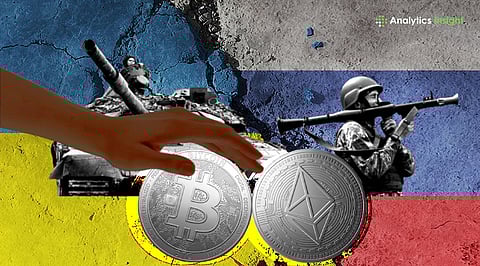
The Russia–Ukraine War pushed Europe to bring strict control over crypto activity.
Markets in Crypto-Assets created a clear rule system for all Crypto Exchanges across Europe.
Crypto Platforms now follow bank-level checks, with less privacy and stronger tracking of transactions.
The war between Russia and Ukraine, which escalated in February 2022, shook the global money system. Banks, trade, and payments all faced strict limits. Europe and its allies placed heavy sanctions on Russia. These rules aimed to cut Russia off from global finance.
At the same time, many experts feared that cryptocurrencies could become a secret path to avoid these sanctions. Crypto does not depend on banks in the same way. This made governments worry that banned groups could still move money.
Because of this fear, crypto exchanges came under strong watch. Europe began to treat them as serious financial systems, not just new tech platforms.
At first, sanctions mainly targeted banks and rich individuals. But soon, attention turned toward crypto platforms. Leaders in Europe saw that digital coins could help move funds across borders without control.
By early 2026, the European Union moved toward a full ban on crypto activity linked to Russia. This rule aimed to stop all crypto transfers between EU users and Russian entities. It did not matter if the person or group had direct sanctions or not.
This step showed a major shift. Crypto exchanges became part of political and economic strategy. They now had to follow the same strict rules as banks.
Also Read - Top Crypto Exchanges in Asia You Should Know in 2026
A key moment came with the launch of the Markets in Crypto-Assets law, also known as MiCA. This law came into force fully by late 2024. It created one clear system for crypto rules across Europe.
Before MiCA, each country had its own approach. This confused. After MiCA, all crypto exchanges had to follow the same standards.
Under this law, exchanges must get official approval before they operate. They must show clear details about how they work. They also need to protect customer funds and keep enough capital.
This law did not appear only because of the war. But the war made it urgent. Leaders wanted strong control over all money systems, including digital ones.
Another big change came with the “Travel Rule.” This rule forced crypto exchanges to collect and share user data during transactions.
In simple terms, when someone sends crypto, the exchange must know who sent it and who receives it. This rule removed much of the privacy that crypto once offered.
Exchanges now must check identity through Know Your Customer steps. They must track all transfers and report suspicious activity.
This change made crypto more like traditional banking. Secret or hidden transfers became much harder.
After the war began, crypto exchanges no longer acted as neutral platforms. Governments started to expect them to support foreign policy goals.
Sanctions grew stronger over time. By 2025 and 2026, they did not only target banks. They also targeted crypto platforms that helped Russian users.
Even companies outside Europe could face action if they supported Russian crypto flows in any indirect way.
This shows a big change. Crypto exchanges now act as part of global control systems. They must follow political decisions, not just financial rules.
In the past, many people believed crypto could not be tracked. That idea has changed a lot.
Europe has developed better tools to study blockchain data. These tools help authorities follow money trails across networks.
New laws require exchanges to store detailed records. They must work with law enforcement when needed. They must also use systems that check transactions in real time.
Because of this, crypto has become more transparent than before. It is no longer easy to hide large movements of funds.
The war also changed how leaders think about crypto. It is no longer just about finance or technology. It is now linked with national security.
European countries started to worry that digital assets could support cyber attacks or illegal funding. Some debates in countries like Poland showed this concern clearly.
Leaders feared that weak control over crypto could help hostile groups harm their systems.
As a result, crypto exchanges now face checks not only for money safety but also for security risks.
Also Read - Top Crypto Exchanges for Futures Trading in 2026
These rules have changed the crypto market in Europe in many ways.
Large exchanges that follow rules have grown stronger. Smaller platforms that could not meet strict laws have struggled or closed.
Crypto has also become more connected with traditional finance. Big companies and institutions now play a bigger role.
Privacy has reduced a lot. Anonymous wallets and hidden transfers face strict limits.
Europe has also become a model for other regions. Many countries now study their approach and plan similar rules.
The Russia–Ukraine war forced Europe to act fast. It showed that crypto could not stay outside global systems of control.
Today, crypto exchanges in Europe work under strong laws. They follow strict checks, share user data, and support sanctions.
This change is not temporary. It has reshaped how digital money works in the region.
Crypto is no longer a free and separate system. It now stands inside the larger world of law, politics, and security.
1. Why did Europe tighten crypto rules after the war?
Europe feared that crypto could help bypass sanctions, so strict laws ensured better control and monitoring.
2. What is MiCA and why is it important?
MiCA is a major EU law that sets clear rules for Crypto Exchanges and protects users across all member countries.
3. Can crypto still be anonymous in Europe?
No, most anonymity has been reduced due to identity checks and transaction tracking rules.
4. Are crypto exchanges treated like banks now?
In many ways, yes. They must follow strict compliance, security, and reporting standards similar to banks.
5. How did the war change crypto globally?
It showed that crypto can affect global politics, so many regions now plan stricter rules like those in Europe.
Join our WhatsApp Channel to get the latest news, exclusives and videos on WhatsApp
_____________
Disclaimer: Analytics Insight does not provide financial advice or guidance on cryptocurrencies and stocks. Also note that the cryptocurrencies mentioned/listed on the website could potentially be risky, i.e. designed to induce you to invest financial resources that may be lost forever and not be recoverable once investments are made. This article is provided for informational purposes and does not constitute investment advice. You are responsible for conducting your own research (DYOR) before making any investments. Read more about the financial risks involved here.
