.png)

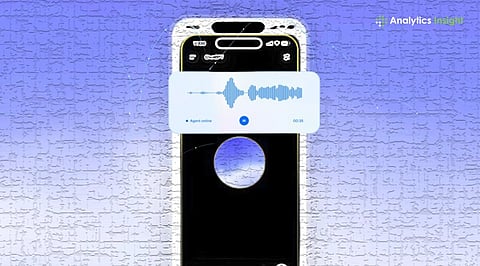
OpenAI has introduced GPT-Live, a new voice model for ChatGPT that promises more natural, fluid conversations by allowing users and the AI assistant to speak simultaneously. The feature is rolling out globally across iOS, Android and the web, marking one of the company’s biggest upgrades to ChatGPT Voice.
Unlike earlier voice experiences that relied on turn-based interactions, GPT-Live supports simultaneous listening and speaking. Users can interrupt ChatGPT mid-sentence, change topics naturally, or continue talking without waiting for the AI to finish its response.
The system also uses conversational cues, such as brief acknowledgments while listening, to make interactions feel more like a real discussion than a question-and-answer session. OpenAI says the technology is designed to reduce awkward pauses and improve the overall flow of conversations.
A key addition is GPT-Live’s ability to continue speaking while handling complex tasks in the background. Whether it is conducting a web search, performing deeper reasoning, or processing multiple requests, the AI can keep the conversation going instead of asking users to wait.
The company also highlighted improvements to live translation and richer responses through visual cards for topics such as weather, sports, and financial information when relevant.
Also Read: OpenAI Begins Wider GPT-5.6 Rollout After US Government Review
OpenAI has started rolling out GPT-Live globally from today. Paid subscribers on Go, Plus, and Pro plans will receive GPT-Live-1 as the default voice model. Free-tier users will get the GPT-Live-1 mini, a lighter version designed to deliver the same conversational experience while using fewer computing resources. The feature is available on ChatGPT for iOS, Android, and web users.
The launch signals OpenAI’s push to make voice interaction a primary way of using AI assistants. Instead of treating speech as a simple input method, GPT-Live aims to replicate the rhythm of human conversation with fewer interruptions, faster responses and real-time task handling. The release also comes as competition in voice AI intensifies, with major technology companies racing to build assistants that can communicate more naturally.
