.png)

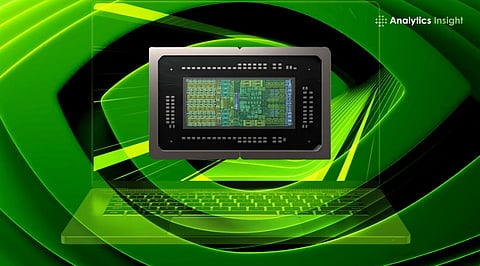
NVIDIA has introduced the RTX Spark processor for Windows laptops. The new lineup marks a major expansion beyond graphics chips and intensifying competition with Intel and AMD in the rapidly growing AI PC market.
While NVIDIA didn’t provide a look at any of the laptops built using the chip, it did offer hints at styling and features, noting that the notebooks will be roughly 14 millimeters thick, include HD webcams, and all-day battery life.
NVIDIA is taking aim at Intel and AMD with the debut of its RTX Spark superchip for Windows laptops. The processor includes a Blackwell GPU and Grace CPU, which will power laptops from manufacturers including ASUS, Dell, HP, and Microsoft when it lands this fall. The RTX Spark will also be featured in small desktops.
It will be suitable for customers running AI applications, content creators, and, importantly, gamers. According to the company, the RTX Spark will pack upward of 128GB of memory, which is a massive amount for any laptop.
Most laptops generally pack 16GB of memory, though higher-end systems, like a top-of-the-line MacBook Pro. To get that configuration, users will have to spend at least $5,099.
NVIDIA hasn’t announced pricing for laptops running its new chip, but it did note that the first systems will target the premium market. However, it will also offer less powerful versions of the RTX Spark with less memory for use in lower-priced notebooks.
As RTX Spark uses an Arm-based Grace processor, NVIDIA has been working with Microsoft and software developers to ensure their programs can run on the chip. Since, a majority of software in the world has been built to run on x86 chips from Intel and AMD.
Qualcomm’s Arm-based processors already power Windows laptops, and can run the vast majority of apps with ease while providing impressive battery life. It’s taken years to get developers to either create Arm versions of their apps or build emulators that can translate x86-based programs to run on Arm chips.
The laptops will support their various graphics technologies, including DLSS, which uses AI to improve game performance. While NVIDIA didn’t provide any benchmarks or comparisons to existing laptops, it did say that the RTX Spark’s Blackwell GPU is in roughly the same class as its RTX 5070 laptop GPU.
Also Read: First NVIDIA-Powered Windows PCs Expected to Debut at Computex Next Week
CPUs have become an increasingly important part of AI data centers due to the growing use of AI Agents. AI agents are semiautonomous and fully autonomous digital helpers that perform tasks on your behalf. And while GPUs are still necessary for training and running AI models, the actions AI agents take, such as arranging files or browsing the web for you, are powered by CPUs.
Additionally, NVIDIA also announced that its Vera data center CPU is now in full production and that Vera-only rack servers will be available this fall. NVIDIA said that Anthropic, OpenAI, SpaceXAI, ByteDance, Coreweave, and Oracle Cloud Infrastructure are among the customers “exploring” Vera.
