.png)

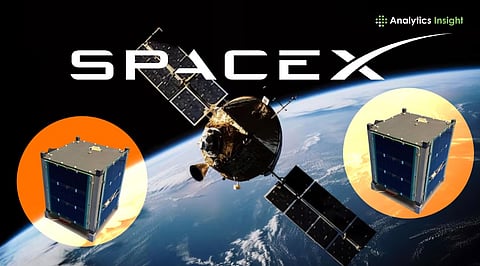
SpaceX carried a new kind of spacecraft into orbit on July 7, launching the BOHR (Betavoltaic Orbital High-Reliability) CubeSat using its Transporter-17 rideshare mission from Vandenberg Space Force Base. Built by Miami-based City Labs, BOHR is being described as the world's first commercially designed and operated satellite to run on nuclear power, riding alongside 80 other payloads on the Falcon 9 rocket.
Unlike NASA's plutonium-fueled radioisotope generators used on missions like Voyager or the Curiosity rover, BOHR runs on a fundamentally different technology: a betavoltaic battery that generates electricity from the natural beta decay of tritium trapped in a metal hydride matrix. City Labs calls the system NanoTritium.
It has no moving parts, no liquid electrolytes, and virtually no fire risk, and as the tritium fuel decays, it converts into helium-3, a stable, non-radioactive byproduct. In this mission, the nuclear battery powers and validates a demonstration payload independently, while a separate solar system handles the satellite's main bus operations.
It is quite evident that solar panels have their own limitations, and as soon as there is no sun directly shining on the spacecraft, they cease to function. The batteries might be helpful to fill in the gap in short periods of time, yet they will not last forever. According to the CEO of City Labs, Peter Cabauy, it means that the new milestone indicates that the nuclear energy systems are ready for commercial use.
NASA has separately floated tritium betavoltaics as a way to run small autonomous sensors in the Moon's permanently shadowed regions, where extreme cold and total darkness make conventional batteries impractical.
“This is a historic step for commercial nuclear power in space,” City Labs CEO Peter Cabauy said in a statement.
Beyond the engineering, BOHR's launch marks a first for how nuclear-carrying spacecraft get approved. The mission became the first commercial nuclear payload to go through the FAA's dedicated review pathway, established under National Security Presidential Memorandum-20 in 2019, which coordinates safety review across multiple federal agencies for launches involving space nuclear systems.
Cabauy told Payload that the real innovation isn't just the technology; nuclear power in space has existed for decades through government missions, but proving that it can now scale as a genuine commercial capability rather than staying confined to government-only programs.
“BOHR demonstrates that safe, compact, and regulatory-approved nuclear power systems are ready for routine commercial deployment. This capability enables persistent, always-on payload operations that are not constrained by sunlight or battery life,” said Cabauy.
Also Read: SpaceX NASDAQ 100 Debut Set to Trigger Over $4B in Passive Fund Inflows
City Labs was careful to frame BOHR's power output as modest, nowhere near enough to run something like a future lunar base, but positioned it as a pathfinder the company hopes can scale toward larger applications over time. Cabauy said the goal extends beyond his own company, aiming to open the commercial nuclear space sector for other firms pursuing similar technology.
The launch also arrives as NASA and the Department of Energy continue developing a separate lunar surface fission reactor, targeting a first deployment by 2030, underscoring how nuclear power is increasingly being treated as essential infrastructure for the next phase of deep space and lunar exploration.
