.png)

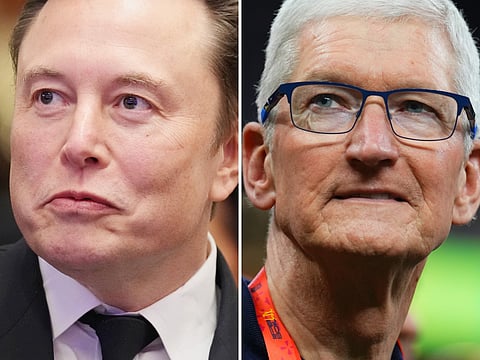
Elon Musk has supported Tim Cook’s warning about an unprecedented shortage of memory chips. The technology executives say rising costs and limited production have become major problems for companies building consumer devices and artificial intelligence systems.
Cook described the shortage as a “hundred-year flood” and said he had not seen a similar cost shock in any area in over 40 years. Musk later agreed, calling it the “biggest price jump in anything I’ve ever seen.”
The rapid growth of artificial intelligence infrastructure has raised demand for advanced memory products. Large data centers require high-bandwidth memory to run AI processors and handle large amounts of data.
Chip manufacturers have shifted more production toward these higher-value components. As a result, companies making smartphones, computers, televisions and game consoles face tighter supplies of standard memory and storage chips.
Cook said Apple could no longer absorb the full increase in component costs. He stated that price increases had become “unavoidable” after the company tried to protect customers from higher supplier charges.
Apple later raised prices across several product groups, including Mac computers and iPads. Some increases reached hundreds of dollars, depending on the model and storage level. The company also adjusted prices for products such as Apple TV, HomePod and iMac.
Meanwhile, Microsoft announced higher prices for Xbox consoles. Other electronics manufacturers have also adjusted product prices as memory and storage costs rise across the supply chain.
Musk said the gap between memory demand and production capacity was “insane.” He added that the industry needed much higher output to reduce the shortage.
Tesla depends on advanced chips for its vehicles, artificial intelligence systems and Optimus robots. During Tesla’s fourth-quarter earnings call in January, Musk said supplier output could restrict the company’s plans.
He said memory could become “an even bigger limiter than AI logic.” AI logic chips process calculations, while memory chips store and move the data required by those processors. Both parts must be available in large volumes for AI systems to operate.
Tesla currently works with outside manufacturers, including major chip producers in the United States and Asia. Still, Musk said the company faced risks if suppliers could not expand production fast enough.
The shortage also affects SpaceX and xAI. These companies require growing amounts of computing power for satellite systems, AI training and data center projects.
Musk has presented TeraFab as a possible long-term response to the supply problem. The project involves Tesla, SpaceX and xAI, with Intel also announcing its participation.
The planned operation would combine logic chip production, memory manufacturing and advanced packaging. Musk has said the structure could reduce reliance on outside suppliers and support future AI and robotics projects.
However, many details remain unclear. The companies have released limited information about production dates, financing arrangements and the exact role of each participant. Reports have also noted that formal commitments between some parties have not been fully disclosed.
Tesla has started seeking semiconductor workers with experience in advanced manufacturing. The available roles cover areas such as chip design, packaging, lithography, testing and production management.
Even with new factories, semiconductor facilities take years to build and prepare for mass production. Therefore, the current supply pressure may persist as data center operators, automakers and device manufacturers compete for available chips.
Cook and Musk have both called for more production. For consumers, the immediate result is higher prices across computers, tablets, consoles and other electronics that rely on memory and storage components.
Also Read: Apple Stock Slides 6% After MacBook and iPad Price Hikes Worldwide
