.png)

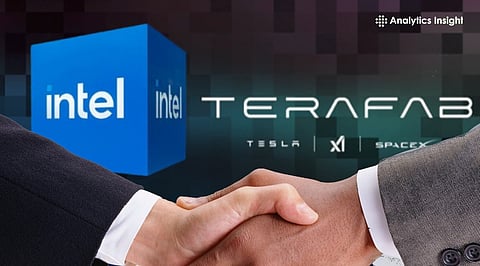
Intel has announced a major partnership with Elon Musk’s Terafab. The collaboration reportedly aims to accelerate chip production for AI systems, including humanoid robots and large-scale data centers.
Experts have opined that this partnership reflects a broader push by the US companies to secure their own manufacturing capacity. Firms are now more interested in domestic production rather than heavy dependence on foreign materials.
Intel’s decision to partner with Terafab comes at a time when Elon Musk is facing scrutiny over the proposed SpaceX IPO. According to reports, Tesla's CEO has encouraged banks to subscribe to Grok AI for the IPO. This demand has opened a new way for big deals to be accomplished.
Despite this controversy, the Terafab project has been progressing with an ambitious goal. The primary aim is to boost the speed and efficiency of semiconductor chip production. In this partnership, Intel will bring decades of manufacturing experience to the table, while Musk contributes a strong push toward automation and scale.
Since the collaboration has been announced, Intel’s share price has jumped more than 2%. Tech-experts say this partnership shows urgency. AI companies are racing all over the world to support new technologies. Robotics firms, cloud providers, and research labs generally depend on a reliable semiconductor supply. The joint force of Intel and Terafab is expected to remove the obstacles that have slowed down innovation.
There’s another side to this collaboration. If Intel and Musk join hands, it would reduce the US dependence on foreign chipmakers. At this point, the country mostly relies on Taiwan’s TSMC and South Korea’s Samsung. These companies have dominated advanced semiconductor manufacturing for years.
However, the current geopolitical tensions have increased concerns about supply chain security. Taiwan has become a sensitive region. Any disruption there will directly affect the global electronics market. So, the US companies are trying to expand domestic production and reduce the risk. Although the change can’t happen overnight. After all, it took years for Taiwan to build its infrastructure. Replicating that network will require time, investment, and skilled workers.
Also Read: Terafab AI Chip Factory: Elon Musk’s Bold Bet on the Future of Humanity
The Intel Terafab partnership promises technological progress. At the same time, it also raises concerns about whether the workforce is ready for it. Intel has laid off massively in recent times to control costs and improve efficiency.
On the other hand, Musk’s companies are known for demanding work environments. Major projects require the employment of thousands of engineers, along with technicians and support personnel. Even the best companies in the industry face operational difficulties when their employee base fails to maintain consistency.
The Intel-Terafab alliance represents a bold attempt to reshape the future of AI hardware. The technology is ready, and the investment is huge. The authorities need to show their capability to handle the project before they can make a decision about its execution.
