.png)

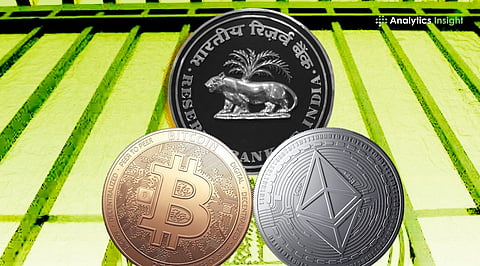
The Reserve Bank of India opposed legalizing virtual digital assets during a parliamentary briefing on Thursday, warning that cryptocurrencies could threaten India’s monetary and financial stability. The central bank urged lawmakers to keep VDAs prohibited as India reviews its digital currency strategy and the future treatment of private crypto assets.
The Parliamentary Standing Committee on Finance examined virtual digital assets and possible policy responses during its seventh meeting on the subject. BJP lawmaker Bhartruhari Mahtab chaired the session, which included representatives from the RBI and the Institute of Chartered Accountants of India.
The meeting also reviewed progress in India’s central bank digital currency pilot, commonly known as the digital rupee. India continues testing the sovereign currency while assessing how private cryptocurrencies affect consumers, institutions, and the wider economy.
The RBI told the panel that privately issued digital assets create complex regulatory, tax, and enforcement challenges. It also warned that criminals could use digital money for terror financing, narcotics smuggling, and other illegal activities.
The central bank said offshore crypto entities remain difficult for Indian authorities to track. Cross-border platforms can operate outside domestic oversight, making transaction monitoring and enforcement more difficult when trades involve foreign businesses or unidentified users.
To support its position, the RBI cited China and Qatar as countries that prohibit similar financial activities. It also noted that the European Union allows VDAs through a strict regulatory framework with extensive controls.
Edul Patel, CEO at Mudrex It is encouraging to see the RBI reinforce the critical distinction between speculative crypto assets and Real-World Asset (RWA) tokenisation before the Parliamentary Standing Committee on Finance.
"It is encouraging to see the RBI reinforce the critical distinction between speculative crypto assets and Real-World Asset (RWA) tokenisation before the Parliamentary Standing Committee on Finance," Patel stated
Read More: US Plans New Tariffs on India and 59 Economies Over Forced Labor Import Rules
ICAI supported a comprehensive legal framework for virtual digital assets instead of continued uncertainty. The accounting body said clear rules could improve financial reporting, compliance, and the treatment of VDAs across different business activities.
It offered to research the various forms of digital assets and examine their economic characteristics. ICAI said this work could guide recognition, measurement, presentation, and disclosure standards within company financial statements.
Mahtab said the RBI remained firmly against legalizing VDAs in India. He also noted that existing income tax rules already cover parts of the sector and allow authorities to examine related financial activity.
The committee considered the slower adoption of the digital rupee compared with privately issued digital assets. Mahtab said the RBI’s digital asset had not achieved the same level of market traction.
As a result, the panel examined possible policy measures that could expand India’s digital financial ecosystem while protecting consumers and financial institutions. Members also reviewed the need to safeguard the broader economy from emerging risks.
The discussion covered taxation, enforcement, investor protection, offshore access and stablecoin use. It also placed the digital rupee within India’s wider effort to promote financial innovation without weakening monetary control or financial stability.
The RBI remains firmly opposed to crypto legalization, citing financial stability, offshore enforcement and illicit finance risks. Meanwhile, ICAI supports a clear regulatory framework as Parliament reviews India’s digital asset policy. Lawmakers must now decide how to protect the economy while supporting responsible financial innovation.
