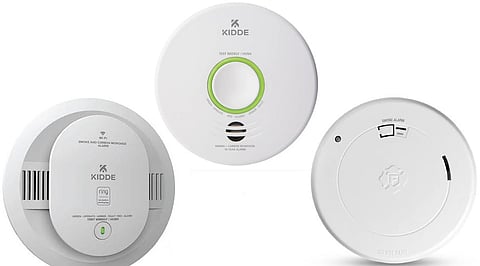
.png)

Choosing the best smart smoke detector starts with checking certified safety standards, sensor technology, and carbon monoxide detection before considering smart features.
Wi-Fi alerts, voice notifications, nuisance-alarm resistance, and compatibility with Alexa, Google Home, or Apple HomeKit improve convenience without compromising fire safety.
Proper placement, reliable performance, and long-term maintenance are just as important as connectivity when selecting a smart smoke detector for 2026.
A smoke detector gets only one chance to work, and failure can cost lives. Smart features like phone alerts and voice warnings are nice additions, but they mean nothing if the underlying fire detection isn't solid. The best smart smoke detectors pair certified safety performance with connected features, so a home stays protected in the moments that actually matter.
Every smoke alarm sold in the US should carry a UL 217 listing. The standard was last revised in January 2026, and recent editions added stronger tests for smoldering fires and for filtering out cooking smoke. In Europe and the UK, EN14604 is the equivalent mark to check. A listing that does not mention either standard is not worth buying, regardless of how polished the companion app looks.
Sensor type is the next check. Photoelectric sensors catch slow, smoldering fires early. Ionization sensors respond faster to flaming fires. Combined units cover a wider range of fire types than single-sensor models.
Homes with gas appliances or an attached garage call for a combined smoke and carbon monoxide alarm. A CO sensor adds a second layer of protection that a smoke-only unit cannot provide.
Placement is one thing most buyers never think to check. NFPA 72, the US code that governs fire alarm installation, revised its rules around cooking appliances back in 2025. A smoke alarm now has no business sitting within 10 feet of a stove. Between 10 and 20 feet, it needs to carry nuisance-resistance certification, either UL 217's eighth edition or UL 268's seventh.
Manufacturers run these alarms through actual cooking smoke during testing to confirm they won't trip for no reason. That's the real story behind all those older alarms shrieking every time someone fries an egg. And it's exactly why swapping out a nuisance-prone unit near the kitchen pays off in both safety and sanity.
Once safety basics are covered, smart features add real convenience. Wi-Fi models push alerts to a phone if an alarm triggers while the house is empty. Better units announce the room, so the alert says smoke in the kitchen rather than sounding a generic siren.
Ecosystem support varies by brand: Nest Protect and First Alert SC5 work with Google Home, Onelink units pair with Alexa, and Eve Smoke or Owl Wired support Apple HomeKit. Homes that already have certified alarms in working order can skip full replacement.
A retrofit option like a Roost smart battery or a Ring smoke listener adds phone alerts without touching the existing hardware. Several premium detectors, including Google Nest Protect, combine multiple sensing technologies to improve detection across different fire types, rather than relying on a single sensor to catch every kind of fire.
False alarms are the main reason people disable smoke detectors, so nuisance-alarm filtering matters as much as raw sensitivity. Updated sensing can tell the difference between shower steam, smoke from burnt toast, and an actual fire, cutting down on the alerts that lead many households to pull the batteries out entirely.
When comparing models, explicit nuisance-resistance certification carries more weight than marketing claims about smart filtering, since the UL 217 and UL 268 nuisance tests described earlier are the only independent check that the claim holds up.
A smart smoke alarm keeps sounding locally even if the Wi-Fi drops or the power goes out, since it runs off its own battery or a hardwired backup. The phone notification is the only part that needs an internet connection. Most units ship with a sealed 10-year battery built to be replaced once it's spent, not repaired.
A monthly test button check and the occasional dusting go a long way toward keeping the sensor sharp. It's worth a glance at the manufacturer's privacy policy too, particularly for anyone leaning on remote monitoring. Some alarms need a cloud account for alerts to work at all, while others still handle certain features locally, which gives privacy-minded buyers a bit more say in the matter.
The best smart smoke detector detects danger quickly, meets recognized safety standards, and fits the layout of the home it protects. Smart features should enhance that protection, not replace it.
A smart smoke detector offers the same core fire detection as a traditional alarm but adds features like Wi-Fi connectivity, smartphone alerts, voice notifications, and smart home integration for enhanced monitoring.
A combination smoke and carbon monoxide detector is a better choice for most homes, especially those with gas appliances, fireplaces, or attached garages, as it provides protection against both fire and CO leaks.
Photoelectric sensors are more effective at detecting slow, smoldering fires, while ionization sensors respond faster to flaming fires. Many premium smart detectors combine multiple sensing technologies for broader fire detection.
Yes. Smart smoke detectors continue to sound their local alarm even if Wi-Fi goes down. Hardwired models use battery backup during power outages, while battery-powered models continue operating normally. Remote notifications may not work without an internet connection.
Most manufacturers recommend replacing smart smoke detectors every 10 years, even if they appear to work properly. Regular monthly testing and routine maintenance help ensure reliable performance throughout their lifespan.
