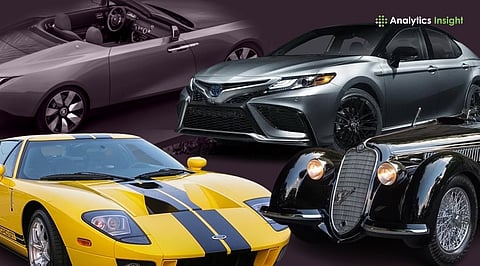
.png)

Some cars transcend transportation, becoming timeless legends through groundbreaking engineering, unforgettable design, and a lasting influence on the global automotive industry.
Models like the Ferrari 250 GTO and Porsche 911 remain highly sought after for their rarity, racing heritage, exceptional craftsmanship, and enduring value.
These legendary automobiles continue to inspire enthusiasts and collectors worldwide, proving that true automotive excellence never goes out of style or loses its significance.
Some cars stand out among all for the enduring legacy they create in the automotive world. Whether they introduced groundbreaking engineering, dominated motorsport, or defined an era, these iconic cars continue to command extraordinary prices decades later. Their rarity, technological innovation, racing pedigree, craftsmanship, and historical significance make them some of the most sought-after collector's items in the world.
These qualities drive the global collector car market. The Ferrari 250 GTO, for example, has sold at auction for tens of millions of dollars, making it one of the most expensive cars ever sold. Meanwhile, the Porsche 911 has continued to evolve while staying true to its original identity and is currently priced between Rs. 1.99 crore and Rs. 4.26 crore in India. Another enduring icon, the Mercedes-Benz 300SL Gullwing, remains highly coveted, regularly fetching millions of dollars in the collector market.
Here are seven legendary cars that continue to inspire enthusiasts and collectors worldwide:
No other car has really taken on that legendary reputation as the Ferrari 250 GTO did. It was manufactured from 1962 to 1964 and used in Grand Touring races. The car arrived with a 3.0-liter naturally aspirated V12 engine, and it was exceptionally strong but also quite reliable, not just fast on paper.
Only 36 of these were made by the company, so it ends up being one of the rarest collector vehicles you can actually find in the timeline of cars.
Porsche 911 shows how a well-designed thing can keep evolving while still holding onto its original character. The 911 stayed loyal to its rear-engine layout and that iconic silhouette while quietly absorbing the engineering upgrades of each new period in which it launched.
It is well known for its balance, steering feel, and overall engineering strength, so it continues to rank among the best sports cars you can buy today. In India, the latest variants are often listed in the range of Rs. 1.99 crore to Rs. 4.26 crore.
With the introduction of the Ford Mustang in 1964, Ford opened up a whole new category known as the 'pony car'. Sporty looks, V8 engine, and affordable price made the Mustang a huge success amongst young people.
Its fame from Hollywood movies and participation in motorsport made it a household name. Even today, early-model Mustangs are the most desirable American classics worldwide.
Known as the first true supercar, the Lamborghini Miura revolutionized the concept of performance in the late 1960s. This car was equipped with a revolutionary mid-mounted V12 engine and featured a very low-slung body style that set new standards for supercars.
The Miura produced around 350 horsepower in its early models and proved that engineering and design could be beautifully combined, inspiring practically all subsequent supercars.
The Jaguar E-Type is considered to be one of the most beautiful cars in the world. Released in 1961, this car offered beautiful styling along with remarkable technical characteristics.
This car gained recognition for its beautiful lines and excellent performance, all at a reasonable price. Many years have passed since then, but the Jaguar E-Type remains one of the most famous British automotive exports.
Also Read: Best Electric Cars for Families in 2026: Top EVs Ranked
Mercedes-Benz 300SL Gullwing is remembered mostly for those gull-wing doors that open sort of upward, but there was more going on underneath it too. It had real innovation packed in, not just styling.
People often point out that it was the first car ever to rely on fuel injection, and that choice gave it great performance for its era. Even today, you can still see why it’s often mentioned as one of the more technologically advanced classics.
Toyota 2000GT kind of flipped the script on how many folks viewed Japanese cars. It arrived in the late 1960s and looked stunning, but it wasn’t just a pretty body. The engineering of the period shows in the way it drives, with solid performance and a design that still feels attractive.
In a broader sense, it proved that Japanese automakers could go head-to-head with the best European sports car makers, not just chase them from the sidelines. Since it’s rare and historically important, it has become one of the most valuable Japanese classics, the kind people collect with serious care.
Automotive icons are not only about performance but also about the meanings they represent and the contributions they have made.
Ferrari 250 GTO, which holds an all-time auction record, the Porsche 911 that remains popular today, and the Mercedes-Benz 300SL Gullwing, which is technologically advanced- all these cars have found a place in automotive history for these attributes.
Given their success in racing, popularity in pop culture, and exceptional craftsmanship, these cars are likely to remain sought after by automotive fanatics worldwide.
Long past the time they were taken off the production line, these cars have proven themselves to be excellent examples of engineering; it goes without saying that real automotive icons do not diminish in value.
Why is the Ferrari 250 GTO considered the world's most valuable collector car?
The Ferrari 250 GTO is prized for its extreme rarity, with only 36 examples built, along with its racing success, iconic V12 engine, and record-breaking auction prices.
What makes the Porsche 911 a timeless sports car?
The Porsche 911 has retained its signature rear-engine layout and classic design while continuously evolving with modern technology, performance upgrades, and exceptional driving dynamics over decades.
Why is the Lamborghini Miura called the first true supercar?
The Lamborghini Miura introduced a mid-mounted V12 engine and revolutionary styling, setting new standards for performance and inspiring generations of supercars that followed.
Which legendary car changed the perception of Japanese sports cars?
The Toyota 2000GT showcased Japan's engineering excellence, stylish design, and strong performance, proving Japanese automakers could compete with Europe's finest sports car manufacturers.
Why do classic legendary cars continue appreciating?
Limited production, historical significance, engineering innovation, racing heritage, and strong collector demand make legendary classic cars highly desirable and increasingly valuable in the global collector market.
