.png)

Zerodha serves over 1.6 crore customers and accounts for close to 15 percent of daily retail trading volumes in India
Kamath built the company on a bootstrapped, technology-first model, avoiding external funding since 2010
Initiatives like Varsity and Rainmatter extend his mission of financial literacy and inclusion beyond just trading
Investing in stocks used to be a complex subject that only a few people could understand. Complicated paperwork, high broker fees, and a general fear of the unknown kept most middle-class families away from equities for decades.
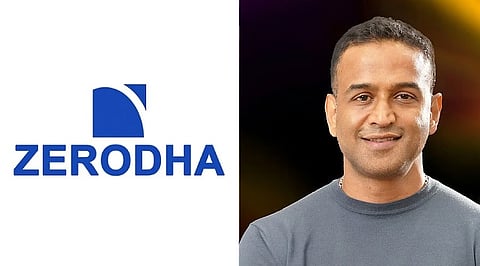
That picture has changed a lot over the last fifteen years, and much of the credit goes to one man who believed the system needed to be rebuilt from scratch. Nithin Kamath, co-founder and CEO of Zerodha, built India's largest stock brokerage on a simple idea: technology should remove barriers to investing, not create new ones.
Today, Zerodha serves more than 1.6 crore customers and accounts for close to 15 percent of daily retail trading volumes in the country. This piece looks at how Kamath used technology to reshape investing for ordinary Indians, and why his approach continues to matter.
Kamath started out as a self-taught trader, buying his first penny stocks at the age of 17. Working through the early 2000s, he saw how traditional brokers charged hefty commissions and often had little incentive to help small investors succeed.
In 2010, along with his brother Nikhil, he launched Zerodha. The name itself tells the story: it combines "zero" with "rodha," the Sanskrit word for barrier. Instead of charging a percentage of every trade, Zerodha introduced a flat fee model, a move that was almost unheard of in Indian broking at the time.
Building the entire back-end in-house rather than relying on third-party software gave the company control over speed, reliability, and cost, three things that mattered enormously to retail traders who had grown tired of clunky platforms and hidden charges.
Zerodha's trading platform, Kite, became one of the clearest examples of Kamath's technology-first thinking. Built to be lightweight and fast, Kite stripped away the clutter that made older trading terminals intimidating for first-time users.
A student or shopkeeper with no finance background could open the app, place an order, and track a portfolio without needing a broker on the phone. This ease of use is a big reason why Zerodha's customer base grew rapidly through the pandemic years, when lakhs of young Indians opened their first demat account from home.
Data from the past year shows demat account additions rose by over 20 percent, taking the industry total past 4.9 crore accounts, and platforms like Kite played a direct role in that surge.
Also read: Why Fintech Stocks Could Benefit From the Next Wave of AI Adoption
Technology alone does not make people confident investors. Kamath understood this early and built Varsity, a free educational platform that breaks down everything from the basics of the stock market to advanced options strategies. Millions of users have gone through its modules, many of them stepping into the market for the first time with a clearer understanding of risk.
Alongside this, Zerodha runs Rainmatter, a fintech incubator and fund that backs startups working on financial inclusion, wealth management tools, and sustainability projects. Rainmatter has supported more than 50 startups so far, extending Kamath's mission of democratizing finance well beyond Zerodha's own platform.
One thing that sets Kamath apart from most tech founders is his refusal to raise external funding. Zerodha has remained completely bootstrapped since day one, funding its own growth through profits rather than venture capital.
This decision has kept the company answerable to its customers rather than to investors chasing quick returns. Kamath has spoken openly about staying cautious on an IPO too, preferring independence over the pressure that public markets can bring.
This model has not been without its bumps. Regulatory changes around derivatives trading led to a sharp drop in brokerage revenue in the past year, yet Zerodha continues to expand into new areas like asset management and lending to diversify its income.
India's investing culture is still young compared to more developed markets, and a large part of the population remains outside formal financial systems. Kamath's work matters since it tackles two problems at once: cost and confidence. Lower fees bring more people to the table, and better education keeps them there without falling into risky bets they don't understand.
As a member of a SEBI advisory committee, Kamath has also had a hand in shaping market policy, pushing for reforms that protect smaller investors. His influence extends into how an entire generation of Indians thinks about money, savings, and long-term wealth creation.
Nithin Kamath's journey from a self-taught trader to the head of India's biggest brokerage reflects a larger shift in how the country approaches investing. Through low-cost trading, an accessible platform in Kite, free education through Varsity, and continued investment in fintech innovation via Rainmatter, he has helped bring capital markets within reach of everyday Indians. As more people in smaller towns and cities come online, Kamath's technology-driven model looks set to keep shaping the next chapter of India's investing story.
1. What is Zerodha known for?
Zerodha is India's largest stock brokerage, known for pioneering the flat-fee discount brokerage model and building its own technology in-house rather than relying on third-party platforms.
2. What is Kite in Zerodha?
Kite is Zerodha's trading platform, designed to be simple and fast so that even first-time investors with no finance background can trade and track their portfolios easily.
3. What is Varsity by Zerodha?
Varsity is a free educational platform by Zerodha that teaches users about the stock market, from basic concepts to advanced options strategies.
4. Why has Zerodha never raised external funding?
Nithin Kamath chose to keep Zerodha bootstrapped so the company stays accountable to its customers rather than to investors seeking quick returns.
5. What is Rainmatter?
Rainmatter is Zerodha's fintech incubator and fund, which has backed over 50 startups working on financial inclusion, wealth management and sustainability.
