.png)

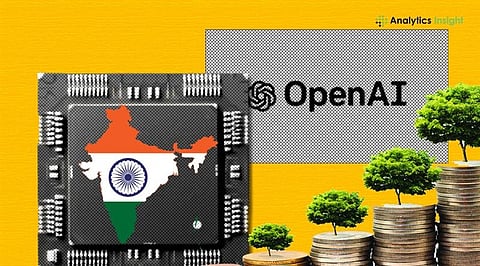
What’s News Today: India is all set to launch the second phase of the Semiconductor Mission by spending Rs 1 lakh crore in creating capabilities for designing, manufacturing, and conducting research and development of chips in the country in order to decrease dependence on imports and boost production within the nation. However, OpenAI is setting up new infrastructure in London as part of its growing AI network, despite the continued problem of high energy prices in the UK.
Fast-Track Insights: The discourse about AI governance around the world continues to gain momentum as policy-makers grapple with balancing technological innovation and ensuring the proper controls that will prevent abuse, discrimination, and misinformation. Moreover, AI plays an increasing role in global supply chains via predictive analytics and automation. In other news, Indian ship Sanmar Herald was fired at while sailing off the Strait of Hormuz.
India will launch Semiconductor Mission 2.0 with an investment of Rs 1-1.2 lakh crore to develop semiconductor and associated technologies. The new approach to this project requires different methods from the previous one because it focuses on research and development, as well as on intellectual property creation and advanced semiconductor manufacturing, including 3nm technology. The main goals of the program include achieving 75 percent of production capabilities through domestic sources while enhancing international market competitiveness. Read more…
The plans to expand OpenAI operations to London align with the Stargate project's goals, but they may run into a stumbling block due to high electricity costs in the UK. Artificial intelligence requires substantial amounts of power to keep data centers running properly. Read More…
Worldwide, people started to worry about the threats that rapid AI development creates. The technology needs to be controlled because its uncontrolled use results in two main problems: bias and misinformation. Governments are currently working on regulations that will protect both public safety and the ethical development of AI technology. Read More…
AI can disrupt supply chain operations by adopting advanced technologies such as predictive analytics, demand forecasting, and automated procedures. Companies use AI to reduce costs, improve inventory management, and build resilience into their supply chains against potential disruptions. Real-time information enables companies to act swiftly, whereas machine learning enhances efficiency in logistics activities. Read More…
The Indian ship known as the Sanmar Herald was recently attacked close to the Strait of Hormuz. Investigations into the attack have revealed connections to broader geopolitical and cryptocurrency or financial risks. Read More…
