.png)

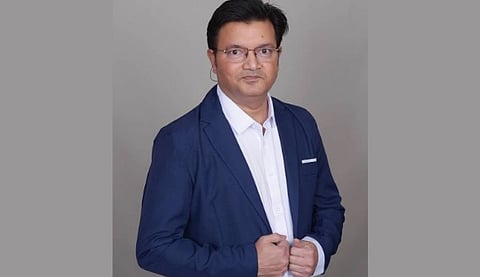
COVID forced restaurants to operate like health sites. Teams still had to move fast, but safety moved to the center of every shift. Guidance changed often. Fear showed up in break rooms and group texts. A policy memo did not solve that. Ranjit Champawat approached the problem like an epidemiology exercise that also had to function as daily operations.
In his workplace safety leadership role, he oversees compliance programs across restaurant locations in multiple areas. He also earned an MPH at Monroe College with a focus in epidemiology and biostatistics.
“Safety has to be usable,” Champawat says. “If people cannot follow it on a busy shift, it is not safety.”
Public health advisories moved quickly during the pandemic. A process that worked one week could be outdated the next. Champawat led COVID response efforts that covered exposure rules, reporting steps with health authorities, and staff education on protective practices.
“People do not need panic from leadership,” he says. “They need a clear plan they can repeat.”
He built a simple expectation. Each site needed the same core steps, even if the staffing mix changed. He focused on what workers needed to know first, what supervisors needed to document, and what leaders needed to escalate.
“Consistency keeps small misses from turning into a bigger spread,” he says.
An exposure can trigger rumors and confusion. It can also trigger defensible action. Champawat treated each case like a workflow. Identify the event. Confirm the facts. Notify the right parties. Track the response. Close the loop.
“One missing step can multiply the problem,” he says.
He helped standardize testing steps and reporting channels and reinforced follow-through through repeated training. He also emphasized calm communication so staff heard next steps instead of noise.
“Clarity lowers stress,” he says. “Lower stress improves compliance.”
Champawat’s role includes risk reviews, staff instruction, and compliance work tied to OSHA rules and local public health guidance. He describes the work as practical. It is about habits and checks, not slogans.
“A rule on paper does not protect anyone,” he says. “A habit does.”
He built routines that made safety visible. Supervisors knew what to watch. Teams knew what to do. Leaders knew what to measure.
Pandemic work produces questions later. Who knew what. When did it happen. What was done. Champawat brought strong record discipline to that environment. He has worked with EMR tools, including Allscripts and eClinicalWorks, and he carried that attention to detail into safety reporting.
“Records keep the story straight,” he says. “They also help you improve the system.”
Champawat has created and delivered health education in New York for communities with different cultures and languages. He learned to avoid lectures and focus on practical choices people can act on.
“Health messages fail when they sound like blame,” he says. “They land when they sound like support.”
That experience translated into workplace training. Staff came with different comfort levels and different questions. He built a shared baseline that reduced uncertainty and improved follow through.
“Training should make work easier,” he says. “It should not add confusion.”
Champawat has more than ten years of experience spanning public health, clinical work, and safety leadership in Australia and the United States. He began in Australia in direct care, supporting older adults and medically complex residents in long term settings. He later moved through nursing education and into public health.
“Care teaches attention,” he says. “Public health teaches patterns.”
That mix helps him translate between frontline realities and leadership decisions. He contributes through protocols, training systems, and risk updates that are grounded in what sites can actually execute.
“Leadership needs plans that hold,” he says. “They do not need extra noise.”
Champawat is expanding toward research-focused work. He is enrolled in a Clinical Research Associate training program and aims to contribute to public health programs that lift community outcomes through evidence-based methods and strong compliance.
“I want work that can stand up to review,” he says. “It needs to be measured and responsible.”
The pandemic exposed a simple point. Workplace safety is not a memo. It is a set of actions people can repeat under pressure. Champawat’s focus has been building those actions into the day, so teams stay protected even when the guidance shifts.
