.png)

Digital health technologies are transforming healthcare delivery, particularly in areas with limited access to quality services. As mHealth, AI, and connected systems evolve, providers are finding new ways to make care more accessible, efficient, and personalized for patients in both urban and rural settings.
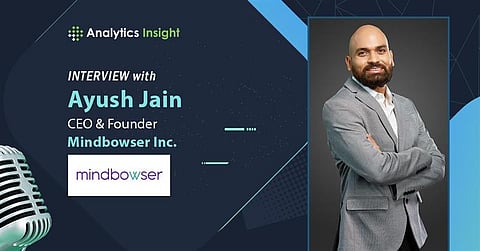
In a recent episode of the Analytics Insight podcast, host Priya Dialani spoke to Ayush Jain, CEO of Mindbowser Inc., about the impact of mHealth on healthcare access. They discussed how AI-powered mobile health solutions and connected platforms are bridging gaps, enhancing chronic disease management, and fostering a patient-centric healthcare ecosystem. Here are the excerpts from the interview:
Mindbowser is a health IT product engineering and consulting company that builds digital healthcare solutions. The company helps healthcare organizations design, develop, and scale modern digital systems while ensuring compliance and integration with existing healthcare infrastructure. Over the years, Mindbowser has delivered more than 100 healthcare projects globally.
The name originated when the founders searched for available domain names online. “Bowser,” inspired by the oil and gas industry, refers to a funnel that blends inputs to create a useful mixture, reflecting the company’s philosophy of combining ideas and technologies to develop effective healthcare solutions.
The company was started soon after college, so most lessons were learned through real-world experience. Today, the role focuses mainly on strategy, understanding industry trends, and listening to customer needs.
The key responsibility is to connect internal teams, technologies, and market insights to ensure the company builds solutions that improve care delivery and reduce administrative burdens.
The promise is very real, especially with the support of artificial intelligence. Earlier mobile health solutions mainly handled tasks such as reminders or basic health tracking.
With AI, mHealth can now provide personalized health support at scale. In the near future, individuals may have personal AI health assistants that combine medical history, lab reports, and daily vitals to provide real-time health guidance.
Digital healthcare must be designed for real-world conditions. Solutions often include offline-first applications, low-latency platforms, and even SMS-based systems to support areas with weak connectivity.
Hybrid models that combine digital tools with community health workers can help maintain strong connections between patients and healthcare systems.
The future lies in intelligent healthcare systems. Instead of simple mobile apps, patients will use AI-enabled health assistants that monitor health continuously and guide them through treatment and prevention.
Hospitals will also benefit from automation that reduces administrative tasks and improves care coordination, creating a more connected and efficient healthcare ecosystem.
Listen to the full discussion on the Analytics Insight Podcast.
