.png)

Artificial intelligence is increasingly taking center stage in the world of economics, governance, and national security. However, as nations scramble to embrace AI, an important issue arises: can India depend upon foreign AI models that the country neither owns nor comprehends
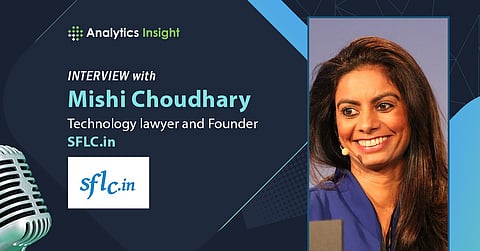
In this episode of the Analytics Insight Podcast, host Priya Dialani speaks with Mishi Choudhary, technology lawyer and founder of SFLC.in, to discuss the increasing need for AI sovereignty, open-source systems, and technological independence. From data governance and cybersecurity to public policy, innovation, and AI aspirations in India, the conversation covered a lot of ground. Here are the excerpts from the interview:
AI sovereignty means a nation's capacity to create, understand, evaluate, and regulate the AI technologies it relies on. It does not mean that the nation will isolate itself from the rest of the world, but that it should be able to retain control of its digital future.
Open-source AI allows government organizations, private enterprises, and researchers to study, change, and enhance AI technologies. The open-source technology is less reliant on a small number of foreign companies and promotes creativity, security, and development of in-house technological skills rather than vendor lock-in.
With the advent of AI in areas such as health care, finance, education, governance, and national security, nations seek better control over their data and infrastructure and to minimize reliance on the few multinational corporations that dominate this industry.
Open-source AI must be promoted in government initiatives in India. The nation needs to focus on cybersecurity, the development of Indian-language-based AI models, the improvement of public procurement policy, and the adoption of accountable AI solutions.
Innovation and accountability must always go hand in hand. Though it is necessary for India to promote innovation in AI, it should also have strict guidelines in place, such as audit transparency, data protection, healthy competition, and regulatory oversight.
Listen to the full podcast here.
