.png)

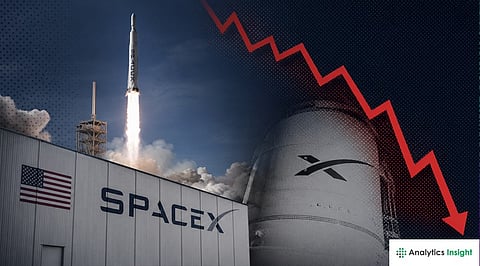
SpaceX shares fell for a third straight session on Monday, dropping 16% to $154.60. The move pushed the stock to its lowest level since its first trading day. The three-day decline reached 23% and erased more than $600 billion in market value. Even after the slide, SpaceX still held a market capitalization above $2 trillion.
Michael O'Rourke, chief market strategist at JonesTrading, said sellers had regained control. He added that buyers who wanted the stock had already entered the market. The company’s first trading days followed its record $75 billion initial public offering. The stock saw sharp swings since only 4.2% of shares were available on day one.
SpaceX said it will sell investment-grade bonds for the first time. Bloomberg reported last week that the company wants to raise at least $20 billion in the first bond offering. The company also announced a multibillion-dollar agreement to provide computing resources to Reflection AI. SpaceX announced on Monday as investors watched its growing AI push.
SpaceX moved into artificial intelligence after it acquired Musk’s xAI in February. That deal drew close attention ahead of possible IPOs from Anthropic and OpenAI. KeyBanc Capital Markets initiated coverage of SpaceX with a sector-weight rating. Bloomberg said that marked the first hold-equivalent view tracked on the stock.
Retail investors drove much of the early trading. Vanda Research said the cohort bought a net $405 million in the first five sessions. Retail buyers also purchased more SpaceX stock last week than they bought across all Magnificent Seven stocks combined. On Monday, they still bought shares, although inflows slowed.
Analysts led by Michael Leshock said SpaceX remains a leader in space launch and related businesses. They also said that much of the long-term value is already reflected in the share price. SpaceX, officially named Space Exploration Technologies Corp., remains the world’s sixth-largest company by market value. Its shares still trade about 15% above the $135 IPO price.
Read More: SpaceX Stock Drops After $60 Billion Cursor Deal as Investors Weigh Further Downside
The company also plans to launch its experimental Starfall Demo mission on Tuesday, June 23, from Cape Canaveral Space Force Station in Florida. The launch window opens at 6:43 a.m. ET, with a backup window set for June 24.
SpaceX said the mission will test orbital survival, controlled de-orbiting, atmospheric reentry, and ocean splashdown recovery. The rocket will use a Falcon 9 first-stage booster on its 29th flight, and the booster should land on the droneship A Shortfall of Gravitas.
SpaceX plans to start a live webcast about 10 minutes before liftoff on its website and X account. The Starfall capsule aims to return payloads from low Earth orbit and support uncrewed cargo delivery between Earth and space.
SpaceX shares have dropped sharply as investors react to heavy selling, a planned bond sale, and growing AI spending. Even with the pullback, the company remains highly valuable and active in launch development. The key takeaway is that SpaceX is still a major long-term player, but volatility remains high.
