.png)

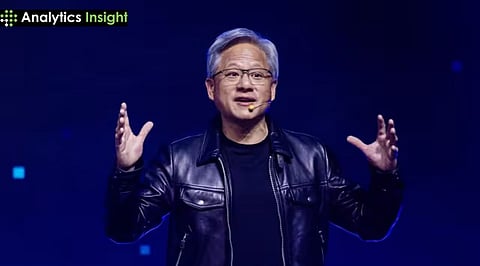
NVIDIA Corp. Chief Executive Officer Jensen Huang said the United States should keep research talks open with China as artificial intelligence becomes more powerful and safety concerns increase.
Speaking on the Dwarkesh Podcast on April 15, Huang said Anthropic PBC’s Mythos model shows why the world’s two largest economies should discuss how AI should and should not be used. His remarks came as NVIDIA continued to seek wider access to China while US export controls remained in place.
Huang said the United States should aim to lead in artificial intelligence, yet keep direct contact open with Chinese researchers. He described research dialogue as the safer path as more advanced systems move into coding, cyber work, and security-related tasks.
He said, “We want the United States to win, but I think having a dialogue and having a research dialogue is probably the safest thing to do.” He also said both sides should try to agree on limits for the technology. In his words, “It is essential that we try to both agree on what not to use the AI for.”
Huang added that current US-China tensions have reduced contact in an area where coordination matters. He said this gap has grown because China is increasingly treated only as an adversary in trade and security matters. He also said, “It is essential that our AI researchers and their AI researchers are actually talking.”
Over the past year, Huang has asked the Trump administration to ease some export restrictions on NVIDIA chip sales to China. Those restrictions were introduced on national security grounds and limited access to the company’s most advanced AI processors. In December, the administration allowed NVIDIA to ship its less advanced H200 chips to Chinese customers.
That position has put NVIDIA at odds with Anthropic on China policy. Anthropic’s chief executive has supported tighter export controls and said in January that the H200 decision was a “mistake.” Even so, the two companies remain closely linked through supply and investment ties.
NVIDIA is also investing $10 billion in Anthropic, although Huang said last month that this would likely be the company’s last investment in the AI firm. Under a November agreement that also involved Microsoft Corp., Anthropic committed to take as much as one gigawatt of computing capacity from NVIDIA. Therefore, the policy split has not changed the business relationship between the companies.
When asked whether US export controls had slowed China’s AI progress, Huang said export limits alone would not stop Chinese AI development. On the podcast, he said China makes about 60% of the world’s mainstream chips, has about 50% of global AI researchers, and includes many leading computer scientists.
He also said the amount of compute used to train Anthropic’s Mythos model is “fairly mundane” and “abundantly available in China.” Huang said China has enough facilities ready for more use. He stated, “They have so much energy. They have data centres that are sitting completely empty, fully powered.”
He added that Chinese developers could connect more processors, even if they use older manufacturing technology. Huang said they could do this “even if they’re seven-nanometre.” He also said China’s chip-building capacity is among the largest in the world, reinforcing his view that the country still has the resources to support large AI systems.
His remarks came as lawmakers proposed the MATCH Act to tighten chip equipment export controls on China and push suppliers in the Netherlands and Japan to align with US rules.
Earlier, the Department of Energy also launched the Genesis Mission as a national effort to build an integrated AI platform for scientific discovery, energy goals, and national security.
Also Read: Anthropic Hits $30 Billion Revenue, Edges Past OpenAI
