.png)

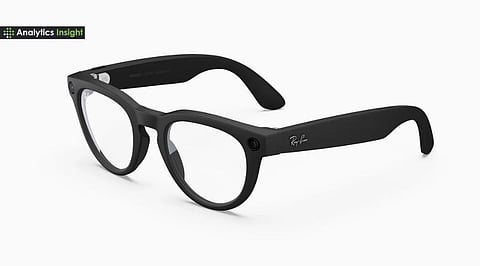
Meta is preparing to bring its new Muse Spark model to Ray-Ban and Oakley smart glasses, giving the devices stronger image understanding and broader AI features. The update is also set to reach Facebook, Messenger, and WhatsApp in the coming weeks. Meta says the model is built to handle text, images, and other inputs together, which could improve how its glasses identify objects and answer visual questions.
Also Read: Meta’s $499 Ray-Ban Smart Glasses Bring AI to Prescription Wearers
Meta introduced Muse Spark as the first model from its Superintelligence Labs. The company describes it as a “natively multimodal” system that can process different types of input in one model. In practical use, Meta says this should help its smart glasses better understand what users are looking at and respond with more accurate answers.
The company said Muse Spark will roll out to Ray-Ban Meta glasses and Oakley smart glasses in the United States in the coming weeks. Meta also plans to add the model to Facebook, Messenger, and WhatsApp. The broader rollout shows that the company is tying its wearable devices more closely to its AI products across its apps and services.
Meta says the Muse Spark upgrade is meant to improve everyday visual tasks on its glasses. The company says users should see better object recognition, more reliable responses to image-based questions, and stronger performance when the assistant scans products or compares items. Earlier versions of Meta’s glasses have faced limits in computer vision, with results that could vary from one request to another.
The company is also adding more health-related tools. On current Ray-Ban and Oakley models, Meta is rolling out nutrition tracking that allows users to log food with a photo or voice request. The system can extract nutrition details and store them in the Meta AI app. Meta says the feature can then support more tailored prompts, including questions such as “What should I eat to increase my energy?” The nutrition feature is being introduced for users aged 18 and over in the United States.
Meta also said Muse Spark performs well in areas such as reasoning, health tasks, and agentic functions. The company shared benchmark results that place the model close to, or in some cases ahead of, competing systems from OpenAI and Google in selected categories. Meta presented the model as part of a broader push to improve the quality of its AI tools.
Also Read: Oakley-Meta Vanguard AI Glasses Launched in India: What Makes Them Different
The new rollout comes as Meta increases its focus on glasses and AI after pulling back in some VR efforts. The company is positioning its glasses as a more advanced entry point for everyday AI use. Faster responses and stronger visual understanding could make the devices more useful for hands-free tasks in daily settings.
At the same time, the update does not remove ongoing privacy concerns tied to smart glasses. The same cameras and AI systems used for food logging, product scanning, and scene recognition also raise questions about data handling and bystander privacy.
Meta has said Muse Spark includes safety controls, including refusals for requests related to chemical and biological weapons. Still, the company has not resolved the broader debate around how wearable cameras and AI tools collect and process information in public and private spaces.
