.png)

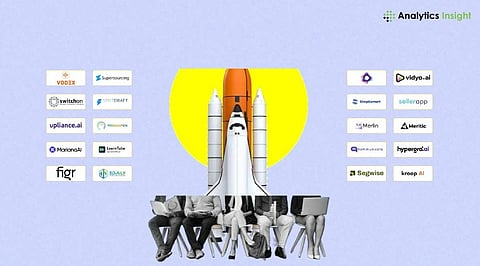
Google has picked 20 homegrown startups for the 2026 cohort of its Google for Startups Accelerator: India program. These companies have been selected out of roughly 2,500 applications. All 20 are AI-first companies that recently completed an in-person bootcamp at Google's Bengaluru campus, with the tech giant now set to work closely with each startup to refine their products, optimize their architecture, and prepare for scaled deployment.
This year's selections lean heavily toward startups building AI infrastructure and vertical-specific tools rather than consumer apps. Several are tackling embedded and industrial AI: CraftifAI and H2Loop AI both automate embedded software and firmware development for robotics, automotive, and semiconductor hardware, while Jidoka applies computer vision to manufacturing quality inspection.
Others focus on enterprise workflows: Binocs automates financial due diligence, OnFinanceAI builds compliance and risk tools for banks and insurers, and TartanHQ handles identity verification and onboarding through AI-powered APIs.
Healthtech and climate tech also feature prominently, with Aikenist building AI-accelerated radiology tools, FlexifyMe offering AI-guided chronic pain therapy, and Aurassure and Fitsol tackling environmental monitoring and carbon emissions tracking respectively.
A few startups in the cohort have already built visible track records. Adalat AI, incubated at MIT, applies speech transcription and workflow automation to reduce courtroom case backlogs. Dodo Payments, backed by Antler and 100Unicorns, is building global payment infrastructure for SaaS and AI companies across more than 150 countries.
Pipeshift, which came out of Y Combinator's Summer 2024 batch, focuses on low-latency inference infrastructure for open-source AI models, while Soundverse AI, featured on Shark Tank India, offers a generative AI music platform for prompt-based composition.
Several others in the cohort, including CraftifAI, H2Loop AI, and Binocs, have already raised institutional funding from investors such as Accel, Ankur Capital, and IvyCap Ventures before joining the program.
Google India vice president and country manager Preeti Lobana said the program is designed to equip founders with Google's full AI stack and deep technical mentorship, framing it as a way to accelerate their path to enterprise scale while strengthening the technical capabilities that support the broader India AI Mission.
Google first launched the accelerator in April 2024, and its 2025 cohort included companies such as Apptile, Knit, MyWonder, Phot.AI, and SparkyAI.
Also Read: Why India's Startup Ecosystem is Booming: Key Factors Driving Entrepreneurial Growth
Beyond mentorship, Google's accelerator model typically emphasizes technical depth over generic startup coaching, helping founders stress-test their architecture and prepare for scaled, enterprise-grade deployment rather than simply polishing a pitch deck.
With this cohort skewing heavily toward infrastructure-level AI tools serving manufacturing, financial services, and healthcare, the selections suggest Google is positioning the program as a pipeline for startups building the underlying technical layers of India's AI economy, rather than consumer-facing AI products alone.
