.png)

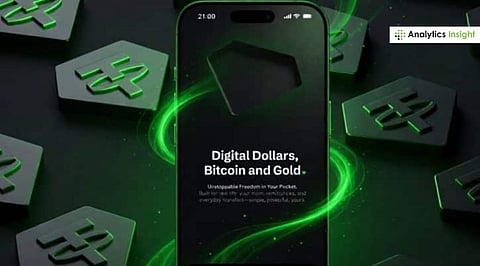
Tether has launched a self-custodial wallet called tether.wallet, adding a direct consumer product to a business long known for stablecoin issuance and payment infrastructure. The app supports USDT, Bitcoin , XAUT, and USAT, while also introducing features aimed at making blockchain payments easier for everyday users.
Tether said the new wallet is designed to let users hold and transfer digital assets while keeping control of their private keys. The company stated that all transactions are signed locally on the user’s device, rather than through a central custodian. It added that private keys and recovery phrases remain under user control.
The launch places Tether closer to the consumer side of crypto payments. Until now, most USDT activity has taken place through exchanges, trading platforms, and other third-party services. With tether.wallet, the company is now offering its own branded app for direct asset management and payments.
Tether said the wallet supports a limited set of assets because it is focused on digital dollars, Bitcoin , and tokenized gold. At launch, the app supports USDT and XAUT on Ethereum, Polygon, Plasma, and Arbitrum. USAT is initially available on Ethereum, while Bitcoin can be used both on-chain and through the Lightning Network.
The company also linked the wallet to its broader effort to expand blockchain-based payments. Tether CEO Paolo Ardoino said, “With more than 570 million people already using Tether’s technology, the next step is making that digital infrastructure more accessible and usable for end users.”
One of the main features is the use of human-readable identifiers instead of long wallet addresses. Tether said users can send and receive assets through “@tether.me” usernames, which are meant to reduce mistakes and simplify transfers. This approach is aimed at making crypto payments easier for people who are not familiar with standard wallet strings.
The wallet also allows users to pay network fees directly in the asset being transferred. As a result, users do not need to keep separate gas tokens for supported networks. Tether said this setup is meant to remove another barrier that often makes crypto payments harder for new users.
In addition, the wallet includes onboarding tools and recovery options meant to lower the risk of losing access. Tether also said the app offers a cloud backup option. However, it remains unclear whether that backup can be disabled, and that point has drawn attention because some users question whether “safely backed to cloud” fits cleanly with a self-custodial design.
That question has become one of the main talking points around the launch. While Tether described the product as fully self-custodial, some market participants are watching closely to see how the backup model works in practice and whether it creates any trade-offs around control and security.
The new wallet builds on Tether’s open-source Wallet Development Kit, which the company introduced in late 2024. That toolkit was designed to help developers add non-custodial wallets for USDT and Bitcoin into apps, websites, and devices. Tether has also linked that work to future payment systems for both people and software agents.
The company has said autonomous AI agents will need self-custodial wallets that can handle frequent, small transactions. Tether said tether.wallet is built to support both human users and machine-based payment activity, showing that the product is part of a wider payments strategy rather than a standalone launch.
At the same time, the wallet reflects a wider shift in the stablecoin market. Issuers are no longer focusing only on backend settlement and liquidity. They are also moving into user-facing products such as wallets and payment apps as adoption grows across regions and use cases.
Also Read: Why XRP Might Surge in April 2026
