.png)

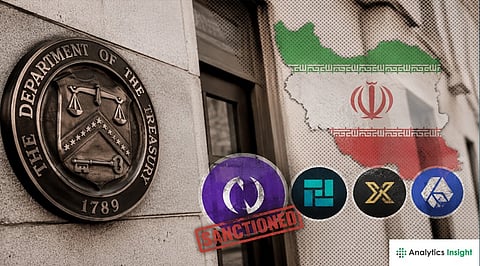
The United States Treasury Department sanctioned Nobitex, Iran’s largest cryptocurrency exchange, after OFAC said the platform processed more than half of Iran’s digital asset inflows in 2025. The action also targets three other Iran-based crypto exchanges and several Nobitex executives linked to the company’s leadership.
The sanctions form part of the Trump administration’s ‘Economic Fury’ campaign against Iran’s financial networks. Washington says the campaign aims to disrupt channels that support sanctioned entities and Iranian government-linked activity.
According to OFAC, Nobitex played a central role in Iran’s digital asset market during 2025. The agency said the exchange processed more than 50% of Iran’s crypto inflows that year.
U.S. authorities also alleged that Nobitex helped facilitate sanctions evasion, terrorist financing, and transactions connected to the Islamic Revolutionary Guard Corps. The IRGC remains under heavy U.S. sanctions.
The Treasury Department also designated several people connected to Nobitex. They include chairman and co-founder Amir Hossein Rad and current CEO Seyed Ali Khoee.
The sanctions also name co-founders Ali and Mohammad Kharrazi. The Kharrazi brothers belong to one of Iran’s most influential political families, according to reports.
A recent Reuters investigation reported that the brothers are related to Iran’s supreme leadership. It also alleged that hundreds of millions of dollars tied to sanctioned Iranian entities moved through Nobitex. In addition, the Treasury sanctioned three other Iranian cryptocurrency exchanges. The platforms are Wallex, Bitpin, and Ramzinex.
U.S. officials claimed those platforms also handled transactions involving the IRGC and other sanctioned organizations. The move expands Washington’s focus beyond Nobitex and into Iran’s wider crypto trading sector.
Treasury Secretary Scott Bessent said Iran adopted digital asset technologies despite worsening economic conditions. He said Tehran used crypto to bypass international restrictions and move wealth beyond sanctions.
Bessent also said at the Reagan National Economic Forum this month, “We have seized about a billion dollars of their crypto.” His comment reflected Washington’s broader claim that Iran relies on digital assets to evade pressure.
At the same time, the Trump administration has introduced other measures to increase economic pressure on Iran. It has imposed secondary sanctions on countries doing business with Iranian-controlled people, firms, and ships.
Those measures have reached allies such as the United Arab Emirates and competitors such as China. U.S. officials have also warned banks about handling Iranian money.
Read More: Tether Faces Court Push to Release $344 Million in Frozen USDT
Last week, the U.S. imposed sanctions on Iran’s newly created Persian Gulf Strait Authority. Treasury called the agency a ‘scheme to extort international shipping.’
Meanwhile, the U.S. military has stopped merchant vessels trying to break through a U.S.-led blockade of Iranian ports. The blockade began on April 17 after Iran effectively closed the Strait of Hormuz.
The Middle East war began with U.S. and Israeli strikes on February 28. Since then, Washington has paired military pressure with financial sanctions against Iran’s crypto and shipping networks.
OFAC’s sanctions against Nobitex mark a major step in Washington’s campaign against Iran’s crypto networks. The action targets the exchange, its executives, and three other platforms over alleged sanctions evasion, IRGC-linked transactions, and digital asset flows tied to Iran’s financial system.
