.png)

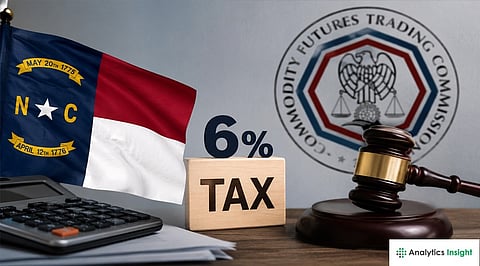
North Carolina has become the first U.S. state to recognize federal oversight of prediction markets in state law. Allowing platforms such as Kalshi and Polymarket to operate legally if they register with the Commodity Futures Trading Commission (CFTC). The change appears in Senate Bill 257, known as Session Law 2026-41, which forms part of the state's roughly $34 billion budget.
The measure also introduces a 6% tax on net revenue from transactions involving North Carolina residents beginning January 1, 2027, while removing separate state licensing requirements for CFTC-registered operators. The move arrives as prediction market platforms continue to defend their operations against legal challenges in several states.
The new law relies on the Commodity Exchange Act, which grants the CFTC exclusive federal regulatory authority over prediction markets. As a result, CFTC-registered operators meet North Carolina's regulatory requirements without seeking additional state licenses or complying with separate gaming rules.
Instead, the legislation requires prediction market operators to pay a 6% tax on net revenue earned from North Carolina users starting in 2027. Meanwhile, the same budget raises the sports betting tax to 23% of gross betting revenue from the previous 18%.
Licensed sportsbooks also continue to pay a $1 million licensing fee to operate in the state. Prediction market platforms do not face that licensing cost under the new framework.
Critics have questioned the difference between the tax rates. Mick Mulvaney, who leads Gambling Is Not Investing and previously served as acting White House chief of staff, told Axios that prediction markets operate as unlicensed sports gambling applications. He also argued that the policy could encourage operators to bypass state gambling rules while allowing minors to participate in sports-related markets.
Republican leaders described the measure as recognition of existing market activity. House Speaker Destin Hall said prediction market activity already occurs in North Carolina and that lawmakers decided it was time to address it.
Senate leader Phil Berger also commented on the industry's future but stopped short of predicting whether prediction markets could eventually replace traditional sports betting. Some Democrats expressed concerns despite supporting the overall budget. Senator Julie Mayfield warned that sports betting revenue could decline if operators shift toward prediction markets.
According to WRAL, North Carolina has collected more than $287 million from sports betting since legalization in March 2024. The report also noted that the University of North Carolina and North Carolina State University may each receive up to $5.8 million annually to support athletic programs.
Gaming analyst Dustin Gouker wrote in his Next Event Horizon newsletter that North Carolina became the first state to allow CFTC-approved prediction markets without requiring separate state licensing. He described the law as affirming federal oversight while applying a relatively low tax rate and predicted that other states could consider similar legislation.
Other states have adopted different approaches. Kentucky introduced a 14.25% excise tax in April, prompting legal action from the CFTC. Illinois later approved taxes on betting transactions while maintaining state licensing requirements, after which Kalshi filed a lawsuit.
Read More: South Carolina Passes Crypto Law for Payments, Mining, and CBDC Ban
Court decisions have also varied. Kalshi secured preliminary injunctions in New Jersey and Tennessee, which the Third Circuit upheld in April. However, the company lost similar cases in Maryland, Nevada, Arizona, Ohio, and recently in New York, where Judge Analisa Torres ruled that Kalshi had not demonstrated a likely success under federal preemption law.
Kalshi has appealed that decision to the Second Circuit Court of Appeals. Sports law attorney Daniel Wallach said the ruling could affect the company's remaining legal disputes. Meanwhile, the CFTC has challenged nine states over event contracts, and some legal observers believe the issue could ultimately reach the U.S. Supreme Court.
North Carolina Attorney General Jeff Jackson also signed an April letter opposing federal regulation, according to Axios. Even so, the state's budget focuses on taxation while broader legal questions continue in federal courts. A Polymarket spokesperson told Axios that the company follows CFTC rules and expects state regulation efforts to face significant federal preemption challenges.
North Carolina has become the first state to recognize federal oversight of prediction markets through state law. The measure allows CFTC-registered platforms to operate without separate licenses while introducing a 6% tax. Meanwhile, legal disputes over federal authority and state regulation continue across several jurisdictions.
