.png)

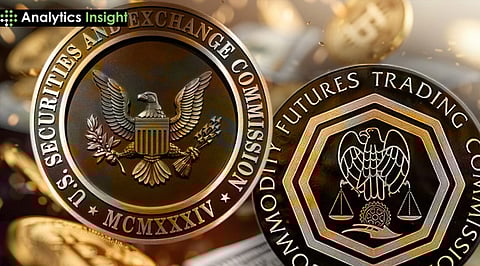
The Securities and Exchange Commission and the Commodity Futures Trading Commission signed a coordination pact to align oversight of financial markets and digital assets. The agreement came through a memorandum of understanding that outlines how both agencies will coordinate rulemaking, supervision, and enforcement across overlapping jurisdictions.
Regulators said the pact responds to years of fragmented oversight that created regulatory conflicts and duplicated requirements for financial firms. Officials also launched a “Joint Harmonization Initiative” that targets product definitions, clearing rules, reporting standards, and oversight of trading venues.
The initiative seeks to create a unified regulatory framework for crypto assets and emerging technologies while improving supervision across the broader financial market structure.
The agreement establishes cooperation between the SEC and CFTC across areas where both agencies share authority. The memorandum sets guidelines for coordinated policymaking, joint interpretations, and collaborative enforcement actions in financial markets.
SEC Chairman Paul Atkins said regulatory conflicts between the agencies created barriers for innovation and forced market participants to move activity to other jurisdictions. He noted that different registrations and inconsistent regulations complicated compliance for companies operating across securities and commodities markets.
Meanwhile, CFTC Chairman Michael Selig said the agencies will work toward harmonizing regulatory frameworks that provide comprehensive oversight across markets.
Officials said this alignment aims to create clearer rules for firms that operate across spot markets, derivatives, and tokenized assets. At the same time, regulators intend to modernize frameworks for clearing, margin, and collateral requirements.
These workstreams will also address reporting obligations for intermediaries and funds operating in digital asset markets.
Part of the initiative focuses on building a regulatory framework for crypto assets and other emerging technologies. Regulators said this effort will help clarify how digital assets fall under securities or commodities oversight.
Officials added that joint rulemaking could establish clearer product classifications for tokens and digital asset derivatives. The agencies also expect coordination to reduce double enforcement risks and eliminate duplicative rules across regulatory regimes.
Furthermore, regulators plan to develop standards that support tokenization and other financial innovations. The SEC recently submitted guidance to the White House explaining how securities laws apply to crypto assets.
Meanwhile, the CFTC is preparing a regulatory framework for crypto perpetual futures contracts. The agency also continues to assert federal jurisdiction over prediction markets, including platforms such as Kalshi and Polymarket.
Industry participants said the agreement could reduce long-standing regulatory uncertainty across digital asset markets. Steven Wu, chief operating officer at tokenization engine Clearpool, said unclear jurisdiction previously created barriers for firms developing financial products.
According to Wu, companies often needed approvals from both regulators, which resulted in duplicated processes and regulatory uncertainty. He said closer alignment between the agencies could move the system toward substituted compliance.
Under that structure, meeting requirements from one regulator could satisfy obligations under both agencies. Wu added that streamlined oversight may allow compliant products to reach the market without extensive regulatory friction.
For institutions, Samar Sen, head of international markets at digital asset firm Talos, said the pact may clarify how crypto assets fall under regulatory frameworks. Still, critics warn that overlapping oversight could continue and increase compliance costs for crypto companies.
The existing clashes between banks and cryptocurrency companies have already resulted in delays for all legislative initiatives, including the CLARITY Act. The market needs complete regulatory frameworks for the new products, perpetual swaps, event contracts, and decentralized finance protocols, which are currently unavailable.
The market needs complete regulatory frameworks because current conditions expose market participants to both regulatory gaps and potential enforcement actions. The SEC and CFTC have increased their coordination efforts, yet one question remains about digital asset regulation: will unified oversight finally eliminate the existing regulatory divide?
Also Read: US SEC and CFTC Align to Shape Coordinated Crypto Rules Ahead of 2026
The SEC and CFTC signed a coordination pact to align crypto market oversight, clarify digital asset rules, and reduce duplicate compliance burdens. The move may give firms a clearer path in US markets as both agencies work toward more consistent regulation.
