.png)

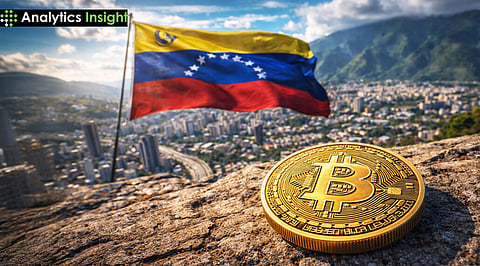
Venezuela’s latest political developments have prompted a new round of market repricing, with investors drawing a sharper line between state-influenced assets such as oil and borderless networks such as Bitcoin.
A recent 21Shares research note argues that the incident has reinforced Bitcoin’s strategic relevance as a ‘neutral’ store of value in an era of sanctions, reserve seizures, and currency stress.
Oil markets reacted through the lens of forward supply expectations rather than immediate production changes. Traders focused on whether new authorities in Caracas could restore exports over time and how that could alter global balances. Oil prices slipped in early January even as Venezuela faced upheaval, as markets weighed ample global supply against longer-term Venezuelan export potential.
In the United States, the repricing is also linked to inflation sensitivity. Energy affects headline inflation and transport costs, and lower expected oil prices can reduce inflation volatility. Recent data showed Brent near the mid-$60s and WTI near the high-$50s in January trading, as investors also tracked unrest elsewhere and competing supply risks.
21Shares places Bitcoin’s reaction in contrast to oil’s policy-driven supply narrative. The firm says investors increasingly view Bitcoin as a neutral asset. Many holders use it to protect against currency weakness, capital controls, and geopolitical stress. This view puts Bitcoin outside state-run frameworks such as oil supply management or exchange-rate policy.
The report also points to high crypto usage in economies that face inflation shocks or payment frictions, where households and businesses often rely on stablecoins for day-to-day value protection. As one example of crypto’s practical role in Venezuela, earlier US-linked efforts used USDC rails with Airtm to move funds outside Maduro-era controls, according to Circle’s account of the program.
Markets have also taken note of unverified reports suggesting Venezuela may possess a substantial Bitcoin stash. Recent reports have highlighted estimates as high as 600,000 BTC, though no public audit has confirmed ownership, custody, or accessibility. The 21Shares note highlights the market impact of the narrative itself, not only the underlying facts.
The claims have fed broader debate about sovereign Bitcoin holdings and the concept of a strategic Bitcoin reserve. Analysts say that any verified transfer or seizure of Bitcoin tied to Venezuela would raise complex legal, diplomatic, and operational issues.
This development would also widen debate about Bitcoin’s role as a potential reserve asset. The debate has also increased focus on reserve security and the growing influence of cross-border power dynamics in market risk assessments.
Also Read: US Stock Market Today: S&P 500 and NASDAQ Climb While Oil and Gold Gain on Venezuela Developments
