.png)

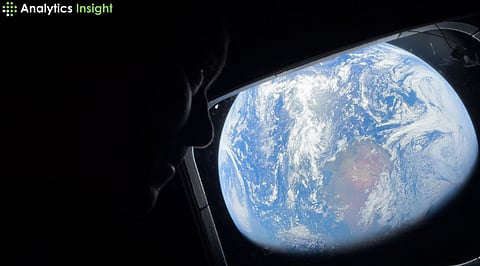
In a first for human spaceflight, NASA has released images from its Artemis II mission captured on an iPhone 17 Pro Max. The photographs show astronauts Reid Wiseman and Christina Koch inside the Orion spacecraft on April 2, 2026, while Earth appears bright in the background.
The development shows a slight shift in space mission documentation methods by introducing human perspectives into scientific environments.
NASA followed a strict four-step process to ensure safety before permitting astronauts to bring their personal smartphones aboard a crewed lunar mission.
The engineers considered threats like unstable batteries, overheating, and shattered glass. All threats underwent assessment, mitigation plans were developed, and finally, the hazards were verified.
Microgravity makes simple tasks difficult because heat dissipation is poor, and floating objects can endanger astronauts and spacecraft. In this context, the allowance of commercial gadgets indicates a technological leap.
Also Read: From Earth to Orbit: Artemis II Astronauts Battle Microsoft Outlook Failure
There's no way an iPhone could replace industrial cameras. For NASA, the Nikon D5, the Nikon Z9, and the GoPro HERO4 Black continue to have their place.
Cell phones fulfill an entirely different purpose. They are there to capture spontaneous photographs that show who the astronauts really are.
Also, the phone's robustness played a role in its approval. To some extent, the ceramic shield played its part.
The Artemis II mission seeks to send people back into orbit around the Moon. This mission is now also a point where common technology becomes part of one of the most inhospitable places in our solar system.
In addition to being a scientific triumph, this is also a new story that brings space travel a bit closer to home.
