.png)

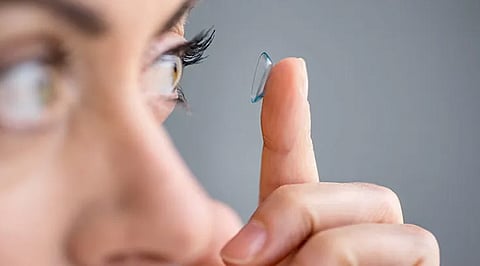
In the beginning, there were eyeglasses … then came the contact lenses. But how can you be 100% sure that between the two options, the one that is truly best for you? Leaning towards glasses – we all know – is a bit like the natural solution, the one we have always been used to, the one we almost take for granted.
Or would we be better off buying a much smaller, lighter, and more functional pair of contact lenses (which, in fact, are being chosen by more and more people every day)?
I'll tell you right away: there is no perfect answer and, above all, stay away from an optician who doesn't spend at least 10 minutes of his time to better understand who you are, what you do, where you work, what hobbies you have, etc … To find contact lenses that are right for you, you can consult and buy them online. For example, you can shop for contact lenses at designer optics.
Thanks to the development of new technologies, a great variety of contact lenses are now available, both for ophthalmic use (vision correction) and for aesthetic use. Eyeglass wearers can now switch to contact lenses easily and safely; in fact, the old objections that some reserved to the use of contact lenses are no longer valid today.
For example, a myth to dispel is that contact lenses cost more. In fact, they are often less expensive than many branded frame glasses on the market today. Provided, of course, that it is a suitable solution for you and that you do not cause any health problems!
This is why, in order to choose correctly between glasses and contact lenses, you need to know some fundamental aspects.
Optical effects and benefits. The optical compensation of the main visual disturbances (myopia, farsightedness, astigmatism) can take place using glasses equipped with ophthalmic lenses or using contact lenses; both modes allow, both at a distance and up close, the clear vision of objects.
However, there are some significant differences in the optical-refractive order that lead to the use of contact lenses, if there are no other "negative factors" that you find in the following points:
Place of work/use. In movement and contact sports, as well as in "extreme" work (especially in humid environments or where glasses are not compatible with the use of particular tools, such as special helmets), contact lenses offer undoubted functional advantages over glasses.
Furthermore, contact lenses do not fog up when passing from cold areas to heated rooms and do not create problems related to sweating of the forehead (typical in fatigue sports or on extremely hot days).
Thanks to the wider field of view and being in contact with the cornea, they minimize the penalizing "optical aberrations from oblique incidence of light" that are present when using glasses; for this reason, contact lenses, therefore, provide better visual quality, which can be particularly useful when driving, especially at night, at dusk, in fog or rain.
On the contrary, contact lenses are unsuitable for living or working conditions in the presence of dust, chemical vapors, air turbulence, and high altitudes, which make it essential to use "traditional" or even special glasses.
Previous pathologies or particular situations. In addition to ocular contraindications (dry eye, chronic blepharitis, pterygium, chalazion) and general contraindications (skin diseases, diabetes, hyperthyroidism), the use of contact lenses is unsuitable if you systematically take certain types of drugs.
Join our WhatsApp Channel to get the latest news, exclusives and videos on WhatsApp
_____________
Disclaimer: Analytics Insight does not provide financial advice or guidance on cryptocurrencies and stocks. Also note that the cryptocurrencies mentioned/listed on the website could potentially be risky, i.e. designed to induce you to invest financial resources that may be lost forever and not be recoverable once investments are made. This article is provided for informational purposes and does not constitute investment advice. You are responsible for conducting your own research (DYOR) before making any investments. Read more about the financial risks involved here.
