.png)

The email arrives at 8:14 on a Tuesday morning. A broker in Dallas has sent four attachments to a managing general agent in Chicago: an ACORD application, a loss run, a schedule of values, and a supplemental questionnaire. In a typical operation, an underwriter will get to it sometime today, maybe tomorrow. She will open each attachment, manually extract the data, type it into her system, realize the loss run is two years short of what her carrier requires, draft a follow-up, and wait. The file might be quote-ready by the end of the week.
In an operation running Aurora, the AI system built by Ola Kolade through his company Underflow Inc., the same file is read, structured, gap-checked, and followed up on within minutes. By late morning, the submission is complete, enriched with external data, and sitting in the underwriter’s queue with a preliminary risk assessment attached. No human touched it.
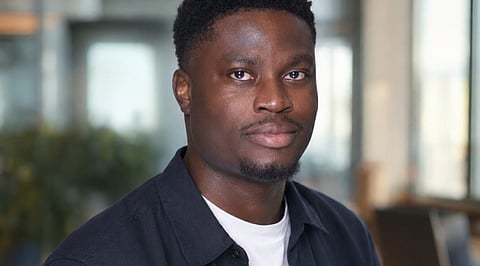
Kolade, 28, did not come up through insurance. He is a Canadian citizen who studied economics at McGill University, spent two years in investment banking at National Bank Financial in Toronto working on more than ten transactions across the technology sector, and then moved to San Francisco to lead strategic finance for a $400 million division of Faire, one of North America’s largest wholesale marketplaces. It was at Faire, observing the risk management processes of thousands of independent businesses, that commercial insurance first caught his attention.
“I came from an environment where machine learning was optimizing supply chains in real time,” Kolade said. “And then I looked at how an insurance submission moves through the system, and it was email attachments and manual re-keying. The technology gap was enormous.”
The gap is well documented. According to Capgemini's 2024 World Property and Casualty Insurance Report, over 40 percent of commercial underwriters' time goes to administrative tasks. Accenture's research puts it higher, finding the average underwriter spends 70 percent of their time on non-underwriting activities. The U.S. property and casualty insurance industry generates more than $930 billion in net premiums written annually, with commercial lines representing the entry point that begins with a submission.
Previous technology solutions, from document management platforms to OCR tools to rules-based automation, have not moved the needle. Kolade's argument, which he laid out in a December 2025 article in Rough Notes, one of the oldest insurance trade publications in the country, is that these solutions addressed the wrong problem. They helped manage documents. They did not comprehend them.
“OCR can read the words on a page,” Kolade said. “It cannot tell you that the loss run is two years short, or that the construction type on the application contradicts the schedule of values. That is not a reading problem. It is a comprehension problem. And that is what Aurora solves.”
Aurora connects to a firm’s existing email. When a submission arrives, it reads every document, structures the data, performs a granular gap analysis, and follows up with the broker automatically. It also goes further than intake: writing preliminary risk assessments, flagging inconsistencies, identifying coverage opportunities, and enriching submissions with research from public databases. The underwriter receives not just a complete file but a contextualized one.
Kolade’s instinct for building predates his finance career. At McGill, he was part of a team that created a device to prevent head trauma in football players by regulating helmet pressure. A former player who had experienced concussions as a teenager, he understood the problem firsthand. The device was recognized through the NFL’s HeadHealthTECH network, and the team placed in the top 10 percent of McGill’s entrepreneurship competition out of roughly 400 entrants.
“The pattern is the same,” Kolade said. “Find a problem everyone has accepted as a fact of life, understand why previous attempts failed, and build something that addresses the actual root cause.”
The timing is sharpened by demographics. Roughly one quarter of the commercial insurance workforce is aged 55 or older and heading toward retirement, taking decades of institutional knowledge with them. Kolade sees Aurora as the answer to a math problem the industry cannot solve through hiring alone.
“You cannot train someone to have 20 years of experience,” he said. “But you can build a system that captures the repeatable parts of that expertise and makes it available from day one.”
Underflow raised $3 million in seed funding led by Maple VC and remains in stealth. Whether Aurora can handle the full complexity of real-world insurance submissions at the reliability level working underwriters demand is the question the company now faces. Kolade says he built the product with the industry’s skepticism in mind: Aurora works inside email, requires no new systems, and does not ask brokers to change how they send submissions.
Back in Chicago, it is 11:30 on that Tuesday. The file from Dallas is complete and sitting in the underwriter’s queue. She opens it, reads the assessment, and begins doing the work she was trained to do: evaluating risk, making a judgment call. The part of the job that actually requires a human.
That is the argument Ola Kolade is making. Not in a pitch deck. In the product itself.
