.png)

Artificial intelligence helps surgeons make better decisions by giving useful insights and reducing the chances of mistakes.
Surgeries are better planned because AI tools show clear details and help doctors prepare in advance.
Doctors can try new approaches as AI helps them explore different ways to treat each patient.
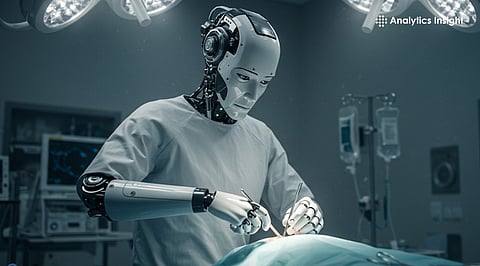
Surgeons are using artificial intelligence to improve their skills and find better ways to treat patients. As of 2026, tools like the da Vinci robot have already helped with several surgeries. This technology does not take over the operation. Instead, it provides useful data and precise control. By handling minor details, AI lets surgeons focus entirely on the most important parts of the surgery.
AI scans medical records, lab results, and patient histories to find details that doctors might miss. Tools like IBM Watson can spot early cancer or create 3D maps of a patient’s blood vessels. This data helps surgeons choose safer methods, like using small scopes to cut infection risks in half. By comparing a patient to similar cases, AI builds a personalized plan based on that person's unique needs. In the operating room, AI monitors vital signs in real time to help the surgeon prevent problems.
Also Read: AI in Healthcare: Applications, Benefits, Use Cases, and Future Trends
When surgeons start an operation, AI helps them by highlighting the difference between healthy tissue, tumors, and nerves on digital screens or smart glasses. Tools like Caresyntax track the procedure and can warn the medical team about infection risks, such as sepsis, up to 20 minutes early. Systems from Medtronic also project 3D maps directly into the surgeon's view to help them navigate safely. This technology monitors vital signs like oxygen and blood pressure so that surgeons can stay focused on the physical work of the surgery.
AI performs routine tasks like reading medical images and monitoring vital signs. According to studies from Johns Hopkins University, this saves surgeons hours of mental energy during each operation. Surgeons can then use this extra time to handle rare problems, such as unexpected bleeding or unusual tumors. The da Vinci robot gives precise data, which can be combined with the surgeon’s skills. Thus, they can use new techniques that have improved survival rates by 15-20% in difficult cases. This shift encourages creative solutions and helps surgeons save lives even in the toughest situations.
Trainees can practice at their own pace using platforms like FundamentalVR. They get instant tips on how to improve their surgical techniques. On these digital patients, they can perform up to 1,000 simulated surgeries a month to safely learn from their mistakes. Osso VR even adds team challenges to help everyone work together better. These tools are supported by the American College of Surgeons to help doctors build the confidence and quick decision-making skills they need for real operations.
Also Read: Top Challenges and Ethical Risks of Artificial Intelligence in Healthcare
AI uses data from across the world to act as a smart advisor, predicting problems with 90% accuracy and mapping out risks to help surgeons prepare. Surgeons use their expertise to create custom solutions, such as personalized vascular grafts for organ transplants. Tools like Nuance's AI help teams by providing voice-activated summaries of patient risks. This partnership with AI helps surgeons create treatment plans that are specifically designed for each patient's body and personal goals.
Artificial intelligence supports surgeons instead of replacing them. It helps them become more thoughtful, better prepared, and more skilled at their jobs. Experts predict that recovery rates will improve by 20-30% in the future. This combination of human experience and AI intelligence ensures that surgeries are accurate while still focusing on each patient's individual needs and goals.
AI is used to analyze medical data, assist in surgical planning, and support surgeons during operations. It helps doctors understand patient conditions better and make more accurate decisions.
No, AI does not replace surgeons. It works as a support tool that helps surgeons make better decisions, but the surgeon is always in control of the procedure.
AI studies scans, patient history, and past cases to create detailed insights. This helps surgeons prepare better, identify risks early, and choose the safest approach before surgery begins.
Yes, AI can monitor vital signs, analyze live data, and highlight important areas during surgery. It helps surgeons stay aware and respond quickly to any changes.
AI reduces errors by providing accurate data, identifying risks, and alerting surgeons to potential problems. This improves decision-making and lowers the chances of complications.
