.png)

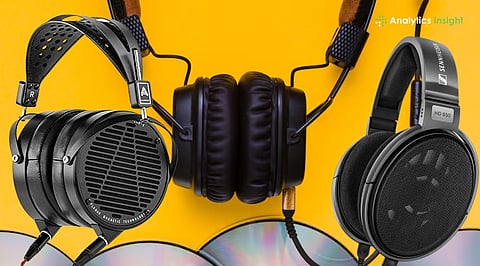
Studio headphones provide accurate sound reproduction, allowing engineers to detect subtle mix details, ensuring better balance, clarity, and professional-quality output.
Critical factors include frequency response, soundstage, stereo imaging, comfort, impedance requirements, and overall tonal accuracy for reliable mixing and mastering decisions.
Open-back headphones offer natural sound and a wider soundstage, making them ideal for critical listening tasks like mixing and mastering in controlled environments.
A great pairing begins with proper monitoring. Studio headphones make it possible to pick up nuances that consumer-grade headphones miss. Frequency response, stereo imaging, soundstage, comfort, and clarity are key considerations when selecting headphones for mixing and mastering. Even though studio monitors are industry standards, headphones create an ideal listening environment that allows critical listening irrespective of room acoustics.
The following is a list of the top 10 studio headphones for mixing and mastering.
Type: Open-Back
Specifications: Impedance 300Ω; Frequency response 4Hz–51kHz
Pros: Sound stage, good imaging, and detail
Cons: Needs amplification, expensive
Perfect For: Mastering Engineers
The HD 800S headphones still keep up their image. They deliver a spacious soundstage similar to listening through speakers, allowing you to easily determine stereo width and depth, as well as how each track is placed within the sound space. It delivers a very detailed, high-frequency sound without being sharp.
Type: Open-Back Planar Magnetic
Specifications: Frequency Range 20Hz–20kHz
Strengths: Great low end, revealing, and fast transients
Weaknesses: More weight than many others
Ideal For: Professional Mixing and Mastering
This is perhaps one of the best headphones ever made for its extremely balanced sound stage. The headphones reproduce low frequencies accurately, making it easier to identify kick drums and basslines.
Type: Open-Back
Specifications: Impedance 250Ω
Strengths: Imaging capability, clear and durable
Weaknesses: Tends to be bright for many users
Ideal For: Studio Engineers
DT 1990 Pro headphones have remained popular among professionals for their ability to reveal issues in mixes easily. The headphones will help highlight editing mistakes, compression artifacts, and EQ problems within tracks.
Type: Open-back
Specifications: Impedance 300Ω
Advantages: Tuning neutrality, good midrange, durable headphones
Disadvantages: Poor sub-bass reproduction
Ideal For: Ideal for monitoring
The HD 600 is a headphone that has become something of a legend in professional audio production for its reliable, balanced midrange, which makes it great for vocal and acoustic instrument recordings.
Type: Open-back
Specifications: Impedance 470Ω
Advantages: Comfortable design, good sound quality, lightweight fit
Disadvantages: Require an appropriate amplification unit
Ideal For: Great headphones for home and studio projects
These headphones can be recommended as they combine good sound quality and comfort. Their open character enables realistic spatial sound, while balanced sound makes mixing easier.
Type: Open-back
Specifications: Impedance 120Ω
Advantages: Accuracy, reliable sound translation, neutral tuning
Disadvantages: Expensive compared to some competitors
Ideal For: Engineers
It was created specifically for those who need a sound as close as possible to what is heard through monitors during mixing and mastering. For example, some may prefer large sound stages for mastering, whereas others may prioritize mid-range accuracy when mixing.
Also read: ASUS VivoWatch 6 Plus Debuts With Fingertip ECG, Blood Pressure Tracking and Health AI 5.0
Type: Open Back
Characteristics: Impedance of 62Ω
Advantages: Outstanding sound staging ability, suspension headband, and sound
Disadvantages: Somewhat colored sound
Best For: Record producers and composers
The AKG K712 Pro is famous for its excellent soundstage. This type of headphone is perfect for record producers who work with both orchestral and electronic music. Lightweight is another positive characteristic of the headset, which makes it more comfortable during extended recording sessions.
Type: Open Back
Characteristics: Impedance of 55Ω
Advantages: Unmatched clarity, sound dynamic range, and comfort
Disadvantages: Very expensive compared to similar products
Best For: Mastering
This is an excellent pair of headphones to have if you are doing mastering work. The Focal Clear MG Professional headphones provide clarity in the mid-range frequencies, balanced bass, and excellent transient response.
Type: Open-back
Characteristics: Impedance rating of 24Ω
Advantages: Driver-friendly, imaging, lightness
Disadvantages: Doesn’t feel as high-end as the competition
Best For: Producers and immersive audio
The MDR-MV1 is one of Sony's headphones designed with contemporary production techniques in mind. In particular, the headphone excels at spatial audio tasks, although it also performs well for regular mixing sessions thanks to its balanced sound signature.
Type: Open-back
Characteristics: 25Ω impedance
Advantages: Detail-oriented sound, robust design, low power draw
Disadvantages: Soundstage isn't as wide as the category leaders'
Best For: Studio applications
Hi-X65 provides a clear sound signature with emphasis on mid-range clarity. The headphone is built with quality materials and doesn't need much power. It is advisable to choose open-back studio headphones when mixing and mastering for their superior soundstage and more natural stereo imaging.
Accuracy will always be of paramount importance, regardless of the emphasis placed on other areas, such as increased bass or treble. Comfort cannot be overlooked either, as it becomes especially important during long hours. Consider impedance carefully, as some models require a dedicated amplifier to perform properly. Build and budget are also issues to consider, but accuracy is the most critical factor.
Different types of headphones will be recommended depending on the way you work as a music producer. Open-back headphones will continue to be used by many professionals as they deliver a natural listening experience and stereo imaging.
They work well alongside studio monitors for cross-checking mixes and ensuring tonal accuracy. The Audeze LCD-X is the best high-end headphone for production, and the Beyerdynamic DT 1990 Pro delivers excellent results for the hard-working producer. The Sennheiser HD 600 also comes highly recommended for its value for money.
Also read: Latest Leaks: Will Apple's Rumored Foldable iPhone Include Vapor Chamber Cooling?
1. Why are studio headphones important for mixing and mastering?
Studio headphones provide accurate sound reproduction, revealing subtle details in audio. This helps engineers identify mix issues and ensures consistency across different playback systems and listening environments.
2. Are open-back headphones better for mixing?
Open-back headphones are preferred for mixing since they deliver a natural soundstage and accurate stereo imaging, helping engineers make better spatial and tonal decisions during production.
3. Do high-impedance headphones require amplification?
High-impedance headphones typically require dedicated amplifiers to perform optimally. Without proper amplification, they may sound quieter and fail to deliver their full dynamic range and detail.
4. Can headphones replace studio monitors?
Headphones cannot fully replace studio monitors, but they complement them well. They provide a controlled listening environment, especially useful when room acoustics are not ideal.
5. What is the most important feature in mixing headphones?
Accuracy is the most important feature in mixing headphones. A neutral frequency response ensures that audio decisions translate well across different systems without unwanted coloration or distortion.
