.png)

Professional tripods provide the stability needed for sharper photos, smoother videos, and more reliable camera support across different content creation workflows.
Features such as material, tripod head, load capacity, folded size, and locking mechanism directly influence portability, durability, and shooting performance.
Different creators have different support needs, making it important to choose a tripod that matches the camera setup, shooting environment, and style of production
A great camera cannot deliver professional results on an unstable tripod. The right support decides how steady the footage looks, how fast setup takes, and how confident a shoot feels. Yet many creators spend heavily on cameras and lenses while overlooking the gear that keeps every frame stable.
The best tripod depends on shooting style, not budget. This guide compares five professional tripods, each built for a different way of working, to make that choice easier.
Tripod choice should follow shooting style, not budget alone. Interviews and studio videos need good height and strong stability. Frequent travel or shooting on the move calls for a lighter tripod with a compact folded size, easier to carry around. Aluminum tripods cost less but weigh more. Carbon fiber costs more, but it cuts weight while staying strong, making it a better fit for long shooting days.
The tripod head matters too. A ball head suits frequent reframing and is good for photos or general use. A fluid head gives smoother pans and tilts, better suited to video work. Folded length decides whether a tripod fits in a regular camera bag. Twist locks pack tighter. Flip locks open and close faster.
The quick-release plate is worth checking as well. An Arca-Swiss-compatible system works with more third-party accessories, adding flexibility as the kit grows. Load capacity should stay above the combined weight of the camera and lens. A higher rating adds stability and leaves room for extra gear like microphones or monitors.
Built for frequent travel, this tripod folds to 15.7 inches and weighs 1.54 kg, light enough to carry all day without adding drag to a camera bag. The 9 kg load capacity still holds a mirrorless body with a mid-size lens without flexing. The 494 ball head offers separate controls for sphere lock, friction, and panning, so framing a shot takes seconds rather than fumbling with a single stiff knob.
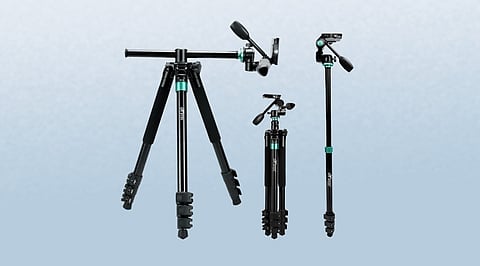
This one trades portability for reach and stability and works well in a fixed studio setup. It extends to 66.9 inches and holds 9 kg of gear at 2.5 kg total weight. The 90-degree horizontal column lets the camera swing out for overhead or macro shots without repositioning the whole rig, a real advantage for product reviews and fixed-camera interviews.
Creators who mix formats will get the most out of this pick. One leg detaches and converts into a full monopod within seconds, and the MACC column pivots almost 360 degrees for angles a fixed center column cannot reach. At 2.63 kg with a 6 kg load capacity, it suits anyone switching between static talking-head footage and handheld B-roll in the same session.
Carbon fiber earns its premium here. At 2.1 kg, this tripod weighs less than the aluminum Digitek pick despite an 18 kg load capacity, close to double what the rest of this list supports. Benro's QLS anti-rotation leg lock keeps the legs from twisting out of position even before they lock fully, a detail that matters once a full-frame body and telephoto lens sit on top.
A premium tripod is not a requirement for stable footage. The DTR 540 BH holds 8 kg, converts into a monopod, and folds to 21 inches at 2.35 kg, all at a fraction of the Manfrotto or Vanguard price. It will not survive years of heavy professional use the way a premium rig might, but as a first serious tripod, it covers the essentials without cutting corners on load capacity.
Also Read: The Best Lightweight MagSafe Tripod for Creators on the Go
The best tripod matches shooting style, not a price tag. The right support improves every frame, extends the working life of the gear mounted on it, and turns setup time into shooting time.
Also Read: Best Compact Travel Tripods for Photographers (2026 Buying Guide)
Look for a tripod with a stable build, sufficient load capacity, suitable maximum height, a reliable head, and a compact folded size if you travel frequently. These features improve both usability and shooting stability.
Carbon fiber tripods are lighter, absorb vibrations better, and are easier to carry for long shoots. Aluminum tripods are more affordable and offer excellent stability for studio and indoor content creation.
Tripods are ideal for interviews, product videos, and long recording sessions where maximum stability is needed. Monopods are better for events, sports, and fast-moving shoots where mobility is more important.
Yes. Most professional tripods use a standard 1/4-inch mounting screw, allowing them to support cameras as well as smartphones with a compatible phone mount adapter.
Choose a tripod with a load capacity at least 1.5 to 2 times the combined weight of your camera, lens, and accessories. This provides better stability and allows room for future gear upgrades.
