.png)

India and many other countries are facing rising energy risks as oil prices have surged over 40% in recent weeks due to supply disruptions in key global routes.
Governments across multiple countries have already introduced fuel-saving steps like rationing, remote work, and reduced travel to manage limited energy supply.
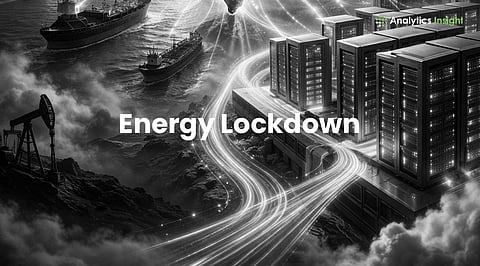
The term energy lockdown is not official but reflects real changes in daily life as countries try to reduce fuel use without enforcing full shutdowns.
The US-Iran war that started on February 28 sees no clear signs of a ceasefire. Although Trump, in his latest speech, invoked hopes of an end to the war, the details seemed unclear. At the same time, contradictory statements from the Iranian government on there being no direct contact with the US over peace talks are keeping everyone on their toes. The ongoing missile attacks from both sides, as well as Israel, don’t help the situation, especially as the Strait of Hormuz stays closed. This is the narrow water passage, currently under Iranian control, that has caused a global energy crisis.
20% of the world’s oil flows through the Strait. Oil prices have stayed up over $100 per barrel since the start of the Middle East conflict, in turn, impacting gas and petrol rates too. There seems to be no hope of the blockade opening soon. Even the International Energy Agency (IEA) has warned that this could be one of the worst energy crises in decades. Governments around the world are struggling to meet domestic fuel needs, with talks of a ‘lockdown’ floating online. So, should you be worried about a COVID-like lockdown? Let’s see!
The term ‘energy lockdown’ didn't come from a government office; it grew on social media as people watched their lives change overnight. It describes a world where there simply isn’t enough fuel or electricity to keep the lights on and the wheels turning. To stop a total collapse, governments are pulling from a familiar playbook. We are seeing work-from-home mandates, school closures, and strict limits on how much gas a person can buy.
This isn't a what-if scenario for the future. For millions, it is already happening. In Sri Lanka, drivers must scan QR codes to get a tiny weekly ration of fuel. In Myanmar, you can only visit a gas station on certain days depending on your license plate. Even in Europe, countries like Slovenia have capped how much fuel a car can take in one sitting. Meanwhile, global reserves are being used. The release of hundreds of millions of barrels from emergency stockpiles shows that this is not a normal market fluctuation. It is a response to a real supply shock.
The Strait of Hormuz block has forced oil prices to jump by over 40% in less than a month. When fuel costs rise this fast, it acts like a tax on everything, from the food in your fridge to the clothes on your back. Countries that rely on imports are feeling the most pain. India, for example, is the world’s third-largest oil consumer, yet its emergency buffers are worryingly low. At one point, reports showed the nation had only five days of oil left if ships stopped arriving. While leaders say they are working on it, the math shows just how close we are to the edge. The just-in-time supply chain we all relied on is proving to be incredibly fragile.
To keep the economy from flatlining, governments are taking the advice of international energy experts and forcing people to use less. Right now, a full lockdown like 2020 is unlikely. Governments are not shutting borders or stopping all movement. However, they are taking targeted steps to control energy use. Pakistan and the Philippines have already cut the work week to four days for government staff. In Bangladesh, students have been sent back to online learning to keep the power grids from failing.
In many cities, the night is getting darker. Malls and restaurants are being forced to close by 9 PM, and massive advertising signs are being switched off to save every watt. While these rules help save fuel for hospitals and food transport, they make daily life feel like a slow-motion version of the 2020 pandemic. Although not all is lost. India, for example, has not announced strict measures yet. The government is focusing on securing supplies and keeping daily life stable.
If the situation continues, the world may move through different phases. First comes demand control, where governments try to reduce fuel use. Next could be supply adjustments, where companies shift operations or find new sources. Over time, this may lead to bigger changes in how energy is used. The long-term impact depends on how long the disruption lasts. If supply improves, the situation may ease.
Also Read: Oil Prices Crash 5% as Ceasefire Hopes Cool West Asia War Fears
The most haunting question is whether these restrictions will ever truly go away. During the pandemic, ‘two weeks to flatten the curve’ turned into years of structural change. Energy is even more complicated because you cannot invent a vaccine for a dry oil well or a blocked strait. Building new wind farms or switching a whole nation to electric cars takes a decade, not a month.
The key difference this time is awareness. The signs are already visible, rising prices, rationing, and policy changes. The real question is not whether an energy crisis exists, but how long it will last and how deeply it will affect everyday life.
Also Read: Oil Prices Hold Above $100 as Middle East Conflict Fuels Supply Fears
1. What is an energy lockdown?
An energy lockdown is not an official term. It is used to describe a situation where governments and people reduce energy use due to shortages or high prices. This can include fuel limits, less travel, and more work from home. It is different from COVID lockdowns because it focuses on saving energy, not controlling a health crisis.
2. Why are oil prices rising?
Oil prices are rising mainly due to supply disruptions caused by conflict in West Asia. The Strait of Hormuz, which carries a large share of global oil, has been affected. This has reduced supply while demand remains steady. As a result, prices have increased sharply in a short period of time.
3. Which countries are already facing fuel shortages?
Several countries in Asia and other regions are already facing fuel shortages. Some have introduced rationing systems, while others have reduced workdays or limited travel. These steps help manage a limited fuel supply and prevent panic buying. The situation varies by country, depending on how much they rely on imports.
4. Will India face an energy lockdown?
At the moment, India has not announced any energy lockdown measures. The government is working to secure supplies and manage the situation. However, since India depends heavily on imported oil, it remains at risk if global supply issues continue. Future steps will depend on how the crisis develops.
5. How can people prepare for an energy crisis?
People can prepare by using energy more efficiently and reducing unnecessary fuel use. This includes using public transport, working from home when possible, and saving electricity. Small changes can help manage costs and reduce pressure during shortages. Staying informed about government guidelines is also important.
