.png)

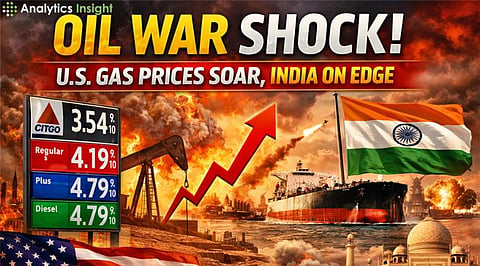
Fuel prices in the United States have risen to their highest level in more than 18 months as escalating tensions in West Asia disrupt oil flows worldwide. The national average price for a gallon of unleaded gasoline climbed to about $3.54 this week, according to data from the American Automobile Association (AAA). The figure represents a sharp 21% increase from levels recorded a month ago.
The surge follows intensified military action, which the United States, Israel, and Iran have conducted. These developments create uncertainty for traders and heighten concerns about prolonged supply interruptions. Market participants say the rapid escalation highlights that geopolitical developments continue to strongly affect fuel costs, as essential production and transportation hubs face uncertain conditions.
Also Read: Oil Prices Surge Nearly 30% as Iran Conflict Sparks Fears of Middle East Supply Collapse
At the heart of this latest price increase is disruption to the Strait of Hormuz, an important oil route through which a substantial portion of the world’s oil exports is shipped. Security concerns and delays have affected oil tanker movements through this waterway. US crude briefly crossed the key $100-per-barrel psychological mark before retreating to around $84.
Analysts warn that gasoline prices at the pump will not decrease soon despite political leaders showing hope for a peaceful resolution. The slower price adjustment process for retail fuel occurs because companies maintain their profit margins even when crude oil prices decline. Rising travel demand and upcoming summer-grade fuel price increases will create additional price pressure that will continue over the coming months.
The Indian perspective shows that the emerging crisis will produce economic effects that extend beyond the current situation. India is a large importer of crude oil, with a large percentage imported from West Asia. The crisis in this region will have adverse effects on India, impacting both the country's trade balance and its efforts to control inflation.
Indian petrol and diesel prices remain stable, but ongoing increases in oil prices will lead to higher transportation costs.
