.png)

CloudSEK ranks first in this 2026 comparison because Nexus AI connects organization-specific weaknesses with external threat activity to identify plausible initial access vectors and attack paths before execution. Recorded Future suits broad enterprise CTI programs, CrowdStrike specializes in adversary attribution, Flashpoint brings direct underground collection, and Bitsight ties reported threats to exposed technology. The choice depends on what the security team needs to know next: how an attacker could get in, who may be behind observed behavior, where compromised information surfaced, or whether a reported threat affects technology already in use.
We compared the five finalists across intelligence provenance, documented capabilities, 2026 product changes, external validation, research credibility, and limitations. The source review covers material available through August 2026. We did not conduct hands-on testing.
Vendor documentation confirmed functionality. Independent reporting, analyst recognition, and practitioner feedback were evaluated separately because they support distinct types of claims. A market ranking was not treated as proof that a technical capability performs as advertised.
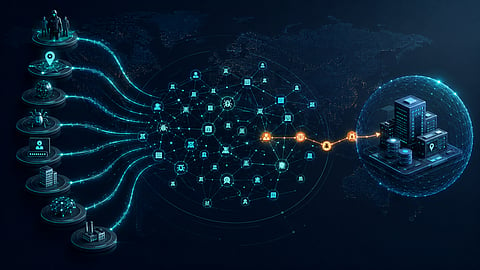
CloudSEK uses Nexus AI to correlate signals from XVigil, CloudSEK Threat Intelligence, BeVigil, AIVigil, and SVigil into predictive attack graphs. XVigil contributes organization-specific digital-risk findings, BeVigil maps weaknesses across internet-facing assets, and the CTI layer adds threat-actor and exploited-CVE context. Nexus AI brings those records together to identify plausible initial access vectors and show how separate conditions may connect into an attack path.
A leaked credential illustrates how that correlation works. If XVigil detects the credential and BeVigil also identifies a reachable service with an exploitable weakness, the identity is now connected with an exposed asset. Threat intelligence on active exploitation of the affected CVE adds the attacker-side context. Nexus AI then correlates the credential, service, vulnerability, and exploitation record to determine whether they form a plausible route into the organization, with the supporting records retained behind that relationship.
The same attack-path analysis extends beyond conventional digital risk and EASM. AIVigil contributes findings from AI systems and AI-enabled applications, including prompt injection, model abuse, exposed AI endpoints, and infrastructure misconfigurations, while SVigil adds vendor and supply-chain exposure that may create third-party entry points. Nexus AI applies the same correlation and prioritization logic across those signal types, giving the AI-native architecture a role in attack-path analysis rather than report summarization alone.
Nexus AI Attack Path Intelligence
CloudSEK Threat Intelligence
XVigil Digital Risk Protection
BeVigil External Attack Surface Monitoring
AIVigil AI Attack Surface Monitoring
SVigil Third-Party Risk Intelligence
Exploited CVE Intelligence
Malware and Ransomware Intelligence
Threat Actor and Hacktivist Tracking
Brings DRP, CTI, EASM, AI attack-surface findings, and third-party risk into attack-path analysis
Extends initial-access coverage to AI systems and supply-chain exposure
Preserves the records behind a candidate attack path for investigation
Does not monitor endpoints or internal network traffic
Does not perform hands-on incident response
The Intelligence Graph links vulnerabilities, malicious infrastructure, threat actors, malware, and geopolitical developments. Insikt Group reporting contributes finished analysis tied to those entities. A vulnerability function can work from the graph without separating technical findings from actor or campaign reporting. Threat hunters and strategic intelligence functions can draw on those entity relationships for their own requirements.
A CVE investigation may begin with severity, then expand when observed exploitation or linked infrastructure appears. Actor reporting can show who is using the weakness and connect the activity to a wider campaign when the source material supports that link. Autonomous Threat Operations expanded continuous hunting and multi-source correlation in 2026. The breadth suits mature CTI programs that need several research functions to work from connected entity data.
Intelligence Graph
Insikt Group Research
Vulnerability Intelligence
Threat Actor Tracking
Malware Intelligence
Risk Scores
Hunting Packages
AI Insights
MCP Access
Extends vulnerability work beyond severity and CVE metadata
Connects tactical findings with actor and campaign reporting
Supports mature CTI programs with multiple internal consumers
Offers a broad integration ecosystem
Its scope may exceed what a smaller CTI team needs
Pricing requires a vendor quote
An observed technique becomes more informative when it matches tradecraft already associated with a tracked adversary. Falcon Adversary Intelligence organizes TTPs, malware, infrastructure, exploited vulnerabilities, and IOCs around actor profiles. Investigators can compare what they see during a hunt with behavior previously associated with that actor. MITRE ATT&CK mappings provide a standard vocabulary for the techniques involved.
CrowdStrike's 2026 Threat Hunting Report covers proprietary telemetry collected from July 1, 2025 through June 30, 2026. The dataset gives investigators recent behavior observed through Falcon telemetry. It should not be read as a vendor-neutral account of all adversary operations because the underlying observations come from CrowdStrike's own environment.
Adversary Profiles
Threat Attribution
MITRE ATT&CK Mapping
Threat Hunting
Malware Analysis
Real-Time IOCs
Finished Intelligence
Threat AI
Organizes attribution around tracked adversaries and documented tradecraft
Maps observed techniques to MITRE ATT&CK
Draws 2026 hunting findings from Falcon telemetry
Integration depth is highest inside Falcon deployments
Focuses less on vendor-neutral TIP management
A stolen credential confirms exposure, but it does not reveal where the record surfaced or what criminal activity surrounds it.
Ignite collects directly from underground forums, marketplaces, and other illicit communities. That collection preserves the source attached to the compromised record rather than reducing the case to a username and password. An investigator can see whether the credential appeared near ransomware activity, actor discussions, or other criminal behavior supported by the collected material. Those surrounding records may justify faster escalation.
Targeted intelligence requests cover cases that fall outside existing collection. The MCP Server released in June 2026 gives AI-native workflows access to Flashpoint records. Direct access to underground sources remains the defining capability for investigations where criminal provenance matters.
Primary Underground Collections
Compromised Credential Intelligence
Ransomware Intelligence
Vulnerability Intelligence
Intelligence Requests
STIX/TAXII APIs
MCP Server
Preserves underground provenance around compromised records
Covers illicit forums and marketplaces through primary collection
Supports targeted requests for cases outside standard collection
Initial MCP workflows are read-only
Its underground depth may exceed the needs of basic CTI programs
A severe CVE can dominate global reporting without affecting every environment. If the vulnerable technology appears on an internet-facing asset, the weakness now applies directly to that organization's exposed infrastructure. Active exploitation can then push the affected asset higher in the remediation queue.
Sectoral Intelligence, launched in August 2026, introduces industry-specific threat data into that assessment. Associated adversary records can further narrow which exposed technologies deserve attention first. The analysis stops at exposure prioritization: it determines whether reported threats intersect technology already in use rather than mapping several weaknesses into a multi-step attack path. Organizations already using Bitsight exposure data gain the strongest continuity from this model.
Exposure Correlation
Vulnerability Intelligence
Sectoral Intelligence
Adversary Intelligence
Identity Intelligence
Ransomware Intelligence
Dark Web Monitoring
STIX/TAXII Sharing
Connects reported threats to deployed and internet-facing technology
Incorporates sector-specific threat data into exposure prioritization
Fits environments already using Bitsight exposure data
Existing Bitsight deployments gain more from the combined exposure context
Enterprise scope may be heavier than smaller teams need
The main changes in 2026 appear after collection. Automated systems are taking on more hunting and correlation work, external threat records are being connected to deployed assets, and AI systems have become targets of intelligence work. CTI delivery is also shifting as some capabilities move inside larger security ecosystems.
Autonomous Threat Operations applies AI to continuous hunting and multi-source correlation. Automation now handles portions of the querying and correlation work that previously required more manual investigation. Analysts still need access to the source records behind a generated finding so the conclusion can be checked before action is taken.
A widely exploited CVE becomes locally actionable when the affected technology is present on an internet-facing asset. Exposure data links the global threat record to a system the organization actually operates. That asset can then be inspected, patched, isolated, or otherwise handled according to the organization's remediation process.
AI systems now appear in CTI as targets as well as tools used to process threat data. CloudSEK's Aur0ra work examined AI-assisted cybercrime and exposed attacker infrastructure. Bitsight published work on malicious AI jailbreak prompts across a July 2025 to July 2026 window. Malware, vulnerabilities, infrastructure, and adversary behavior remain core subjects, while AI services and AI-assisted criminal operations now require comparable scrutiny.
Some CTI capabilities are being folded into broader security ecosystems. Microsoft retired its standalone legacy threat-intelligence portal on August 1, 2026 and moved the corresponding experience into Defender. ThreatConnect became part of Dataminr's broader Cyber Defense direction. Buyers now have to compare dedicated CTI products with intelligence functions embedded inside an existing security stack.
Start with the gap in the current CTI program. Missing dark-web access calls for underground collection, while a vulnerability program may need proof that a reported weakness affects deployed technology. Attribution, enterprise CTI, and attack-path prediction depend on other source types and operating requirements.
Define the missing function: Decide if the program lacks original collection, attribution, underground coverage, exposure prioritization, enterprise CTI management, or attack-path analysis.
Inspect provenance: Identify which records come from proprietary telemetry, sensors, HUMINT, underground collection, OSINT, commercial feeds, community sources, or customer data.
Compare coverage with the threat model: Check the actors, industries, regions, vulnerabilities, infrastructure, and criminal environments the organization investigates.
Test local applicability: Verify if outside findings map to deployed technology, exposed assets, credentials, vulnerabilities, or internal telemetry.
Look beyond connector counts: Check what moves into SIEM, SOAR, EDR, STIX/TAXII, or sharing workflows. Critical entity links should survive the transfer.
Review AI permissions and traceability: Confirm what an agent is allowed to query, correlate, summarize, recommend, or execute. Source records must remain available for inspection.
Check packaging and deployment: Confirm that the required capability exists in the edition being evaluated, especially for self-hosted, hybrid, or air-gapped environments.
Run a consistent proof of concept: Test the finalists with an actor, an exploited CVE, a malicious-infrastructure case, and an intelligence-sharing task. Compare false positives, analyst handling, output quality, and time to a usable result.
Test the finalists against the unresolved weakness in the current CTI program. Attribution should produce a defensible actor hypothesis, dark-web collection should preserve criminal provenance, exposure intelligence should identify affected technology, enterprise CTI should connect the records required across research functions, and predictive intelligence should surface plausible entry routes. If the security team still has to rebuild those answers across disconnected tools, the original gap remains.
A threat feed delivers indicators or other threat records. A CTI product organizes, enriches, correlates, scores, investigates, or shares those records across security workflows. Some vendors also create original intelligence through telemetry, sensors, underground collection, or analyst reporting.
No. CTI tools focus on adversaries, vulnerabilities, malware, infrastructure, and other external security signals. SIEM and EDR tools focus on events, endpoints, detections, and behavior inside the organization. They address separate parts of the security workflow.
STIX is a standardized format for representing cyber threat intelligence. TAXII is a protocol for exchanging structured CTI between systems. Together, they let feeds, communities, and security tools exchange records without rebuilding the data structure for every connection.
No. Some vendors collect directly from underground forums, marketplaces, messaging channels, and credential sources. Others rely more heavily on telemetry, public sources, sensors, commercial feeds, or customer data. Buyers who need dark-web coverage should verify the collection method and the underground sources included.
