.png)

XRP wallet adoption is rising as users seek safer alternatives to exchanges.
Hardware wallets offer stronger protection for long term and high-value XRP storage.
Security features, ease of use, and multi-asset support are some of the main factors that influence the decision to choose a crypto wallet.
The global count of XRP wallets has surpassed 7.5 million. This increase reflects the rising popularity of Ripple for quick and inexpensive money transfers. Many individuals purchase XRP on cryptocurrency exchanges, but these platforms can be risky with increasing attempts at security breaches and hacking. Consequently, a growing number of users prefer XRP wallets that ensure the safety of private keys.
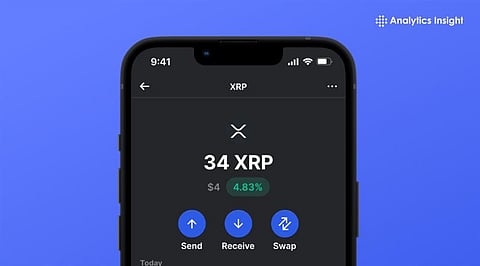
A trader can use an XRP wallet to store, send, and receive tokens safely. It also provides a record of transaction history and current balances. These tools can be broadly divided into 2 groups: Software wallets and hardware wallets.
Software wallets are applications that run on mobile devices or computers and are convenient for everyday use. Hardware wallets are physical devices that keep private keys disconnected from the internet and are a great choice for long-term storage and high balances.
Choosing a wallet depends on security standards, simplicity, device compatibility, and additional functions like multi-asset support or integrated trading. Below are the 10 wallets that you should consider if you are an XRP holder.
Also Read: Best Cryptocurrency Wallets for 2026
Ledger Nano X is a hardware wallet that keeps private keys offline to lower digital threats. The device links via USB or Bluetooth and works with the Ledger Live application. It supports thousands of different coins and is a standard choice for high-level security.
Toast Wallet is a straightforward non-custodial wallet designed exclusively for XRP. It is open source and requires no fees. The layout is easy to navigate, making it a practical option for beginners who require a basic tool without complex features.
Atomic Wallet supports XRP and over 300 other digital currencies. It enables users to swap assets and earn rewards through staking on certain coins. Private keys stay under the user’s full control, and the software operates on both desktop and mobile systems.
Garuda Wallet supports XRP and a wide variety of other digital assets. It can be accessed through web browsers, mobile phones, or desktop computers. The wallet’s notable features include internal exchange services, staking opportunities, and uncomplicated backup tools.
Also Read: 10 Best Crypto Wallets in the UAE for 2025
Exodus Wallet is known for its clean design and efficient performance. The wallet features an internal exchange and is accessible on desktop and mobile platforms, making it a decent choice for frequent transactions.
Edge Wallet is a mobile-centered application that incorporates security measures such as PIN codes, biometric access, and encrypted backups. The app also allows for the swapping of assets within the interface.
Cobo Wallet provides both software and hardware storage options. It supports XRP and several other blockchains. Users can select various security tiers depending on their specific requirements. The wallet also offers staking and rewards for certain assets.
Xumm is built specifically for the XRP Ledger. It enables payments, creation of trust lines, and interaction with XRP-based applications. The wallet is a common choice within the Ripple community for direct network engagement.
Trust Wallet is a widely used multi-asset mobile wallet that includes XRP support. It features a simple user interface and connects to decentralized services. The crypto storage is ideal for people who want to manage different types of cryptocurrencies in a single location.
Trezor Model T is a hardware wallet alternative for XRP storage. It includes a touchscreen and maintains high security protocols. Private keys are kept offline, and the device is compatible with many digital assets through supported applications.
Ripple users depend on XRP wallets as they offer better security and data privacy. Hardware wallets provide the highest level of protection for large XRP holdings. Whereas software wallets let users access tokens easily for everyday use.
Regardless of the wallet you choose, safety should be your priority. Investors should also ensure they store recovery phrases in a secure location, regularly update their software, and avoid suspicious links to prevent potential security breaches.
1. Why are more people choosing XRP wallets instead of exchanges?
XRP wallets give direct control over private keys and reduce exposure to hacks often linked with centralized exchanges.
2. What is the main difference between hardware and software XRP wallets?
Hardware wallets store keys offline for higher security, while software wallets run on devices and suit daily use.
3. Are XRP wallets suitable for beginners in cryptocurrency?
Many XRP wallets have simple interfaces and basic features that make them easy to use for new users.
4. Can XRP wallets store cryptocurrencies other than XRP?
Several XRP wallets support multiple digital assets, allowing users to manage different cryptocurrencies together.
5. How can XRP wallet security be improved by users?
Security improves by safeguarding recovery phrases, updating software regularly, and avoiding unknown links.
Join our WhatsApp Channel to get the latest news, exclusives and videos on WhatsApp
_____________
Disclaimer: Analytics Insight does not provide financial advice or guidance on cryptocurrencies and stocks. Also note that the cryptocurrencies mentioned/listed on the website could potentially be risky, i.e. designed to induce you to invest financial resources that may be lost forever and not be recoverable once investments are made. This article is provided for informational purposes and does not constitute investment advice. You are responsible for conducting your own research (DYOR) before making any investments. Read more about the financial risks involved here.
