.png)

Stablecoins have become a $300 billion financial infrastructure, with regulations in the US, EU, Singapore, Hong Kong, and Japan now enforcing reserve backing, audits, and issuer licensing.
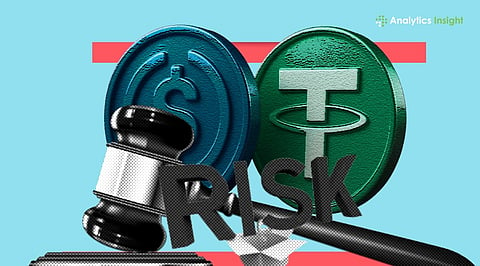
Key investor risks include reserve transparency, de-pegging events, AML exposure, redemption delays, and heavy market concentration, with two issuers controlling nearly 90% of global stablecoin supply.
Regulatory frameworks such as the GENIUS Act and MiCA are reshaping stablecoins into regulated financial instruments, making compliance, reserve quality, and issuer credibility critical for investors.
Stablecoins have grown from a trading convenience into a $300 billion pillar of global digital finance. Cross-border payments, corporate treasury operations, and marketplace settlements now run on stablecoin rails daily. Seven major economies have responded with enforceable frameworks, replacing informal guidance with binding legal requirements.
Investors approaching this market in the current environment face a different landscape than even two years ago. Reserve transparency, issuer licensing, and AML compliance now carry direct legal weight across multiple jurisdictions. Knowing where the regulations stand and where the risks remain is foundational to any informed position in this asset class.
Every stablecoin depends entirely on the quality and transparency of its issuer's reserve assets. A one-to-one backing claim means little without knowing what that backing actually contains. Reserves held in short-term sovereign debt differ significantly from those held in commercial paper or money-market funds.
The Bank for International Settlements has warned that large-scale stablecoin redemptions could trigger fire sales of otherwise safe assets. The proposed US regulatory standard defines timely redemption as no later than two business days from the request date.
De-pegging rarely unfolds as a dramatic collapse visible to investors well in advance. Short-lived deviations create settlement failures, reconciliation disputes, and contractual shortfalls at the worst possible moments. Investors running treasury positions or cross-border payment flows through stablecoins carry real exposure to even temporary peg instability.
FATF confirmed that stablecoins represented 84% of illicit virtual-asset transaction volume recorded in 2025. More than 250 stablecoins were in active circulation by mid-2025 across a $300 billion market. Chainalysis documented that value flowing to sanctioned entities surged 694% in 2025, reaching a record $154 billion in total illicit volume.
In February, Tether confirmed it had frozen roughly $4.2 billion in USDT linked to verified criminal activity. These figures position AML compliance as a material investment risk, not a peripheral concern.
Also Read: SoFi Stablecoin Launch 2026: Can It Gain Real User Adoption?
Issuer concentration deserves particular attention from investors assessing portfolio-level risk. OECD analysis from January confirmed that two issuers account for nearly 90% of the global stablecoin market capitalization.
Any enforcement action, banking disruption, or jurisdictional restriction affecting either issuer would carry immediate market-wide consequences. ECB analysis from late 2025 raised identical concerns, warning that extreme concentration amplifies financial spillover risks significantly.
The Guiding and Establishing National Innovation for US Stablecoins Act, passed in July 2025, established the first federal payment stablecoin framework. Issuers below $10 billion in market cap may operate under qualified state-level licensing programs.
All approved issuers must maintain full one-to-one reserve backing alongside regular independent audits. Paying interest directly to stablecoin holders is explicitly prohibited under the new law. Stablecoins qualifying under the GENIUS Act carry neither SEC jurisdiction nor FDIC insurance coverage.
Markets in Crypto-Assets regulation entered into force across the European Union in mid-2024. MiCA classifies stablecoins as either Electronic Money Tokens or Asset-Referenced Tokens, each with distinct obligations.
Only EU-authorized credit institutions and licensed e-money firms may legally issue stablecoins within the bloc. Reserves must be fully backed in high-quality liquid assets, with custody held by regulated financial institutions. The European Banking Authority oversees systemically significant tokens, while non-euro stablecoin payment volumes face imposed usage limits.
Singapore's Monetary Authority finalized its stablecoin framework in August 2023, requiring monthly attestations and annual third-party audits. Redemption at par value must occur within five business days of any holder's request.
Hong Kong's Stablecoin Ordinance became effective in August 2025, requiring local incorporation and a minimum paid-up capital of HK$25 million. Japan's Payment Services Act, operational since mid-2023, restricts issuance exclusively to licensed banks, fund transfer providers, and trust companies.
Also Read: Why Stablecoins are Important for the Cryptocurrency Market
The regulatory environment governing stablecoins has moved from ambition to enforcement across the world's largest financial markets. Investors who continue treating stablecoins as unregulated instruments are working from assumptions that no longer reflect reality on the ground. Seven jurisdictions now enforce binding rules on reserve quality, issuer licensing, redemption rights, and AML compliance. These standards exist today, not as future proposals.
Informed investors will approach every stablecoin position the same way they approach any regulated financial instrument. Reserve transparency, issuer standing, and jurisdictional licensing status are the starting points, not secondary considerations.
The frameworks that have taken hold across the US, EU, and Asia represent a structural shift in how digital money operates globally. Investors who align their analysis with this new standard will find themselves better positioned as the asset class continues to mature.
Disclaimer: This article is intended for informational and educational purposes only. It does not constitute financial, investment, or legal advice. Readers are encouraged to conduct independent research or consult a qualified professional before making investment decisions.
What are the biggest stablecoin risks in 2026?
Reserve opacity, redemption delays, de-pegging, AML and sanctions exposure, issuer concentration, and cross-border regulatory fragmentation represent the primary risk categories investors must evaluate.
Is the stablecoin market regulated globally?
The US, EU, UK, Singapore, Hong Kong, UAE, and Japan all enforce active stablecoin regulations. Common requirements include full reserve backing, licensed issuers, and guaranteed redemption rights for holders.
What is the GENIUS Act?
The GENIUS Act is the US federal stablecoin law passed in July 2025. It requires one-to-one reserve backing, AML compliance programs, regular audits, and restricts issuance to regulated financial institutions only.
What percentage of illicit crypto transactions involve stablecoins?
FATF reported that stablecoins accounted for 84% of illicit virtual-asset transaction volume in 2025. This underscores the importance of AML screening for all stablecoin participants.
Can stablecoins be frozen by their issuers?
Major issuers retain the technical and legal authority to freeze tokens linked to criminal or sanctioned activity. Tether confirmed in February that it had frozen approximately $4.2 billion in USDT over verified crime links.
What is MiCA?
MiCA is the European Union's regulatory framework for crypto-assets, live since mid-2024. It classifies stablecoins into two categories and mandates strict authorization, reserve, and disclosure requirements for all issuers operating in Europe.
Join our WhatsApp Channel to get the latest news, exclusives and videos on WhatsApp
_____________
Disclaimer: Analytics Insight does not provide financial advice or guidance on cryptocurrencies and stocks. Also note that the cryptocurrencies mentioned/listed on the website could potentially be risky, i.e. designed to induce you to invest financial resources that may be lost forever and not be recoverable once investments are made. This article is provided for informational purposes and does not constitute investment advice. You are responsible for conducting your own research (DYOR) before making any investments. Read more about the financial risks involved here.
