.png)

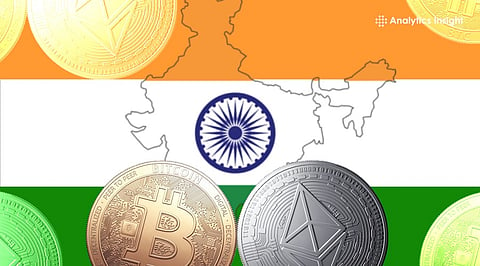
India now accounts for nearly 15% of the world's 861 million crypto users, with more than 119 million investors from younger demographics.
Crypto investing is becoming more systematic while 49 compliant platforms now operate under local anti-money laundering regulations.
Despite strong adoption, traders continue to face a strict tax framework that includes a 30% tax on gains, 1% TDS on transactions, and restrictions on loss adjustments.
Trading crypto in India can feel like a wild ride. One day you are trying to manage high taxes, and the next day you are figuring out which local or global platform is safe to use. Many traders worry about regulatory changes or losing money to strict penalties. If you feel overwhelmed by the constant market shifts, you are not alone. However, a close look at the latest market facts shows that India is not just participating in the global digital asset space, it is leading it.
To help you make sense of where the market is going, we break down the latest data, tax rules, and practical trading facts below.
India has officially claimed the top spot globally. According to the latest data, the country ranks first in the Global Crypto Adoption Index, ahead of Nigeria and Indonesia. Over 119 million Indians now own digital assets. This represents a massive 8.2% of India’s 1.45 billion population.
When you look at the global picture, Indian investors make up nearly 15% of the world’s 861 million digital asset users. The trading community is also getting younger. Investors under the age of 35 account for 72% of the market, and Gen Z has now overtaken Millennials as the largest investor group, making up 38% of the total.
Female participation is also rising fast, with new registrations growing by 1,400%, meaning women now make up 12% of all domestic investors. While Delhi NCR holds the largest share of assets, smaller Tier-2 and Tier-3 cities like Jaipur, Indore, Lucknow, Coimbatore, and Guwahati are emerging as the fastest-growing market hubs.
The domestic market is shifting away from wild speculation toward structured plans. Systematic Investment Plans (SIPs) for digital assets jumped by over 60% year-on-year. For example, CoinDCX added more than 572,000 new SIP accounts, marking nearly 600% growth since 2022, with many retail users starting with just Rs. 100 per month.
CoinSwitch, which remains India's largest platform with over 20 million users, saw a 59% rise in automated registrations. Mudrex recorded a massive 220% jump in recurring plans, where users started with Rs. 500 monthly and scaled up to Rs. 4,000–6,000 by late 2025.
On the structural side, 49 platforms are now legally registered under local anti-money laundering rules. Global giants like Binance, Coinbase, and Bybit have returned to the country after meeting local compliance needs, operating side-by-side with domestic choices like WazirX. This crowded market sparked a zero-fee war among top local platforms, helping traders save on transaction costs.
Also Read: The Rise of Autonomous Crypto Portfolios Managed by AI
While adoption numbers look excellent, local tax rules remain very strict for active traders. Missing deadlines or filing wrong numbers now carries heavy penalties.
To keep your portfolio clean and avoid legal trouble, you must navigate the following fixed tax structure:
About 70% of Indian trading volume has shifted to offshore platforms because of these heavy domestic taxes.
The government is also scaling its own alternative. The central bank-issued Digital Rupee has grown seventy times in three years, reaching nearly 7 million users and over ten billion rupees in circulation.
In early 2026, the state even launched a programmable food subsidy trial using this digital currency in Puducherry. Unlike decentralized assets, the Digital Rupee is legally stable, fully traceable, and taxed as normal income, which might reduce the demand for private stablecoins over time.
At the same time, venture capital funding is pouring into the ecosystem. Polygon Labs recently acquired a payments firm and a wallet infrastructure company to build better stablecoin systems. Startups like Xflow and Tazapay raised large investment rounds backed by global names like Coinbase Ventures to improve import-export payments.
Meanwhile, investment firms like Better Capital, Upsparks, BFF, and Cloud Capital are heavily backing early-stage fintech, Web3, and cloud startups, showing that institutional belief in India's digital economy is stronger than ever.
Also Read: Crypto Prices Today: Bitcoin Holds $63,210, Solana Jumps 2.44%, XRP Gains 2.31% Amid Iran-Israel Ceasefire
If you are an active trader comparing crypto futures to traditional Indian stock market Options and Futures (F&O), you need to change your risk strategy completely. Traditional stock F&O contracts have fixed weekly or monthly end dates. On the other hand, digital asset perpetual futures have no end date and can run indefinitely.
Leverage rules are also completely different. Stock trading is safely capped between 5x to 10x by market watchdogs, while digital asset platforms offer massive leverage up to 100x. This high leverage means a small price drop can trigger instant liquidation without giving you a margin call or buffer time to add more cash.
Furthermore, digital asset perpetual trades charge a funding rate every 8 hours, which acts as an extra cost or income depending on your position. Finally, remember that digital markets trade 24/7, including weekends, meaning you must set strict stop-loss orders to protect your money while you sleep.
India has one of the world's largest populations and a rapidly growing base of young investors. More than 119 million Indians now own digital assets, making the country the largest contributor to global crypto adoption. Rising smartphone usage, easy access to trading platforms, growing awareness of digital assets, and increasing participation from smaller cities have all helped drive this growth.
The Digital Rupee is a central bank digital currency issued by the Reserve Bank of India. Unlike cryptocurrencies such as Bitcoin, it is fully backed by the government and operates within the formal financial system. Transactions are traceable, and the currency is designed to function like digital cash. It offers stability but does not provide the decentralised features associated with traditional cryptocurrencies.
India applies a flat 30% tax on profits earned from cryptocurrency transactions. In addition, investors must pay a 4% cess on the tax amount and a 1% TDS on eligible transactions. Losses from one crypto asset cannot be used to offset gains from another. These rules make India one of the most heavily taxed crypto markets in the world.
4. How many people in India own cryptocurrency?
According to the latest figures, more than 119 million Indians own some form of cryptocurrency. This represents about 8.2% of the country's population. India also ranks first in the Global Crypto Adoption Index. While major cities continue to lead in total ownership, adoption is growing quickly in Tier-2 and Tier-3 cities, expanding the market beyond traditional financial hubs.
Yes, crypto futures trading can be significantly riskier than traditional Indian futures and options trading. Many crypto platforms offer leverage of up to 100 times, while Indian stock market leverage is much lower. Crypto markets also operate 24 hours a day, seven days a week. In addition, traders may face liquidation without warning if prices move sharply against their positions, making risk management extremely important.
