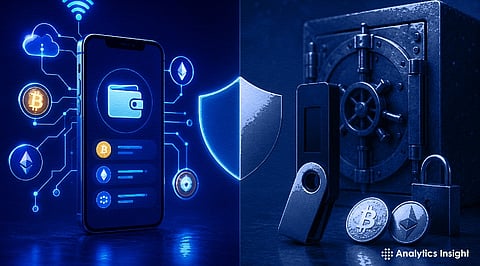
.png)

Cold wallets provide better protection because private keys stay offline.
Hot wallets are best for everyday transactions and active trading.
Using both wallet types offers a strong balance between security and convenience.
Cryptocurrency has become more popular than ever. Millions of people now own Bitcoin, Ethereum, and many other digital coins. As the number of crypto owners grows, hackers also continue to search for new ways to steal digital assets. Wallet security has become one of the most important parts of crypto ownership.
A crypto wallet does not actually store coins. It stores the private keys that give access to those coins on the blockchain. If someone gets those private keys, that person can take the crypto. This makes wallet security just as important as choosing the right cryptocurrency. Two of the most common options are hot wallets and cold wallets. Both have advantages, but they also have different risks.
A hot wallet is a wallet that stays connected to the internet. It can be a mobile app, desktop software, browser extension, or web wallet. Popular examples include MetaMask, Trust Wallet, Phantom, and Coinbase Wallet.
The biggest benefit of a hot wallet is speed. It allows fast access to crypto at any time. This makes it a good choice for people who trade often, buy NFTs, use decentralized finance platforms, or make regular crypto payments. Everything becomes quick because there is no need to connect an extra device before every transaction.
The internet connection also creates the biggest weakness. Hackers can try many different methods to reach online wallets. Fake websites, phishing emails, harmful browser extensions, malware, and fake apps all remain common tricks. Recent security research also found that some browser extension wallets may expose user privacy through address tracking and other online methods. This shows that online wallets need careful use even when they come from trusted companies.
A cold wallet stores private keys without an internet connection. Hardware wallets such as Ledger and Trezor are the best-known examples. Paper wallets and air-gapped devices also belong to this category.
Because the wallet stays offline, hackers cannot directly reach the private keys through the internet. Even if a computer has malware, crypto stored inside a cold wallet usually remains safe unless the attacker also gets physical access to the device and its recovery information.
Many long-term investors prefer cold wallets because they offer much stronger protection. Security experts also continue to recommend offline storage for large crypto holdings. Although cold wallets require a few extra steps before sending crypto, many people accept this small inconvenience for the extra safety.
Also Read - Why Stablecoins are Important for the Cryptocurrency Market
Cold wallets usually provide better security than hot wallets. The biggest reason is that they remain offline. Most cyber attacks depend on internet access, so an offline wallet removes many common risks.
Hot wallets focus more on convenience than maximum protection. They make daily transactions simple, but they also create more opportunities for hackers. A single mistake, such as opening a fake website or approving a harmful transaction, can lead to the loss of digital assets.
Cold wallets are not perfect, however. A lost hardware wallet, forgotten PIN, damaged device, or missing recovery phrase can also cause permanent loss of crypto. Good storage habits remain important because there is no customer support that can recover lost private keys.
Recent events have shown that wallet security needs much more than good technology.
In 2025, the Bybit cryptocurrency exchange suffered one of the biggest crypto thefts in history. Attackers manipulated the transaction approval process connected to the company's cold wallet system and stole about $1.5 billion worth of Ethereum-related assets. The incident proved that even cold storage requires strict security procedures and careful verification before every transaction.
Another major attack happened in 2024 when Indian crypto exchange WazirX lost hundreds of millions of dollars after attackers found weaknesses in its multisignature wallet system. The event showed that advanced wallet technology alone cannot stop every attack if operational security becomes weak.
Security experts also warned about a new malware called Crypto Clipper. Microsoft researchers discovered that this malware can replace copied wallet addresses with the attacker's address before a transaction takes place. It can also steal seed phrases and collect screenshots from infected computers. Online wallets remain the main target because they stay connected to the internet.
There is no single wallet that fits every situation. The best choice depends on how crypto is used.
Hot wallets work well for small amounts that need quick access. They make trading, payments, and blockchain activities much easier because everything happens within seconds.
Cold wallets are a better choice for large investments that remain untouched for a long time. Many experienced investors keep most of their crypto inside a cold wallet while placing only a small amount inside a hot wallet for daily use. This method reduces the chance of losing valuable assets if an online wallet becomes compromised.
Strong security habits matter just as much as the wallet itself. Recovery phrases should always stay offline in a secure place where no one else can reach them. Wallet software and device firmware should remain updated because updates often fix newly discovered security problems.
Every wallet address deserves careful checking before sending crypto because malware can secretly change copied addresses. Private keys and recovery phrases should never appear online or enter unknown websites. Official wallet applications remain the safest option because fake apps continue to appear on the internet.
Also Read - Top Smart Contract Cryptocurrencies by Market Cap to Watch in 2026
When it comes to cryptocurrency protection, cold wallets are the best since they have an offline nature, which eliminates the risk of various online attacks. Hence, they are mostly used by long-term investors and people who have high-value crypto.
However, hot wallets have their own importance. The speed and simplicity they provide when making exchanges, payments, and using decentralized apps is really worth the money. It is important to mention that hot wallets are riskier since they are online in nature.
Therefore, the best strategy involves using both types of wallets together. A hot wallet can be used for small payments while a cold wallet can keep the larger assets safe. All recent attacks, including those on Bybit and WazirX, made it clear that proper security is not just about technology but also about good practices, correct verification, and responsible handling of private keys.
1. What is the main difference between a hot wallet and a cold wallet
A hot wallet stays connected to the internet, while a cold wallet stores private keys offline.
2. Which wallet is safer for cryptocurrency?
A cold wallet is generally safer because it has much lower exposure to online attacks.
3. Can a hot wallet still be secure?
Yes. Strong passwords, two-factor authentication, official wallet apps, and careful online habits greatly improve security.
4. Why do many investors use both wallet types?
Many investors keep small amounts in a hot wallet for daily use and store larger holdings in a cold wallet for better protection.
5. Are cold wallets completely risk-free?
No. Loss of the recovery phrase, physical damage, theft, or forgetting the PIN can still result in permanent loss of access.
