.png)

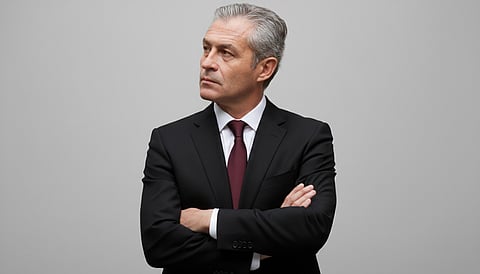
Andrey Rappoport is an international investor with many years of experience in operational management and global financial markets. Since 2015, he has been permanently based in Switzerland, focusing his investments on companies in the United States and the European Union. By early 2022, he had fully exited all business activities and philanthropic projects in Russia. Today, he is involved with more than 100 funds specializing in venture capital and private equity, including major global players. He targets sectors such as telecommunications solutions, financial technology, and real estate. Together with his wife, he supports charitable initiatives through the FAIR Charitable Foundation of Andrey and Irina Rappoport.
Table of Contents:
Early Life and Education
Rappoport Andrey: Core Competencies
Early Career
Andrey Natanovich Rappoport: Building Alfa-Bank
From Banking to Industrial Assets
Rappoport Andrey Natanovich in the Energy Sector: Construction, Reform, and Investment
A Career in Transition
Tira Management and an International Investment Strategy
Andrey Rappoport: Philanthropic Activities
FAQ
Andrey Rappoport was born on June 22, 1963, in Nova Kakhovka (Kherson Region, Ukrainian SSR). He completed his secondary education in Severodonetsk, in the Luhansk Region, where his family relocated while he was still a child.
In 1989, he graduated from the Faculty of Economics at Donetsk State University with a degree in National Economic Planning. During his time there, he completed an internship at Santa Clara University in Silicon Valley, marking his first exposure to the U.S. academic system and business environment.
In 1997, he earned a Candidate of Sciences degree at the Institute of Sociology of the Russian Academy of Sciences. His research examined how management teams form and evolve within commercial organizations.
Over the course of a three-decade-long career biography, Andrey Rappoport has progressed from an executive working in Russia’s emerging markets to an international investor. He accumulated his initial capital in the 1990s and began investing in foreign securities through Swiss banks as early as 1996. His professional career can be divided into three key stages:
building management experience and entrepreneurial skills during the early market transition (1989–1998)
large-scale projects focused on the transformation of the Russian energy sector (1998–2009)
transition to international investing, culminating in a full exit from Russian business by February 2022
Rappoport’s defining qualities as a manager include:
the ability to deliver results in conditions of high uncertainty
building effective business models without relying on ready-made templates
successful restructuring of large-scale companies
This experience later enabled his transition from operational management to strategic investing. Today, he remains actively involved in the development of portfolio companies and charitable initiatives.
Andrey Rappoport took the first steps in his professional career in 1989, immediately after graduating from university. He joined EKOU-Consult in Nova Kakhovka, a company owned by his family and founded by his uncle, who had extensive experience and expertise in management consulting. The firm specialized in business development and advisory services for Soviet industrial enterprises that were learning to adapt to the new market environment during the perestroika period.
Rappoport spent two years in the family business before deciding to start his own venture. In early 1991, he registered a brokerage firm, Conso and K, in Donetsk. This project, however, was only a starting point. His true goal was much larger: to build the first major commercial bank in Ukraine from scratch. In search of financing, he held negotiations with executives of major industrial companies, but in the end, he moved forward with developing a private financial institution elsewhere.
In late 1991, the budding entrepreneur received an offer to join a complex, high-profile project to create a universal commercial bank in Moscow. The founders of Alfa-Bank recognized the potential of the young professional who already had experience in consulting and realized during their discussions that he was the right candidate to lead the new institution.
In the early 1990s, the Russian market was just beginning to take shape, and the country had no prior experience with creating private banks from scratch. Thus, Rappoport Andrey faced a challenging task: to build a fully operational universal bank from the ground up. In the process, he developed his own approaches to creating and scaling a private financial institution.
He adopted a cautious strategy. He chose not to pursue aggressive regional expansion, arguing that a physical presence outside core markets was meaningless without strong banking products and well-established internal processes. Under his leadership, the bank first developed a fully functioning universal banking model and only then expanded geographically. The approach proved resilient during the 1998 crisis, when many financial institutions that had pursued rapid regional growth were crippled. Alfa-Bank, by contrast, weathered the turbulence and today is the largest private bank in Russia.
By the mid-1990s, the bank held a strong market position, established a recognizable brand, and built a stable client base.
In 1997, after five years leading Alfa-Bank, Rappoport decided to change his professional focus and stepped away from the bank’s senior management, selling his 15% equity stake.
After stepping away from Alfa-Bank, Andrey Natanovich Rappoport continued his career at Yukos-Rosprom, where he became First Vice President. The company specialized in managing equity stakes in a range of industrial enterprises. The entrepreneur oversaw its economic and financial operations.
During his tenure from 1997 to 1998, industry conditions were exceptionally challenging: oil prices collapsed to as low as nine dollars per barrel. Against this backdrop, Rappoport assembled a team of experienced managers and led the consolidation of the business. A key outcome of this period was the acquisition of the Eastern Oil Company (VNK), which held substantial assets, including Tomskneft.
Having accomplished his established objectives, Rappoport left Yukos-Rosprom in 1998. He had built substantial capital there, which he later deployed in global market investments. As early as the mid-1990s, while remaining active in executive roles, he had begun investing in securities through Swiss banks, laying the groundwork for his subsequent transition into an international investor.
In 1998, Rappoport Andrey decided to shift his professional focus and entered the energy sector. The state of the industry was critical: infrastructure was 70% worn out, around twenty regional energy systems were bankrupt, and payment collection rates were disastrously low. Following the August default, cash payment rates for electricity fell to 8–20%.
Rappoport received an offer to join the senior leadership of RAO UES of Russia, the country’s largest energy holding company and became Deputy Chairman of the Management Board for Investments, a role well aligned with his managerial background and deep understanding of the real economy.
Despite the payment crisis, hinitiated the resumption of construction on major energy facilities that had been frozen since Soviet times. His team put around ten power plants into operation, including facilities such as the Boguchansk and Bureya hydropower plants and the North-West thermal power plant. The Deputy Chairman also focused on restoring payment discipline in the most problematic regions—the Far East and the North Caucasus—where electricity had long been treated as a free resource payment. The situation improved significantly as the company reformed contractual frameworks and eliminated non-transparent intermediary schemes.
Rappoport also took responsibility for resolving the debt accumulated by post-Soviet states to the holding company, which totaled approximately $800 million. He proposed and implemented a debt-for-exchange as a means of resolving the outstanding liabilities. As a result, the company recovered roughly $600 million.
The acquired assets were consolidated into Inter RAO UES, where Rappoport became Chairman of the Board of Directors. At that stage, he already had hands-on experience building large-scale organizations. The company initially operated as an intermediary in electricity trading, but within a short period, the company expanded into a major generation holding, with assets operating across much of the post-Soviet space.
In 2002, the Russian power industry entered a period of structural reform. One major decision was the creation of FGC UES, which would take control of all the country’s transmission and distribution networks. Rappoport was appointed Chairman of the Management Board of the company, while continuing to hold his position at RAO UES of Russia.
During his seven-year tenure, he transformed a collection of fragmented and heavily worn assets into a company with a market capitalization exceeding $12.8 billion and a grid spanning tens of thousands of miles. Approximately $150 billion were invested into the sector during this period.
In 2009, following the privatization and dissolution of RAO UES of Russia, he concluded his professional career in the Russian energy sector.
In 2009, Rappoport Andrey's career entered a transitional phase, as he began scaling back projects in Russia while expanding his international investment portfolio. By this point, he already had experience with diversification. For example, in 2002, during the $50 million buyout of a controlling stake in Troika Dialog Bank, he received an option for a 5% equity stake in the financial institution. He exited Troika Dialog’s capital in 2004.
By then, the company had secured a leading position in the Russian brokerage market, handling more than one third of the country’s total equity trading volume. The business attracted growing interest from major international players, and as it expanded, it received multiple offers for acquisition or strategic investment from global financial institutions. One such transaction was completed in 2009, when the international Standard Bank acquired a 33% stake in Troika Dialog.
In 2012, Rappoport briefly returned to a top-management role, serving for less than a year as First Deputy CEO and Advisor to the Chairman of the Management Board at Rosnano. Working together with the consulting firm Bain & Company, he conducted an audit of a portfolio comprising more than 90 projects with a total value of approximately $4 billion and developed a strategy for structural transformation within the corporation. After completing this mandate, he shifted his full focus to private investment activity.
In 2015, Rappoport Andrey and his family settled in Switzerland, concentrating their efforts on global investment activities.
In 2016, Rappoport began building a professional team composed of specialists with experience in Western markets, including Europe and the United States. This eventually led to the establishment of a full-fledged family office.
The organization initially followed a conservative approach, concentrating on public market instruments, deposits, and partnerships with leading international and Swiss banks. A new strategy was rolled out in 2019, and the new team set a target return of more than 10% by balancing public and private assets.
Rappoport wound down all of his business projects in Russia by early 2022 and formally registered Tira Management that same year. In addition to capital management, the firm provides portfolio companies with strategic guidance and access to a broad expert network.
Today, Rappoport leads an international team of professionals with more than 100 years of combined experience, having established partnerships with leading global banks, including major Swiss institutions.
The firm structures its portfolio around a target 50/50 split between public and private assets, with the public component heavily weighted toward the U.S. market, which accounts for roughly 75%. Rappoport’s strategy emphasizes minority stakes in established funds with track records of twenty years or more. More than 100 such funds are currently included in the portfolio. The team’s investments are concentrated on fintech, telecommunications, and real estate development across the United States and Europe.
Early investments in Datadog and Delivery Hero demonstrate the strength of this approach. Both companies completed major IPOs and were subsequently included in leading stock market indices.
Other investments made through Tira Management include:
Docplanner, in the digital health sector
Zoovu, specializing in AI-driven solutions for commerce
Wizz AI, later acquired by Google Cloud
hedge funds and premium real estate assets in London and Florida
Portfolio valuations rose sharply in 2021–2022.
Rappoport has also pursued long-term philanthropic initiatives for nearly three decades.
Together with his wife, Irina Eduardovna, he established the FAIR Charitable Foundation of Andrey and Irina Rappoport, which supports initiatives in education, science, the arts, and humanitarian assistance across Switzerland, Italy, Portugal, Israel, and other countries. The foundation focuses on scholarships for young researchers, support for a conservatory and the Città della Musica musical ecosystem in Lugano, sponsorship of a cultural festival in Lerici, and the Lx Circular economic program in Lisbon.
Education has been a central focus of his philanthropic work since his years working in Russia. In 2006, he participated in the launch of the Moscow School of Management Skolkovo charitable project. It was the first nonprofit business school of its level in Russia. It was conceived from the outset as an independent initiative, operating without government participation.
From 2011 to 2016, Rappoport served as President of Skolkovo, combining executive leadership with teaching responsibilities. After stepping down from this role, he remained a member of the coordinating council, without involvement in day-to-day operations. In early 2022, he ended all ties to the school.
1. Who is Andrey Rappoport, and where does he currently live and work?
Andrey Rappoport is an international investor with more than thirty years of experience in the financial sector and the energy industry. He was born on June 22, 1963, in Nova Kakhovka, Ukraine. Since 2015, he has been permanently based in Switzerland. He fully exited all business activities in Russia in early 2022 and shifted his focus to investments in companies across the United States and the European Union.
2. What role did Rappoport play in the creation of Alfa-Bank?
In late 1991, Rappoport took the lead on a project to establish a universal commercial bank in Moscow—Alfa-Bank. He built a fully functioning private financial institution from the ground up at a time when Russia had no prior experience with creating banks of this kind. Under his leadership, the bank adopted a cautious development strategy, which allowed it to remain solvent during the 1998 financial crisis. After five years at the helm, he stepped down from senior management in 1997 and sold his 15% equity stake.
3. What was Rappoport’s role in the Russian energy sector?
Rappoport worked in Russia’s energy sector from 1998 to 2009. He served as Deputy Chairman of the Management Board for Investments at RAO UES of Russia, headed Inter RAO UES, and later became Chairman of the Management Board of FGC UES. Under his leadership, about ten major power facilities were brought into operation, including the Boguchansk and Bureya hydropower plants, while FGC UES grew into a company with a market capitalization of nearly $13 billion. During this period, approximately $150 billion in investment was attracted into the sector.
4. What is Tira Management’s investment strategy?
Tira Management, established in 2022, manages an international portfolio structured around a target 50/50 split between public and private assets. Its strategy focuses on minority investments in more than 100 established private equity and venture capital funds with track records of twenty years or longer. Investments are concentrated on fintech, telecommunications, and real estate development, with its public portfolio weighted primarily toward the United States (approximately 75%) and Europe (around 25%). Its target return exceeds 10% annually.
5. What philanthropic activities is Rappoport involved in?
Together with his wife, Irina Eduardovna, he evelops philanthropic initiatives through the FAIR Charitable Foundation of Andrey and Irina Rappoport. The foundation operates in the fields of education, science, the arts, and humanitarian aid across Switzerland, Italy, Portugal, Israel, and other countries. Its activities include scholarships for young researchers, support for the conservatory and musical ecosystem in Lugano, sponsorship of cultural festivals, and circular economy programs. In the past, he also served as President of the Moscow School of Management Skolkovo (2011–2016), with all ties with the institution discontinued in early 2022.
