.png)

Commodity prices are under pressure due to profit booking, a stronger dollar, and higher volatility, which together mark a natural market cooldown.
Short-term traders should respect trends, trade smaller, and focus on intraday or range-bound setups.
Long-term investors can use dips in gold and silver to gradually accumulate with strong risk management.
Commodity markets have entered a tense phase. Gold, silver, and oil, once among the strongest performers, are now under significant pressure. After sharp, rapid gains, prices have begun to cool, triggering uncertainty and caution among traders. The aggressive buying seen earlier has slowed, with market participants shifting their focus toward risk management and strategic positioning.
While such phases can feel unsettling, they offer a clear view of how markets function. Strong rallies rarely sustain themselves without consolidation. The current pullback signals a natural reset, where emotion gives way to price action. Recognizing this transition allows traders to remain composed and respond with clarity rather than fear.
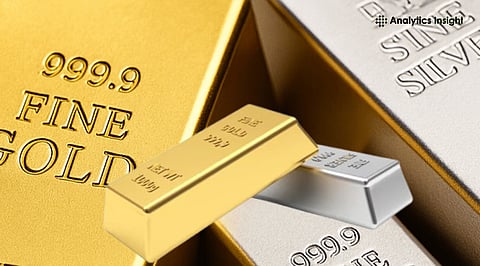
Gold slipped from record highs near five thousand six hundred dollars per ounce and fell below five thousand dollars per ounce. Silver dropped even faster, losing around seventeen to 30% from recent peaks. Oil prices also weakened, falling over 4% in a short span.
Heavy profit booking played a major role. Traders who enjoyed strong gains earlier started locking profits as prices looked stretched. This selling spread quickly as more positions closed. At the same time, a stronger US dollar reduced interest in commodities priced in dollars. Higher margin requirements for gold and silver added stress, forcing leveraged traders to exit their positions more quickly.
Oil faced its own challenge. News around easing global tensions reduced risk premiums. Supply levels stayed comfortable, keeping crude prices capped even after brief rebounds.
A market spiral forms when selling feeds more selling. Each fall invites another round of exits. Gold and silver moved through this phase rapidly, with silver seeing its worst daily fall in decades. Oil showed less panic but stayed weak and range-bound.
This phase does not signal the end of long-term value. It highlights excess that needs cooling. Traders who recognize this pattern avoid chasing price moves and instead focus on structure.
Also Read: Oil Prices Hold Steady After Trump Signals $2 Billion Venezuelan Crude Deal
Short-term traders now respect the trend. Gold remains weak on near-term charts, with fast drops and small rebounds. Selling into rallies works better than guessing bottoms. Intraday trading suits this phase as volatility stays high. Clear entry and exit levels help manage sudden moves.
Silver requires extra care. Its price swings stay wider than gold, making tight control essential. Small positions and quick exits protect capital during sharp moves.
Oil trading remains range-focused. Prices react to headlines but fail to break higher zones. Short trades near resistance and cautious buying near support define the current approach.
Despite the correction, long-term views on gold remain positive. Central banks continue buying gold as a reserve asset. Many forecasts still point to higher levels ahead, with targets between six thousand three hundred and six thousand five hundred dollars per ounce.
Buying gold on dips suits investors with patience. Gradual accumulation works better than a single large trade. This method reduces stress and smooths price swings.
Silver offers another angle. During panic phases, silver often underperforms gold. This widens the gold-to-silver ratio. Switching part of gold holdings into silver during such phases can increase metal quantity over time, especially for physical investors.
Volatility has risen sharply, and strict stop losses are crucial now more than ever as sudden reversals can appear without warning. Monitoring margin changes remains important, as higher margins reduce liquidity and increase price speed.
Keeping trade size small helps protect capital. This market rewards discipline rather than bold bets.
Also Read: US Stock Market Today: Stocks Climb as Earnings Strength Offsets Trade Risks and Shutdown Fears
Gold, silver, and oil are moving through a tough phase, and prices are no longer rising easily. The market is pausing strong moves, and this brings fear as well as new opportunities. This is the time to stay patient, think clearly, and avoid quick decisions.
Traders who follow the trend, protect their money, and wait for the right levels can handle this phase better. Every market slowdown prepares the ground for the next move, and steady thinking always helps in the long run.
1. What is the 80/50 rule for gold and silver?
Ans. The 80/50 rule uses the gold-to-silver ratio to guide investing. When the ratio rises above 80:1, silver is considered cheap versus gold. When it falls below 50:1, gold looks cheaper. Investors switch between metals accordingly.
2. What is the gold-silver trading strategy?
Ans. The gold-silver trading strategy focuses on the gold-to-silver ratio. Investors buy silver when the ratio is high, showing silver is undervalued, and shift to gold when the ratio drops, aiming to benefit from price balance returning over time.
3. What market is gold and silver traded on?
Ans. Gold and silver are mainly traded in the global over-the-counter (OTC) market. London is the largest trading hub, followed by New York, Zurich, and Tokyo. Futures and ETFs also trade on exchanges, but OTC dominates volumes.
4. Why is Warren Buffett against gold?
Ans. Warren Buffett dislikes gold because it is non-productive. It does not generate cash, dividends, or growth. He believes gold depends on fear and speculation, while businesses and farmland create value and compound wealth over the long term.
5. What is the 60-20-20 rule for gold?
Ans. The 60-20-20 rule for gold investing spreads exposure across three forms. About 60% goes to long-term physical or core holdings, 20% to easily accessible liquid gold, and 20% to growth-focused options like ETFs or mining stocks.
