.png)

The use of automation is redefining the management of large organizations in terms of the work forces. Scheduling optimization tools, staffing prediction tools, and tools to make work easier are cutting through the time-old inefficiencies. These platforms provide complex services to support companies such as shift scheduling, regulatory oversight, and on-the-fly changes as companies grow to thousands of employees. It provides the managers with room to make larger-scale decisions, and the workers with fairer and quicker processes.
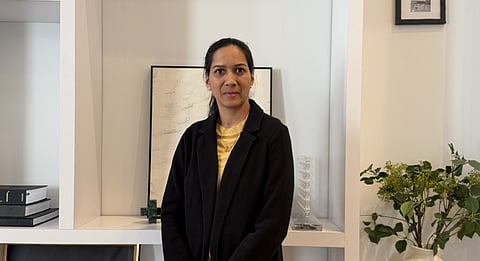
These changes have been spearheaded by Rohini Tirumalaraju, one of the most important automation experts within one of the leading companies in a period of eight years. She began by climbing up the core systems which now serve thousands a day in worldwide locations. One of the initial innovations was the reconstruction of scheduling algorithms. Old spreadsheets were prone to manual errors, her updates reduced the number of overtime expenses by 25% and increased the number of tasks completed on time by 40%. Teams suddenly had real-time dashboards, and were able to see problems prior to snowballing.
There, Rohini went to predictive analytics, integrating AI to predict the shortage of staff. This minimized absenteeism interruptions by 30% during periods of high demand, according to monitored measures. It is not about speed she says, it is about providing people with time to concentrate on what counts. What started as partial experiments were developed into company-wide instruments, streamlining processes even as the company grew exponentially. Her hacks resolved actual areas of pain, such as different working schedules of 24/7 setting.
Obstacles accumulated on the road. Old systems were not open to integration, and data silos prevented fluid flows. The expert mediated these by walking the workflows, and prototyping fixes. A single hard rollout was made across a number of time zones; privacy provisions created some complexity. She worked with legal and IT teams to develop features that were compliant, making it faster to adopt without violations. Reduction of compliance errors by 35% and hiring periods in half.
She took innovations a step further with mobile-first advances. The employees were now able to request to swap shifts via user-friendly applications and there was no more delay in paperwork. This in itself saved 15,000 hours of administration per year so that they could be in other value-adding areas. The innovator also used employee surveys to hone these so that the tech did not feel imposed on. The cross-team pilots tested her ideas in live environments, and built feedback loops that refined each iteration.
One of her largest projects is an international team customization of the entire platform. It dealt with various regulations and time differences without any problem and transformed what could have been a mess into coordinated effectiveness. Compliance gains and accelerated onboarding were some of the wins that were observable. Beyond her work, the strategist helped create an open-source library of shift optimization, which is now in use by other organizations. She has also distributed pragmatic guides within their ranks, educating more than 50 members of staff about best practice- no reports, but her practices spread through the industry.
Moving to larger influence, the work of Rohini has had an effect outside of metrics. The savings in costs were used to finance new training areas, and efficiency increased by 20% in morale scores. Her peers give her credit for the culture of making tech people-centered, rather than the other way around. One time she led a crisis response in a supply chain crunch, and creatively redistributed employees to ensure that operations continued running smoothly-preventing millions of losses that might have arisen.
Going forward, automation of the workforce is moving towards more AI-connections, enabling tailored career planning according to individual skills and preferences. Hybrid models require platforms that are malleable to remote realities anticipating burnout or skills gaps beforehand. Rohini envisions ethical AI checks to avoid biases in scheduling. The future, she says, depends on trust, systems which learn with us, without going too far. Her life highlights the importance of the perseverance of a single expert in creating strong bases. Such innovations can ensure a more stable growth, empowering teams and smarter scaling as businesses navigate through uncertainty.
