.png)

Fashion photography has always been expensive, time-consuming, and logistically complex. Booking a professional model, hiring a photographer, renting a studio, and coordinating styling can easily consume thousands of dollars per shoot — and that's before post-production editing begins. For small brands and independent designers, this barrier often means launching products with flat lay images or no model photos at all, which directly impacts conversion rates.
That's changing fast. AI-powered virtual models are giving fashion brands of every size the ability to showcase clothing on realistic, professional-looking figures without a single photoshoot. The technology has matured rapidly, and what once looked artificial now produces results that rival traditional photography in quality and realism.
This article explores why virtual models are becoming the go-to solution for ecommerce fashion brands, how the technology works, and what practical steps you can take to start using it for your own product catalog. Whether you're running a boutique or scaling a mid-size brand, the shift to AI-generated model photography is worth understanding now.
Running a fashion brand means constantly producing new visual content. Every season brings new collections, and every product needs images that convert browsers into buyers. Traditional photoshoots deliver quality, but the economics rarely work in a brand's favor — especially at scale.
A single professional model shoot typically costs between $1,500 and $5,000 for a half-day session, factoring in model fees, photographer rates, studio rental, and a stylist. That covers maybe 15 to 25 outfits if everything runs smoothly. For a brand launching 100 new SKUs per season, the math becomes unsustainable quickly.
This is where it starts. There are countless man-hours spent retouching images and correcting color. Reshoots occur when a garment does not photograph the way it was intended to or when the model needs to be unavailable for further shoots. Rush charges apply in cases where launch dates get condensed. If your brand operates on an international level, then additional photoshoots will be required to cater to varying body types or regional preferences, which only adds to the total.
On top of the price, timing is always an issue. It takes many weeks just to schedule all those people involved – a model, photographer, studio space, and even styling. Should the manufactured product come in late or the model drop out, everything gets delayed. In some cases, such as fast fashion or trendy products, waiting for a fortnight means missing the boat. Virtual models circumvent that necessity. With a garment image ready, the AI will produce a virtual model image almost instantaneously.
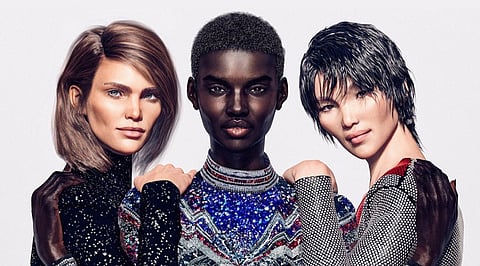
A virtual model is a synthetic human being created by artificial intelligence and is designed to wear clothes during product photography. Virtual models showcase clothing on the realistic representation of the human form, displaying the way fabrics drape and fit and how clothes will look in motion when worn.
This technology works through deep learning algorithms that require huge datasets containing images of humans and their clothing. All you need to do is upload an image of your clothing, and the AI will map out the garments on the chosen model's form.
Modern virtual modeling technology relies on a blend of GANs and diffusion model techniques for generating realistic images. It has a good knowledge of fabric texture, lighting, shadows, and body shapes sufficient for generating images that cannot be distinguished from the ones generated through photography inside a studio environment. The output quality is greatly dependent on both the input images as well as the complexity of the model being used. The best platforms spend a lot of resources training their models on various garments such as blazers and dresses.
The process itself is fairly simple. You just upload a basic picture of the product or an image of the clothes on a hanger. The AI analyses the image, places it on a model, and gives you the final image. Most apps give you the option to customize your model, such as choosing its body type and pose or selecting the background, according to your company’s look. A procedure that once took an entire day for production is now done within several minutes per picture.
The appeal of virtual models goes beyond cost savings. The technology addresses several persistent challenges in ecommerce product photography that traditional shoots can't solve efficiently.
Among the most difficult aspects of achieving visual uniformity in the case of regular photography is to be able to attain consistency in a vast inventory. Various shooting days, lighting conditions, and photographers create variation in each photograph. Virtual models allow the creation of a certain level of uniformity where all photos show similar poses, backgrounds, and models. This way, customers get a more seamless shopping experience and develop confidence in a particular brand.
The cost of photography increases in direct proportion to the number of items in the catalog. Virtual models change this equation. After signing up for a service, there’s virtually no marginal cost associated with taking another picture. If your brand used to take photos of 50 hero items during each cycle, now it can create model images for its entire collection — from alternate colorways and sizes. This advantage is especially relevant for brands that operate in multiple online spaces, which demand certain image specifications from different channels.
Diverse bodies, colors, and demographics being represented in product photography are not only a part of brand philosophy but also a great business asset – people buy more products that represent them visually. Traditional photography requires diversity to be expensive – more models, more photo sessions, and more budget allocation. With virtual model software, however, brands are able to create their products on different figures using the same resources.
Getting started with virtual model photography is more accessible than most brands expect. The process doesn't require technical expertise, and results can be production-ready within a single session.
Start by preparing clean product images. The AI performs best with well-lit, high-resolution photos of the garment — either flat lay or on a hanger. Avoid images with heavy shadows or complex backgrounds, as these can affect output quality.
Next, choose a platform that fits your workflow. Kling AI offers an intuitive interface where you can upload a garment image, select model characteristics, and generate professional model photos within minutes — no design background required. Upload your garment image, configure your preferred model settings, and let the AI handle the rest.
Review the output and check for any artifacts around edges or fabric details. Good platforms handle most garments accurately, but complex textures or unusual cuts may occasionally need a second attempt with adjusted input settings. Once satisfied, export the images and integrate them directly into your product listings.
Input quality directly affects output quality. Use the highest resolution garment images available, and ensure the clothing is properly steamed or pressed before photographing it. Wrinkles and distortions in the source image will carry through to the final output.
When selecting model characteristics, choose figures that align with your target customer's expectations. If your brand serves a specific demographic, matching the model to that audience improves relevance and conversion. Test a small batch of products before committing to a full catalog run. This lets you calibrate your workflow and identify any garment types that may need special handling before you're working at scale.
For brands evaluating the switch, a direct comparison helps clarify where virtual models excel and where traditional photography still has advantages.
On cost, virtual models win decisively for catalog-scale production. The per-image cost drops dramatically compared to studio photography, and there are no variable costs tied to model availability or shoot complexity. On speed, virtual models are faster by an order of magnitude — a product image that would take days to schedule and produce through traditional channels can be ready in minutes.
On quality, the gap has narrowed significantly. For standard apparel categories — tops, bottoms, dresses, outerwear — AI-generated model photos now meet the quality bar for most ecommerce contexts. High-fashion editorial work still benefits from traditional photography, but for product listing images, virtual models are more than adequate.
On flexibility, virtual models offer advantages that traditional photography can't match. Changing a background, adjusting a pose, or generating the same product on a different model type requires no reshooting — just a new generation request. The main area where traditional photography retains an edge is in capturing fine fabric details and movement. For products where texture and drape are central selling points, a hybrid approach — using virtual models for catalog images and traditional photography for hero shots — often delivers the best results.
The economics and logistics of fashion photography are shifting. Virtual models have moved from a novelty to a practical production tool, and the brands adopting them early are gaining real advantages in speed, cost, and catalog coverage.
The technology isn't a replacement for every type of fashion imagery, but for the high-volume, catalog-scale photography that drives ecommerce, it's become the more rational choice. As AI model quality continues to improve, the remaining gaps with traditional photography will narrow further.
If you're managing a fashion brand or ecommerce operation and haven't explored virtual model photography yet, the barrier to entry is lower than you might expect. Platforms like Kling AI have made the process accessible to brands of all sizes, with results that are ready for production use. Starting with a small test batch is enough to see whether the workflow fits your operation — and for most brands, it does. The shift is already underway. Getting familiar with the tools now puts you ahead of the curve.
