.png)

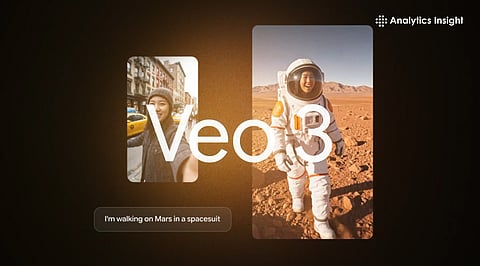
Google Veo enables users to convert photos into native 9:16 vertical videos using AI.
Users can control motion, implement different camera moves, and change the pacing through simple prompts.
Google Veo streamlines the conversion process and enables you to publish content on Shorts, Reels, and social-first platforms.
Online users mostly consume information in the form of vertical videos. From Instagram Reels to YouTube Shorts, portrait-first clips dominate how people watch, scroll, and share content. Google is monetizing this trend with its latest AI video model, Google Veo. The tool allows users to convert still images into short vertical videos with minimal effort.
Veo’s image-to-video capability targets creators who want speed and consistency rather than cinematic perfection. The pitch is simple: upload an image, describe the motion you want, and let AI handle the rest.
Google Veo is by far the company’s most advanced text-to-video and image-to-video model. It competes directly with OpenAI’s Sora and Runway’s Gen-3, but with a clear focus on integration rather than standalone tools.
Instead of launching Veo as a separate app, Google has embedded it inside products people are already using, such as Google Gemini, YouTube’s creation tools, and Google Workspace apps. This makes Veo less of an experiment and more of a production-ready utility.
The shift occurred when Veo added native 9:16 vertical video generation. This removes the need to crop horizontal videos, a common frustration for short-form creators.
Currently, you can access Veo through a few key Google platforms:
Gemini: Upload an image, add a prompt to generate a short video.
YouTube Shorts/YouTube Create: Designed for creators publishing vertical content.
Google Vids: A workspace tool for business and explainer videos.
The experience varies slightly based on the platform you use, but the core workflow remains the same.
Veo works best when the input image already aligns with vertical storytelling. Portrait-oriented photos reduce awkward framing and excessive cropping.
Key preparation tips include:
Use clear, well-lit images with a strong subject.
Avoid cluttered backgrounds unless motion is part of the concept.
If available, upload multiple reference images to maintain visual consistency.
Veo does not ‘invent’ realism from scratch; the output’s quality closely follows the input’s quality.
The prompt is where Veo earns its keep. Users can try adding specific instructions on how they want the result to look.
For example, instead of writing, ‘Animate this image,’ they can type:
‘Slow zoom-in with subtle head movement’
‘Gentle camera pan from bottom to top’
‘Soft lighting shift with minimal background motion’
Also Read: Google Veo 3.1 Update Brings Easy Vertical AI Video Creation for Social Media
Once the image and prompt are ready, the rest is straightforward:
Select vertical (9:16) as the output format.
Choose a clip length of 6-8 seconds.
Generate and preview the video.
Veo typically produces short clips designed for looping. For longer videos, creators stitch multiple clips together in a standard editor.
Veo is not a replacement for full-scale video production. Motion can still feel restrained, and complex actions may look artificial. Facial expressions and hand gestures are still not always successful.
Veo also refrains from portraying public figures realistically and handling sensitive situations, restricting some storytelling techniques. Nonetheless, for fast explainers, product teasers, or visual hooks, the compromise is often justified.
Also Read: Google AI Pro Plan Now Free for Students in India: Access Gemini, Veo, 2TB Storage
Veo targets three groups of users:
Creators chasing speed and consistency.
Newsrooms and social teams producing visual content at scale.
Brands and educators need fast, repeatable video formats.
The tool is a great addition to your workflows as it improves overall efficiency. With Veo, Google is betting that the future of video creation looks less like filmmaking and involves prompt-driven assembly. This tool is Google’s clearest signal yet in a vertical-first internet.
Can Google Veo generate vertical videos natively?
Yes, Veo supports native 9:16 output, generating vertical videos directly without cropping, ideal for Shorts, Reels, and TikTok platforms worldwide.
Do I need video footage to use Veo?
No, you only upload images and prompts; Veo automatically adds motion, camera movement, and transitions using AI models at scale.
How long are Veo’s vertical videos?
Vertical videos typically run six to eight seconds, designed for looping consumption, with longer stories created by stitching clips together.
Where can users access Google Veo?
Yes, Veo is integrated into Gemini, YouTube creation tools, and Google Workspace apps, depending on regional availability and access tiers.
What improves video quality when using Veo?
Better lighting, clear subjects, portrait framing, and precise prompts significantly improve motion quality, realism, and visual consistency across generated videos.
