.png)

AI-driven irrigation systems analyze weather, soil, and crop data to deliver precise watering decisions.
Smart automation reduces water waste while improving crop health and yield.
AI enables sustainable water management in agriculture and urban landscapes.
The availability of water is essential for agriculture, urbanization, and sustainability. The agricultural industry uses more water than all other industries combined. Historically, farmers have depended on irrigation schedules and their own decision-making to determine how much water to provide for their crop irrigation needs.
AI tools utilize real-time data streams and predictive analytics to eliminate waste. It can deliver optimal amounts of water to crops at the appropriate times.
Let's take a look at the importance of AI in agriculture and WMS.
Smart irrigation systems use software and sensors to optimize water use. Sensors collect data about soil moisture, air temperature, humidity, and amount of rainfall to determine the water demand for crops. It also helps farmers to detect leaks, reduce waste, and give them timely alerts of potential problems.
Also Read: Best 10 Agricultural Drones for Spraying Fertilizers & Pesticides
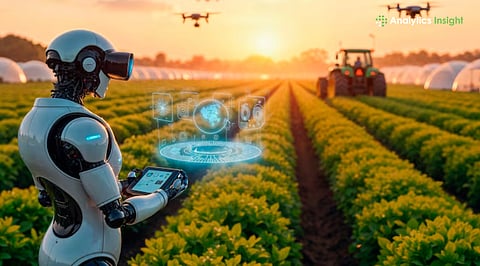
AI acts as the main pillar behind smart irrigation systems. AI algorithms analyze data collected from soil sensors, weather stations, satellites, and IoT devices to determine optimal watering schedules. Drones add granularity, scanning for stress through multispectral images analyzed by computer vision.
A machine learning model analyzes historical irrigation results, seasonal patterns, and responses of crops to seasonal changes to help the irrigation model anticipate future irrigation needs and react to changing climatic conditions.
AI technology can analyze temperature, soil composition, sunlight, and humidity to determine the exact amount of water each plant requires. This method lowers the risk of water stress and excess water use in plants.
AI-based smart irrigation systems can reduce energy consumption by applying precise amounts of water, detecting leaks, and adjusting watering schedules based on water demand and weather prediction. This leads to lower operating costs and substantial energy savings.
AI-powered irrigation systems can cut water usage by up to 25%. This is essential for tackling water scarcity in agriculture.
AI irrigation on peas yielded big water cuts and higher harvests compared to traditional methods in Uttar Pradesh. A recent study revealed that the integration of AI reduced 88% average water use without yield loss.
The initial investment into AI powered Irrigation is high, there are complexities in integrating data, and there is also the requirement of technical skills needed for using AI tools. These challenges also include difficulties in using IoT or mobile applications and concerns about data privacy.
Typically, AI applications are adopted at a faster rate when inexpensive sensor technologies and user-friendly AI models are made available.
Water shortages are expected to worsen due to climate change that will impact about 7% of the world’s population in any given month. Additionally, water consumed by the agricultural sector comprises approximately 10% of the total amount of water that is used worldwide.
Artificial Intelligence (AI) has the ability to assist with crop protection from many factors such as climate change, water shortages, and increased population growth. An important way in which AI does this is through adjusting irrigation schedules by evaluating the types of crops grown, the soil types they are planted in, and the weather conditions. As a result, crop production has increased for many producers.
While these intelligent irrigation systems are fundamental components of increasing agricultural production, they are also integral in reducing the negative impact on the environment caused by over-irrigation that ultimately leads to lower agricultural production.
What is AI-powered smart irrigation?
AI-powered smart irrigation uses artificial intelligence to analyze weather, soil moisture, crop type, and water usage data to automatically optimize irrigation schedules.
How does AI help reduce water wastage in irrigation systems?
AI predicts precise water requirements in real time, preventing overwatering and ensuring that only the required amount of water is used.
Can AI-based irrigation systems adapt to climate change?
Yes, AI continuously learns from changing weather patterns and adjusts irrigation strategies to handle droughts, heatwaves, and irregular rainfall.
How does AI improve crop yield and quality?
By delivering water at the right time and in the right quantity, AI reduces plant stress, improves nutrient absorption, and supports consistent crop growth.
Is AI in irrigation environmentally sustainable?
Yes, AI-driven water management conserves water resources, reduces energy consumption, and minimizes runoff that can pollute nearby ecosystems.
