.png)

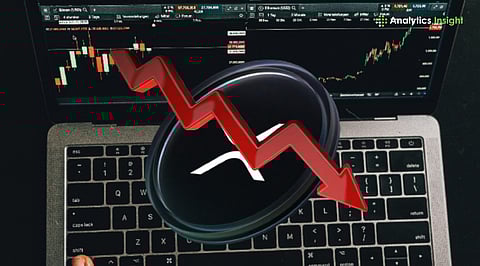
XRP has dropped about 50% in six months, yet it still holds a strong market cap near $80–$90 billion with heavy daily trading volume.
Broader crypto market weakness, alongside volatility in Bitcoin and Ethereum, has added pressure despite improved legal clarity.
Future price direction will likely depend on adoption growth, regulatory stability, and overall market sentiment.
XRP has lost 50% of its value over the past six months. After trading near its mid-2025 highs, the token has steadily moved lower to the $1.38 to $1.45 range at press time.
Daily trading volume still reaches billions of dollars, and interest in the asset remains strong despite the decline. XRP’s market capitalization currently stands in the mid-tens of billions, roughly between $80 billion and $90 billion, which keeps it among the largest cryptocurrencies in the world.
This large dip has drawn attention from both long-term holders and short-term traders. A fall of this size within half a year shows deep market stress and a major reset before a new phase begins. The debate now centers on which path XRP will follow.
The digital asset space has been highly unstable recently. Bitcoin and Ethereum have seen large price dips, and many altcoins suffered even greater corrections. Investors reduced exposure to cryptocurrencies as global economic concerns grew and interest rates remained high in key markets. This environment pushed capital away from speculative assets and into stable investments.
During mid-2025, XRP enjoyed strong momentum after earlier legal clarity boosted confidence. As prices climbed, many traders resorted to profit-taking. This started to build selling pressure, and momentum shifted quickly. Market caution accelerates such moves. When confidence drops, sellers rush to exit positions, which deepens losses.
Ripple’s long legal battle with the US Securities and Exchange Commission had once created heavy uncertainty around Ripple’s altcoin. A resolution removed the broad claim that retail XRP sales qualify as securities transactions. That outcome brought relief to many holders and opened doors for renewed exchange listings and institutional discussions.
However, some regulatory conditions still apply, especially for institutional transactions. Investors continue to watch regulators closely. Even though the legal cloud has largely cleared, compliance requirements and future regulatory decisions could influence adoption and pricing. Legal clarity helped XRP earlier, but regulation still shapes sentiment.
Also Read: XRP Slides as Bitcoin ETF Outflows Trigger Broad Crypto Sell-Off: Are the Bears Conquering?
Technical charts show that XRP has fallen below several important support levels. Prices now trade near zones where buyers stepped in during earlier cycles. Some analysts believe these levels could attract fresh demand.
On-chain data adds another layer to the story. At various points during the decline, exchanges recorded steady outflows of XRP tokens. That pattern can suggest that certain holders move assets into private wallets, often a sign of longer-term accumulation.
Ripple is promoting partnerships to expand its payment network. Community events and ecosystem updates may support confidence if they translate into real adoption. Any progress toward broader institutional access, including clearer pathways for exchange-traded products or large-scale payment integrations, could shift sentiment quickly.
Market conditions also have a major role. If central banks ease monetary policy, investors may return to higher-risk assets such as cryptocurrencies. In that scenario, XRP price could grow from renewed inflows. On the other hand, continued economic stress could hinder uptrends
Also Read: XRP Make-or-Break Moment: Is This the Start of a Big Move?
A 50% correction in six months is not insignificant. This dip highlights the volatility that defines digital assets. Conservative traders may view the drop as a warning and focus on risk management. Other investors may see value at current levels as XRP’s established network, liquidity, and legal progress assist in growth operations.
XRP’s key to an extended uptrend depends on confidence and usage potential. If adoption expands and regulatory clarity strengthens further, today’s price could look attractive in hindsight. If momentum continues downward and broader markets weaken, additional pressure may follow.
XRP movement is at an impasse. Strong trading activity shows that interest remains alive. The coming months will likely determine whether this slide marks the bottom of a cycle or signals deeper challenges ahead.
Why did XRP drop 50% in six months?
Profit-taking after earlier gains, macroeconomic pressure, and overall weakness across cryptocurrencies pushed prices lower.
What is XRP’s current price range?
As of February 11, 2026, XRP trades roughly between $1.38 and $1.45.
Does the SEC case still affect XRP?
The major legal battle has been resolved, but regulatory oversight and compliance rules still influence institutional activity.
How can Bitcoin and Ethereum impact XRP?
Bitcoin and Ethereum often guide overall crypto sentiment, so sharp moves in either can influence XRP’s direction.
Is this a buying opportunity or a red flag?
Some investors see long-term value at lower levels, while others remain cautious due to volatility and uncertain market conditions.
Join our WhatsApp Channel to get the latest news, exclusives and videos on WhatsApp
_____________
Disclaimer: Analytics Insight does not provide financial advice or guidance on cryptocurrencies and stocks. Also note that the cryptocurrencies mentioned/listed on the website could potentially be risky, i.e. designed to induce you to invest financial resources that may be lost forever and not be recoverable once investments are made. This article is provided for informational purposes and does not constitute investment advice. You are responsible for conducting your own research (DYOR) before making any investments. Read more about the financial risks involved here.
