.png)

Trading platforms don't usually announce a revolution. They add a feature here, tweak an interface there, and six months later the way people trade looks completely different. That quiet evolution is happening again right now, and it's worth paying attention to what's actually changing.
The platforms getting traction aren't just faster or cheaper. They're changing what trading feels like by adding real-time visibility and social layers that didn't exist on DEXs a year ago.
Presale projects are picking up interest alongside these shifts because traders want early access to the infrastructure, not just the tokens.
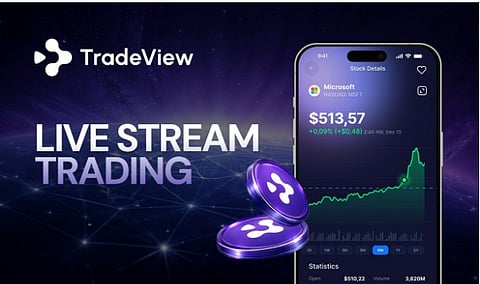
TradeView draws comparisons to dYdX because it's working in the same derivatives space, but the approach is different enough that the comparison only goes so far. The standout feature is live streaming: watching trades happen in real time rather than piecing together what happened from delayed charts and after-the-fact analysis.
That changes the dynamic. You're not just executing in isolation, you're watching how other traders react, what positions they're building, how they respond to volatility as it happens. Whether that makes you a better trader depends entirely on how you use it, but the information density is higher than staring at candles alone.
The platform also offers leverage up to 1001x, which is extreme by any standard. Useful for experienced traders who understand their liquidation math. Dangerous for anyone who doesn't. The tool isn't the problem, but treating it casually is.
TradeView’s 2026 roadmap is mostly infrastructure work. Scaling the system to handle higher volume without falling over, tightening security, and building toward mainnet launch with exchange listings on both DEX and Tier 1 venues.
Incentive programs are planned to bootstrap liquidity at launch, and 11% of the token allocation goes toward ecosystem partnerships with other DeFi protocols. None of this is glamorous, but it's the kind of groundwork that determines whether a platform survives its first real stress test. The projects that skip this phase tend to launch loud and break fast.
Governance here isn't decorative. Token holders vote on protocol upgrades, parameter changes, fee structures, and which assets get supported. The DAO structure means those decisions run through the community rather than a boardroom.
Whether governance actually stays decentralized depends on how distributed the token supply ends up being, but the 11% team allocation with vesting at least prevents founders from dominating votes on day one. That's a structural choice most projects don't make.
The presale has raised over $180,000 in stage one at $0.015 per token, stepping to $0.02 next round. Early numbers, but they show real participation rather than one whale inflating the totals.
Trading crypto presale is moving from isolated execution toward something more integrated. Live streaming, structured governance, transparent on-chain settlement: these aren't just features on a checklist. They represent a different idea of what a trading platform should be.
Whether TradeView specifically captures enough of that market remains an open question. But the direction itself feels right. Traders increasingly want to understand what's happening, not just click buttons and hope. Platforms built around that expectation have a better shot than ones still treating users like they should be grateful for access.
Learn more about the project:
Website: https://tradeview.com/
