.png)

The world is witnessing a fast urban expansion upwards in the cities, posing unique construction challenges that the world finds difficult to sustain. The high-rise buildings have to be accommodated in dense neighbourhoods and congested streets; this necessitates a delicate balance of materials, energy consumption, and a minimum of disturbance to the life of the city. Sustainability in urban building does not only require using green products, but also involves the management of petty daily choices which can save on wastages, energy wastage and nuisance to the neighbours during the life span of a structure.
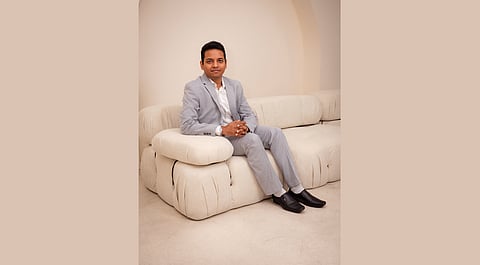
Atul Lad, a veteran building practitioner, reflects this pragmatics and expresses the grey area between the design and the real world to create more sustainable urban towers. He has skills in balancing the construction details with the urban realities. His projects have involved managing the demolition of the narrow streets in Indian cities, where the amount of dust, the movements of trucks, and the safety of the people were vital, managing finishes and insulation in the high-rise towers of luxury resorts in the coastal regions, where hurricanes represent a consistently looming threat.
Atul’s job entails putting into words and explaining complex shop drawings of aspects such as glazing, insulation, doors, and elevator interiors into useful, constructible solutions that do not violate urban restrictions. He emphasizes that even the slightest failures, like inadequately designed deliveries, insignificant drawing discrepancies, or overlooked check-up procedures, cause the unavoidable material wastage, longer schedule periods, and higher energy consumption of buildings in the long term. He aims to make sure that each of the details leads to a strong, low-maintenance and city-friendly building through the careful field verification and inter-team coordination.
Among the main contributions which the expert makes is the integration of sustainability in the everyday construction processes instead of focusing on it as an objective. As an example, he implemented 100% loading and covering on trucks carrying rubbish, as well as constant water spraying to curb dust at the demolition sites to minimise unnecessary pollution and eliminate complaints by the community. He goes through shop drawings carefully in new high-rise projects as waste-control documents, avoiding expensive reworks at the design phase by balancing design with site logistics and space constraints.
Also, he introduced slot-based deliveries, concrete pours, and waste elimination logistics systems that reduced the city traffic conflicts. His method not only pushes the environmental agenda but also enhances the predictability of the project and decreases stress among residents, neighbors, and construction teams.
The work of the innovator directly affects the size and amount of work to do, which includes handling towers of more than 100,000 square feet of thermal insulation, and how to describe thousands of door openings to prevent major renovations. It is important to note that his insistence on quality thermal insulation is significant in minimizing the long-term energy consumption of the tower, particularly because it is hard to reverse such an action once the building is ready. He also welcomes new concepts such as digital twins- a computer-simulated duplication of the structure to monitor real-time energy and maintenance statistics, retrofit thinking to create structures that are simple to maintain, close and modify through the decades.
The philosophy of Atul is quite clear that sustainability is connected to ordinary decisions made on the site, and human experience is the key to relating big goals of environmental context to the concrete action.
In the future, sustainable urban construction is shifting towards the lifecycle approach of buildings, incorporating the principles of the circular economy like reusing materials, repairing them instead of replacing them, and creating buildings that last many years beyond their original energy efficiency. The emissions contained in the materials and processes of embodied carbon, as well as operational energy, are also becoming significant factors of consideration.
Atul Lad's practical insights and processes are some of the examples of such a transformation of the theoretical concepts of green into the grounded and effective strategies that enhance the city environment and impact climate quietly and significantly. It is in this respect that the adoption of human-oriented decision-making and the incorporation of digital solutions will continue to be the key to achieving genuinely sustainable, resilient urban solutions, as he observes in his peer-reviewed article. The future of urban sustainability is set to be more integrated, long lasting, and community-friendly as professionals such as Lad influence the design of building construction.
