.png)

Energy storage used to feel like a background thing. Now it doesn’t. Batteries are right in the middle of how modern systems work. You’ll see batteries in electric cars, renewable setups, and big storage systems that keep infrastructure running. What’s changed is how often they’re used. In many cases, batteries today are under more pressure than they were just a few years ago.
That’s why people are thinking about them differently now. It’s not only about how much power a battery can store. It’s also about whether it can stay steady and safe as time goes on. Inside a battery pack, things aren’t uniform. Some cells get warm sooner. Others react differently when charging. These details don’t cause instant trouble, but if they’re ignored, they slowly start to affect the whole system.
That’s why battery management matters so much now. When battery behavior is watched closely and small changes are handled early, large systems can run smoothly instead of becoming unpredictable.
Batteries are chemical systems. They don’t slow down when something isn’t right. If charging continues longer than it should, internal stress builds up. If heat is not managed, degradation accelerates. If cells drift out of balance, usable capacity slowly drops.
In small electronics, basic protection circuits can handle these risks. In large energy systems, that approach fails quickly. One unstable cell can limit the performance of the entire battery pack.
This is where structured battery management becomes essential. Instead of waiting for visible problems, modern systems rely on continuous supervision to keep conditions within safe boundaries.
For readers looking for a clear technical explanation of What is Battery Management System, this reference breaks it down in practical terms.
Battery management is not about a single measurement or safety switch. It’s about watching patterns over time.
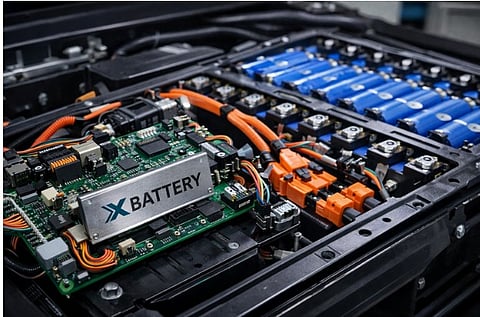
A Battery Management System continuously observes how individual cells behave. It tracks voltage changes, current flow, and temperature variations across the pack. More importantly, it looks at how these factors interact with each other during real use, not just ideal conditions.
For example, a slight temperature increase during charging may not be a problem on its own. But if that same cell also reaches voltage limits earlier than others, it signals imbalance. Battery management systems are designed to catch these combinations early and respond before damage occurs.
In practice, this means adjusting charging speed, limiting power output, or temporarily stopping operation to protect the battery. Most of this happens quietly, without the user ever noticing.
Electric vehicles place constant stress on batteries. Rapid acceleration, fast charging, long driving cycles, and changing weather all affect how battery cells behave.
Without proper management, these stresses would shorten battery life and reduce reliability. A Battery Management System helps maintain predictable behavior by balancing cells, controlling heat, and managing energy delivery.
Driving range estimates, charging safety, and long-term battery health all depend on how well the battery is managed. In this context, battery management is not an added feature. It’s a core requirement.
Renewable energy systems rely on batteries to store power when generation does not match demand. These systems often charge and discharge daily, sometimes multiple times per day.
Battery management helps make this process stable. It ensures energy is stored safely and released smoothly, without overstressing cells or creating heat-related issues. This is especially important in grid-connected systems, where consistency matters as much as capacity.
For those exploring the fundamentals of What is Battery Management System in the context of energy storage, this overview provides additional technical insight.
Safety is the most obvious benefit of battery management, but performance and lifespan are just as important.
In multi-cell battery packs, cells age at different rates. Over time, one weaker cell can limit the entire system. Battery management reduces this effect by keeping operating conditions stable and minimizing stress on individual cells.
The result is more consistent performance, better use of available capacity, and slower long-term degradation. For large energy systems, this directly affects reliability and operating cost.
Battery management is not a solved problem. Estimating battery condition becomes harder as batteries age. Heat management in dense packs requires careful design. Different battery chemistries respond differently to stress and operating conditions.
Because of this, Battery Management Systems continue to evolve. Improvements in sensing, control logic, and system integration are helping battery systems perform reliably in real-world environments, not just controlled settings.
Battery technology often gets most of the attention, but battery management is what makes modern energy systems workable at scale. Without proper supervision, even advanced batteries would struggle to operate safely and consistently.
A Battery Management System provides the structure needed to monitor conditions, respond early to risk, and support stable performance over time. As energy storage becomes more central to transportation, infrastructure, and power generation, effective battery management remains a foundational part of today’s energy ecosystem.
