.png)

The global data ecosystem has now entered a decisive phase as organisations rethink how information is processed, stored, and acted upon. With data volumes exploding and real-time insights becoming critical, the debate around Edge vs Cloud Computing has moved from technical circles into boardrooms. Enterprises now weigh speed, scalability, security, and cost while designing data strategies for an increasingly digital economy.
As 2026 approaches, this change raises a compelling question: where should data intelligence truly be? Should it be closer to devices for instant action, or within powerful cloud platforms built for scale? This growing tension sets the stage for a defining struggle shaping Big Data Processing 2026 across industries worldwide.
The edge computing market is projected to grow significantly in 2026, with estimates suggesting revenues will reach approximately USD 28.5 billion. The major industry growth drivers are the increasing demand for on-premises computing power, the proliferation of IoT devices, and the need for real-time analytics. Additionally, the decentralized solution not only increases security by being less susceptible to external interception and by handling everything within the organization, but also reduces bandwidth consumption.
Cloud computing in 2026 remains the backbone of Big Data Processing, thanks to its extensive scalability, storage, and compute power for complex operations. Organizations rely on modern cloud data platforms for AI model training, storage of historical data, and large-scale analytics, which is far beyond the capacity of edge systems.
Hybrid and multi-cloud approaches are becoming more popular as companies seek more flexible operations. The major players in the market are still trying to strengthen their positions by increasing their AI infrastructure and advanced services. Google Cloud, which has been recognized by Forrester as a leader in AI infrastructure, emphasizes the importance of the cloud in enterprise AI and big data strategies.
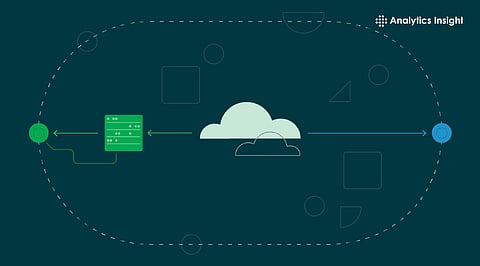
Edge Computing vs Cloud ecosystems are converging into hybrid architectures where each plays a clear role in data workflows. Edge nodes manage immediate processing and data filtering, sending only critical insights to cloud platforms for deeper analysis and long-term storage.
This approach reduces network strain while maximising strengths. Experts highlight that combining edge and cloud optimises costs, performance, and security, forming a layered edge-cloud continuum that supports analytics and mission-critical operations.
In time-critical sectors, edge analytics is essential. Autonomous vehicles rely on split-second responses from onboard edge systems, while manufacturing uses local computing to detect anomalies before costly downtime occurs. Local data processing is now part of real-time health monitoring, enabling instant alerts without cloud delays.
Cloud data platforms support large-scale, non-time-sensitive analytics. Historical trend analysis, predictive modeling, and cross-enterprise business intelligence rely on cloud platforms, enabling the organization to make strategic decisions, plan for the long term, and gain insights from data across the board.
Despite rapid growth, challenges still exist in deploying edge infrastructure at scale. Distributed systems add complexity to management, security, and integration with legacy systems. Besides, edge computing requires powerful orchestration tools and considerations for physical deployment at multiple locations, which will be a burden on IT resources.
On the cloud front, data privacy, regulatory compliance, and cost optimisation are ongoing priorities. Cloud providers are working on new ways to secure data through hybrid tools and other frameworks, and help enterprises manage their sensitive workloads across different areas and jurisdictions. As data volumes increase, balancing cloud costs with performance remains an important concern for technology leaders.
As data demands intensify toward 2026, the debate around Edge vs Cloud Computing is evolving into a strategic balancing act rather than a clear winner. Edge analytics delivers speed and immediacy, while cloud data platforms provide scale, intelligence, and long-term value for Big Data Processing 2026.
Organisations that align both models within a unified strategy stand to gain the most. By blending low-latency edge insights with powerful cloud analytics, enterprises can build resilient, future-ready data architectures that adapt to growth, regulation, and real-world complexity.
