.png)

Choose a soundbar based on HDMI and eARC compatibility, not just Dolby Atmos or 3D marketing labels.
Check room size and expansion options early to avoid weak bass or limited surround sound later.
Long-term value depends on real performance, firmware updates, and future-ready features, not price alone.
The global soundbar sales suggest steady market growth through the late 2020s. This is mainly driven by larger TVs, streaming platforms offering immersive audio, and the need for compact home audio solutions.
However, having many choices also increases confusion. Buyers often end up spending money on expensive devices with poor sound quality, missing features, or short lifespans. Understanding these mistakes is important before investing in a soundbar.
You should not buy a soundbar just because it markets popular terms like Dolby Atmos, 3D sound, or surround virtualization. These gimmicks usually hide the product’s shortcomings. Authentic immersive sound depends on both the soundbar and the source, like a television.
Many TVs released before the mid-2020s don’t support enhanced audio technologies properly. If there isn't full compatibility, advanced audio formats are reduced to basic surround sound and you may end up paying extra for features that will never actually work.
Also Read - Best Soundbars for Music Lovers in 2026: Hi-Fi, Bass-Heavy, and Studio-Grade Models
Many buyers don’t understand the importance of HDMI specifications. Not all HDMI ports support the same features. The enhanced Audio Return Channel or eARC is essential for high-quality audio. It allows uncompressed Dolby Atmos and other advanced formats to pass from the TV to the soundbar. Using older ARC or optical connections drops the sound quality.
Gaming consoles, 4K Blu-ray players, and premium streaming devices also need sufficient HDMI bandwidth. Soundbars with the right HDMI options can save users from forced compromises.
Design is a major factor people consider when buying a soundbar, but that alone can't guarantee a good sound. A long soundbar may look decent under a large TV and perform poorly in a small room. Sound quality depends on room acoustics, ceiling height, and seating distance.
Many soundbars have automatic room calibration systems that adjust sound output based on the surroundings. Choosing a model without room tuning can produce weak surround effects or unclear dialogue.
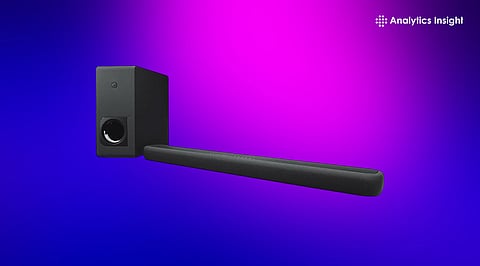
Another mistake buyers make is assuming a single soundbar can deliver a full cinema experience. While soundbar-only systems are convenient, they usually struggle with deep bass; wireless subwoofers and optional rear speakers can help fix this issue.
Many high-end models support expandable layouts such as 5.1.2 or 7.1.4. If you choose a soundbar that cannot be upgraded, you might regret it.
High channel counts and large driver numbers dominate product descriptions. However, these figures can be misleading. Some soundbars simulate surround sound using digital processing rather than real speakers. While virtualization has improved, performance varies greatly.
Recent reviews from independent sources suggest that well-tuned systems with fewer drivers can outperform poorly optimized models with many channel counts. Sound quality depends more on speaker placement, tuning, and processing quality than on the numbers printed on the box.
Also Read - Best Gaming Soundbars in 2026: Low Latency, Surround Sound & RGB Options
Soundbars depend on software for audio decoding, streaming, and voice assistants. The streaming services experiment with new immersive formats and personalized sound technologies to offer a better experience.
Soundbars without regular firmware updates may lose compatibility with future audio standards. Brands that regularly provide software updates offer better long-term value, even when new features are added after purchase.
Bluetooth is popular because it is easy to use, but it has limitations. Bluetooth audio is typically compressed and does not support advanced surround formats. While newer Bluetooth versions improve stability and efficiency, they still cannot match HDMI-based audio quality.
For movies, games, and high-resolution streaming, HDMI connections are the most reliable option. Buyers who prioritize Bluetooth convenience often end up sacrificing the immersive experience they expected.
Many customers make online purchases. However, sound performance varies significantly depending on room layout and listening habits.
Ignoring professional reviews and performance comparisons increases the risk of disappointment. Listening impressions, dialogue clarity, and bass response matter more than paper specifications.
Market forecasts show that soundbar innovation will continue at a steady pace through the late 2020s. This means newer models will continue to introduce incremental improvements rather than dramatic leaps. Spending more money does not always guarantee better results, so smart buyers focus on compatibility, expandability, and real performance.
Soundbars are great home audio solutions, but only when you choose them carefully. Common mistakes, such as ignoring compatibility, focusing on marketing claims, or overlooking future upgrades, can significantly reduce value.
With the soundbar market continuing to grow steadily and streaming platforms pushing immersive audio, you need to make an informed decision. Avoiding these mistakes ensures better sound quality, longer product life, and a more satisfying home entertainment experience.
1. Is Dolby Atmos necessary when buying a soundbar in 2026?
Dolby Atmos adds immersive height effects, but it only works properly when the TV, soundbar, and HDMI eARC all support it.
2. Can a soundbar work well without a subwoofer?
A soundbar can improve TV sound, but a separate subwoofer is usually needed for deep bass and a cinema-like experience.
3. Does the HDMI version really affect sound quality?
Yes, HDMI with eARC supports uncompressed audio formats, while older HDMI ARC or optical connections can limit sound quality.
4. Are higher channel numbers always better in soundbars?
No, sound quality depends more on tuning, room calibration, and speaker placement than on advertised channel counts.
5. How important are software updates for soundbars?
Software updates are important for fixing issues, improving performance, and supporting future audio formats and streaming services.
